






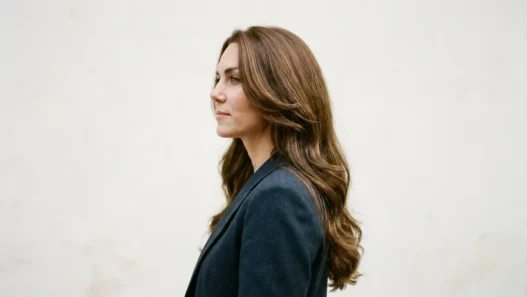

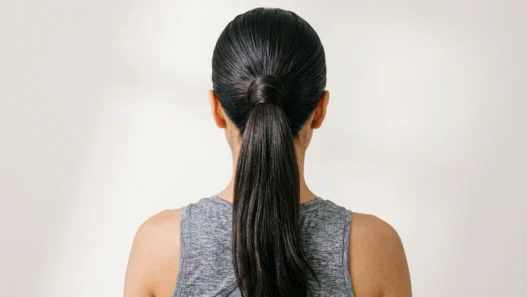

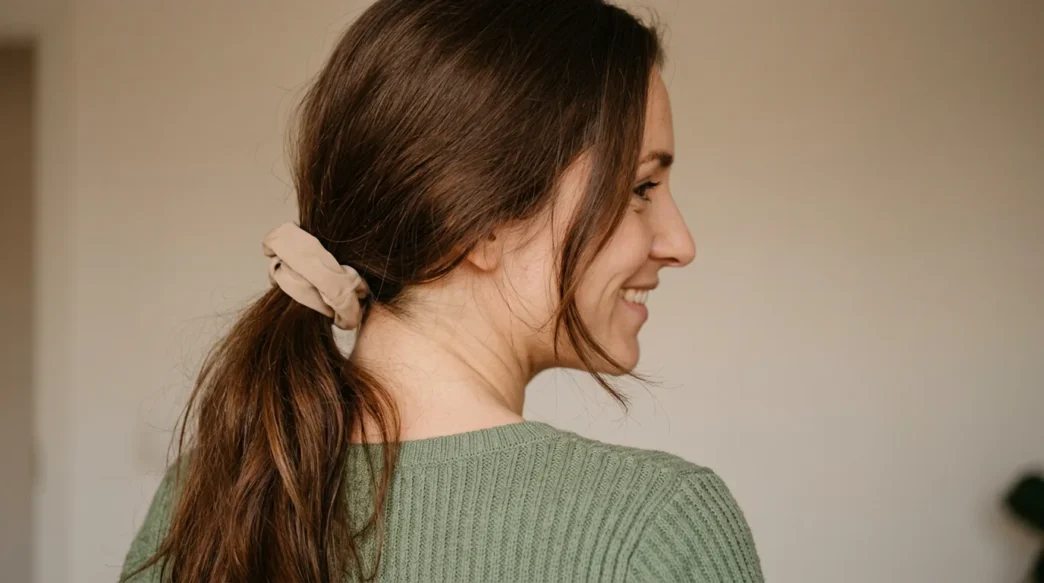
I sat in Maya’s chair last spring nodding like I understood everything. She said something about switching my hair band and using less traction, and I just went, mmhm, totally. I had no idea what she meant. I walked out with a throbbing head, a dent across my crown, and the same too-tight black elastic I’d worn for years.
It took me three more appointments and one broken baby elastic incident to finally ask her to slow down. And I’m so glad I did. Once she explained the words in normal language, my ponytails got better overnight. Less headache. Less breakage. Way more good-hair days.
In This Post: The Hair Band Words I Pretended to Know
Hair Band
This is the big umbrella term that messed me up first. When my stylist says hair band, she does not mean one specific thing. She means any loop you use to hold hair in place. A thick fabric scrunchie is a hair band. A thin office elastic is a hair band. That stretchy sports headband is also, technically, a hair band.
What it does to hair depends entirely on which kind you grab. A soft, wide, fabric-covered band spreads pressure over a bigger area, so you get a softer hold with less denting. A narrow, uncovered rubber loop grabs hard in one thin line, so you get a perky pony for an hour and then a headache and snapped baby hairs for a week. I learned this the hard way after wearing the same too-small elastic for gym, work, and sleep.
When to ask for it? Use the phrase when you want to talk generally. I now say, “What kind of hair band should I use for a high pony that won’t slip?” instead of just buying whatever three-pack is at checkout. It opens up the conversation. She will usually follow up with questions about your thickness, your scalp sensitivity, and whether you tie it in the same spot every day.
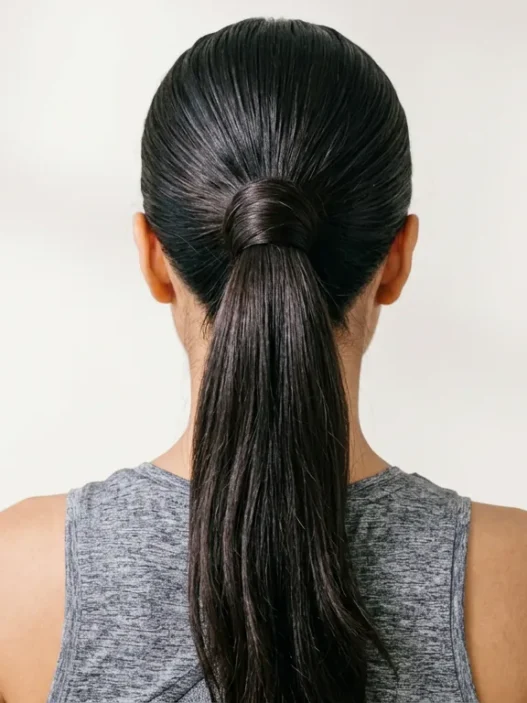
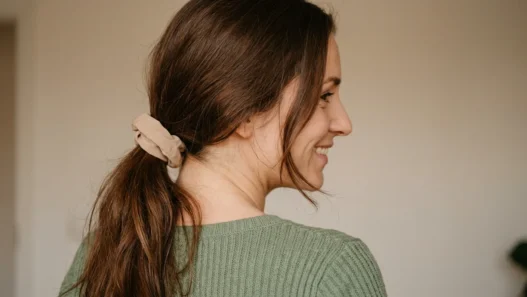
Look at how she’s wearing hers in this photo. That low, slightly loose placement is exactly what Maya showed me when I complained about tension headaches. See how there’s no harsh pull at the temples? That’s a well-placed fabric band doing its job without shouting.
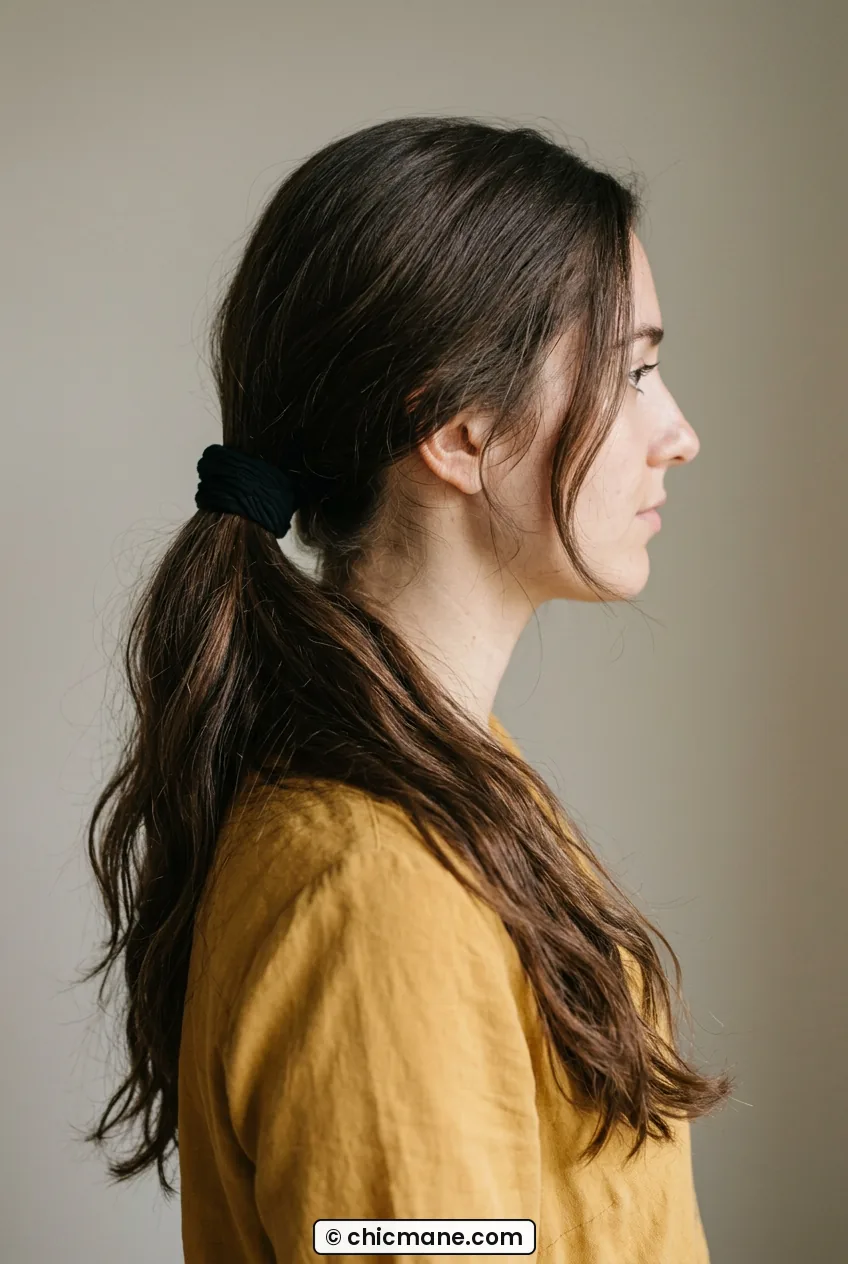
- Wide fabric bands: my everyday pick for thick or long hair, fewer dents
- Coiled telephone-cord bands: good for workouts, they stretch without locking in a crease
- Narrow uncovered elastics: fine for a quick topknot, terrible as a daily driver
- Stretch headband-style bands: best for keeping bangs and fringes back without flattening them
My slightly controversial take? Most of us own way too many cheap elastics and not enough good ones. I threw out a drawer full of thin black loops and replaced them with three soft, wide bands. My hair immediately looked fuller at the tie point because I wasn’t sawing through the same section every day. You can read more on how elastics damage hair before your next restock, it changed how I shop.
Covered Elastic
Maya pulled one of these out of her apron during my color appointment and I thought, oh, that’s just a scrunchie. She laughed. A covered elastic is any elastic core wrapped in fabric, and that wrap matters more than I expected. The fabric lets hair slide a little instead of gripping and snapping. The inner elastic still gives you hold, but the outer layer acts like a little cushion.
I tried this on a second-day low pony and I swear the difference was instant. No squeaky pull when I wrapped it twice. No tiny hairs pinging off. When I took it out at night, there was a soft wave instead of that sharp, almost wet-looking crease. For my medium-thick hair that tangles if you look at it wrong, that slip is everything. If you have fine hair, you’ll like that it doesn’t slide off by 2 p.m. the way silk ones sometimes do. If you have thick hair, go for a wider cover with a strong core, not the flimsy party-favor kind.
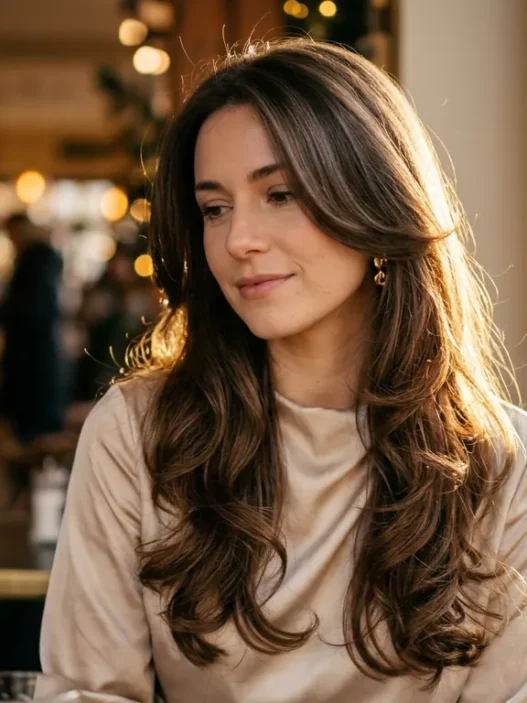
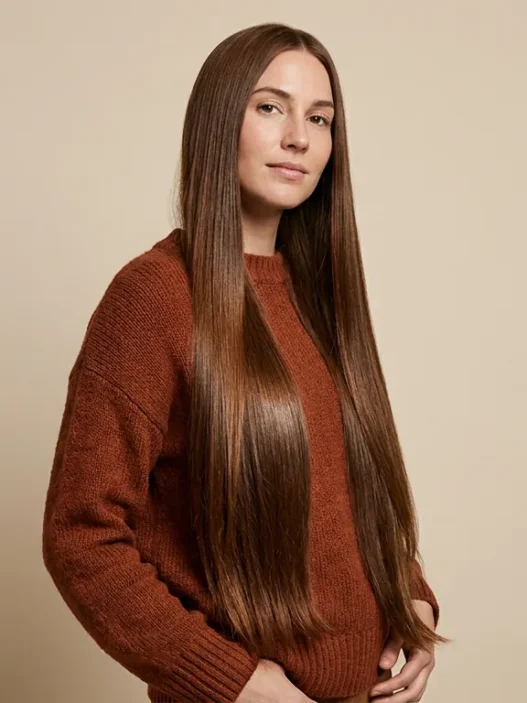
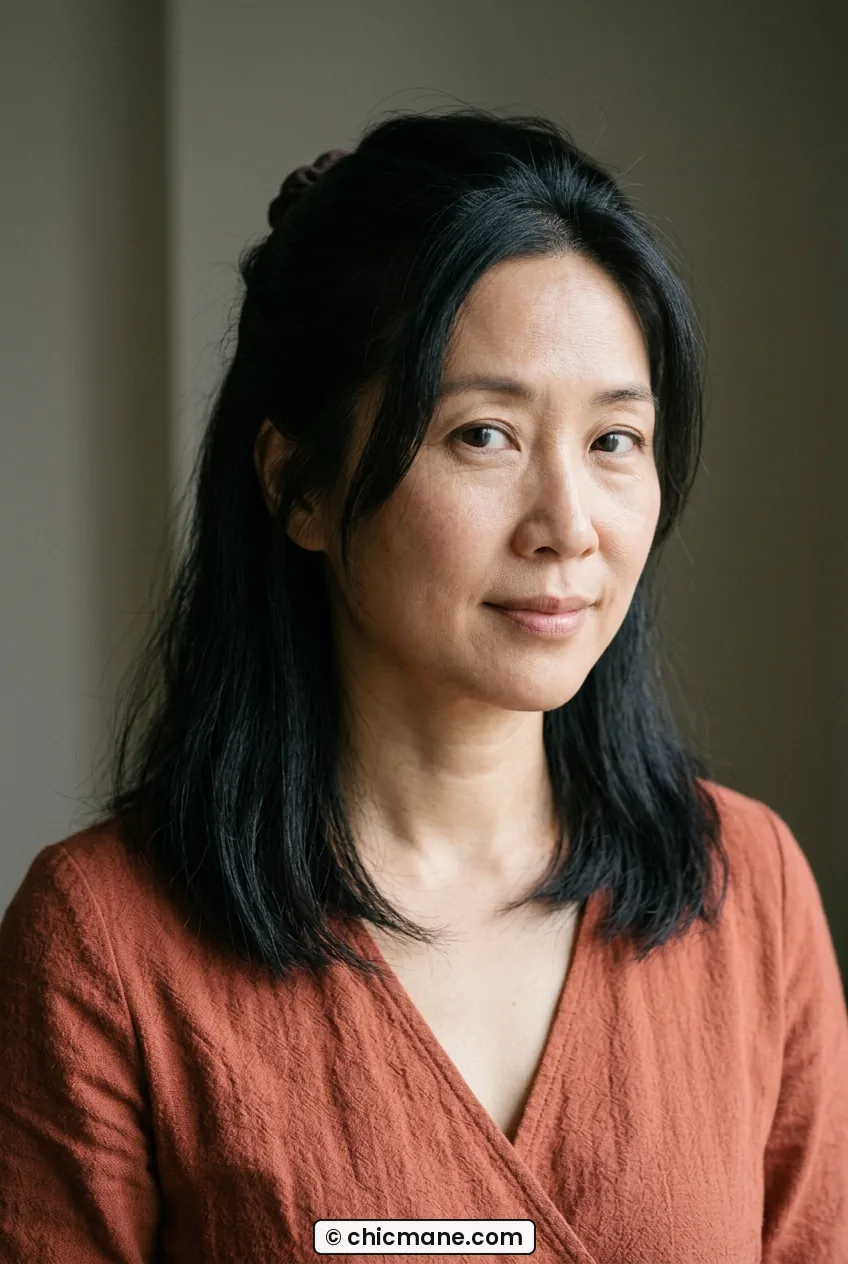
When I styled a simple twisted half-back for brunch last month, I used a small covered elastic instead of a clear one and it disappeared right into my half-up styles. This is the length I’m talking about in the photo below. See how it hits just below her shoulder with no harsh line where the band was? That soft hold is why stylists love these for everyday wear.
Ask for a covered elastic when you say things like, “My ponytail holder is breaking my hair,” or, “I need something for daily wear.” Your stylist will point you to the right width and tension for your density. Bring your usual one with you to the appointment. Maya took one look at my stretched-out elastic and said, yeah, that’s half your problem right there.
Traction
Wait, so why does my scalp ache two hours after a sleek pony?
That’s traction. It’s just the stylist word for constant pulling on your roots. A little pull gives you lift and snatch. Too much pull for too long irritates the follicle, gives you those tiny bumps along your hairline, and over time can thin the edges. I used to think a sore scalp meant my pony was secure. Maya told me sore means stressed.
How do I know if I’m overdoing it?
My test now is stupidly simple. If I can’t wiggle the base a little, or if I get a headache behind my eyes, it’s too tight. If I take it down and see a pale, tender line or lots of short broken bits sticking up, that was too much traction in one spot. Moving the height of your pony even an inch helps. So does switching to a wider band, loosening the first wrap, and not stacking a tight bun on top of a tight pony.
When should I actually use the word with my stylist?
Say it when something hurts or thins. “I’m getting a lot of traction headaches,” or, “I’m worried about traction around my temples.” That tells her you need a low-tension plan, not just a prettier pony. You can also learn about early signs of traction loss before you panic, because catching it early makes a huge difference.
I wore too-tight ponies for years and called the headache normal. It wasn’t. Looser is prettier on me anyway.
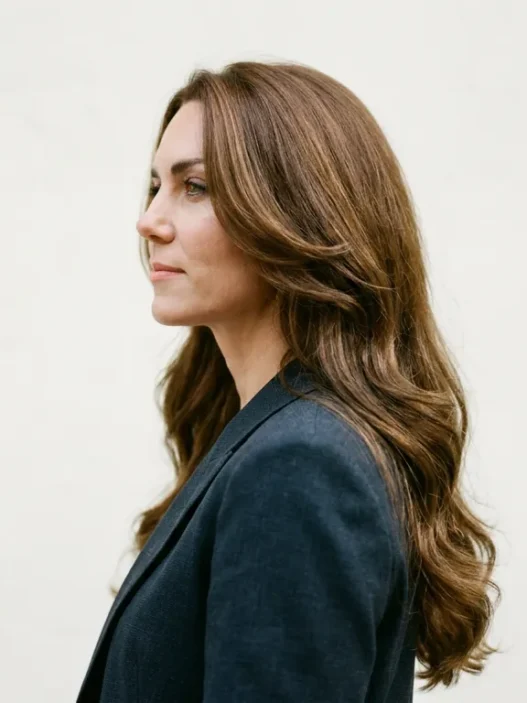
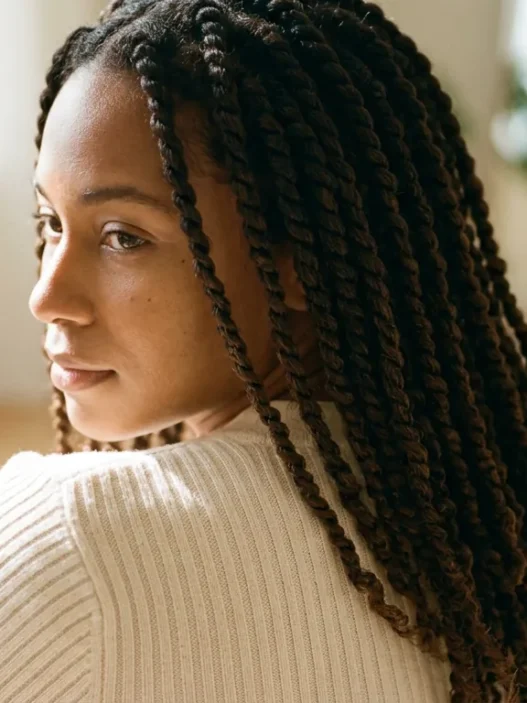
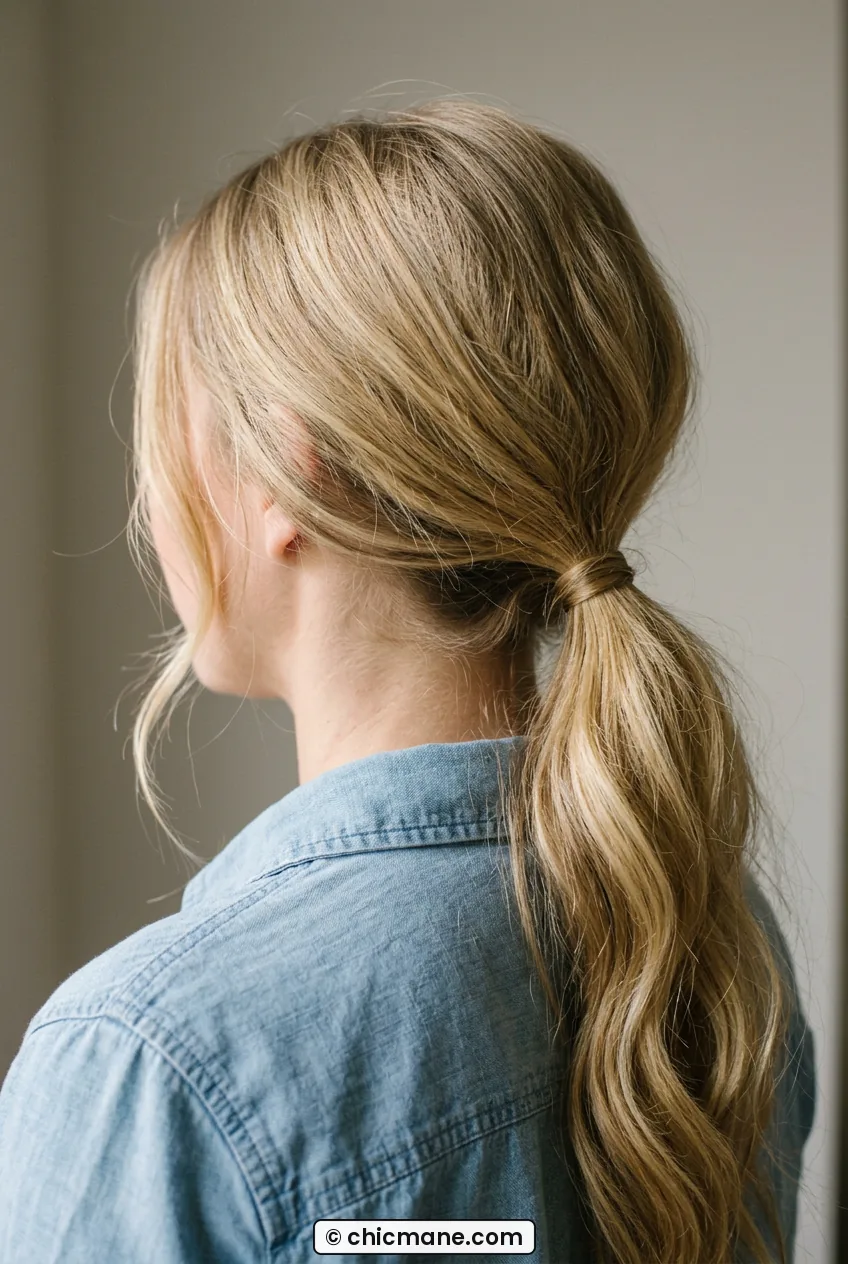
She’s got a similar hairline to mine in this next photo, and honestly, you can see what low traction looks like. Nothing yanked flat. A little softness at the crown. That small bit of give is what keeps my edges happy through a long work day.
Pinned Hairup
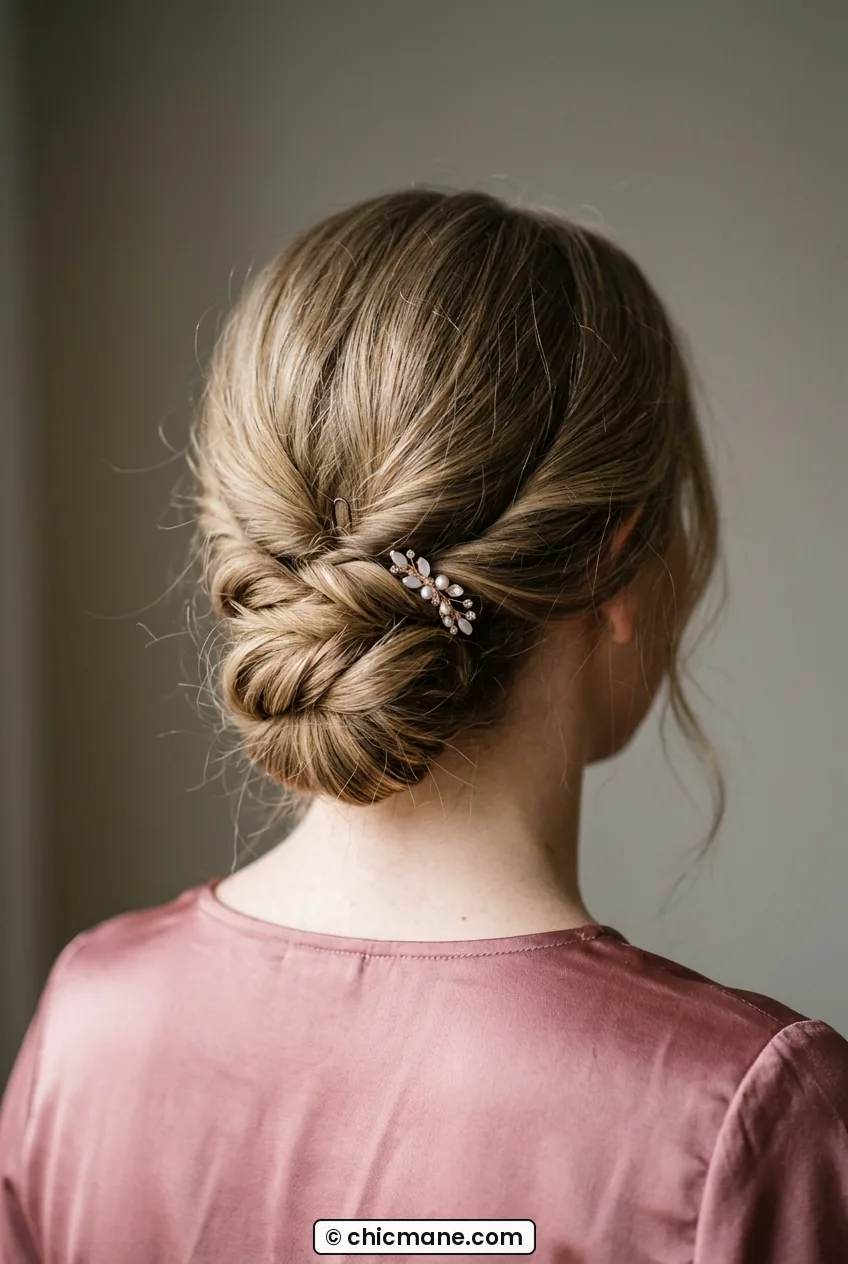
Hairup versus updo confused me for ages. In Maya’s world, a pinned hairup just means long hair gathered and held mostly with pins instead of one tight elastic. Think loose twist, tucked French roll, low chignon anchored with U-pins. The hold comes from structure and crisscrossed pins, not from strangling the base.
What it does to hair is kinder than it looks. Because the weight is spread across five or six points, no single spot takes all the pull. My long hair feels lighter in a pinned style than in a high pony, even though it uses more hardware. The trade-off is time. A good pinned hairup takes me twelve minutes and a handful of pins, while a pony takes thirty seconds. But the pony gives me a headache, and the pinned twist lets me forget about my hair until dinner.
Covered elastic versus pinned hairup? Here’s how I choose now. If I’m running errands, chasing my nephew, or heading to the gym, I grab a soft covered elastic. It’s fast and it moves with me. If I’m going to a wedding, a long dinner, or I know I’ll have photos taken from the back, I do the pinned version. It looks softer, it doesn’t dent, and it holds through hugs and wind. For my last date night I did a low pinned twist with the front pieces left out, and it stayed put through pasta and a walk downtown with zero scalp ache.
When to ask for it, use her language. Say, “Can you show me a pinned hairup for long hair that doesn’t rely on a tight elastic?” She’ll know you want distributed hold. If you love romantic texture, ask how she preps curly hair for pinning, because day-two curls grip pins beautifully without extra spray.
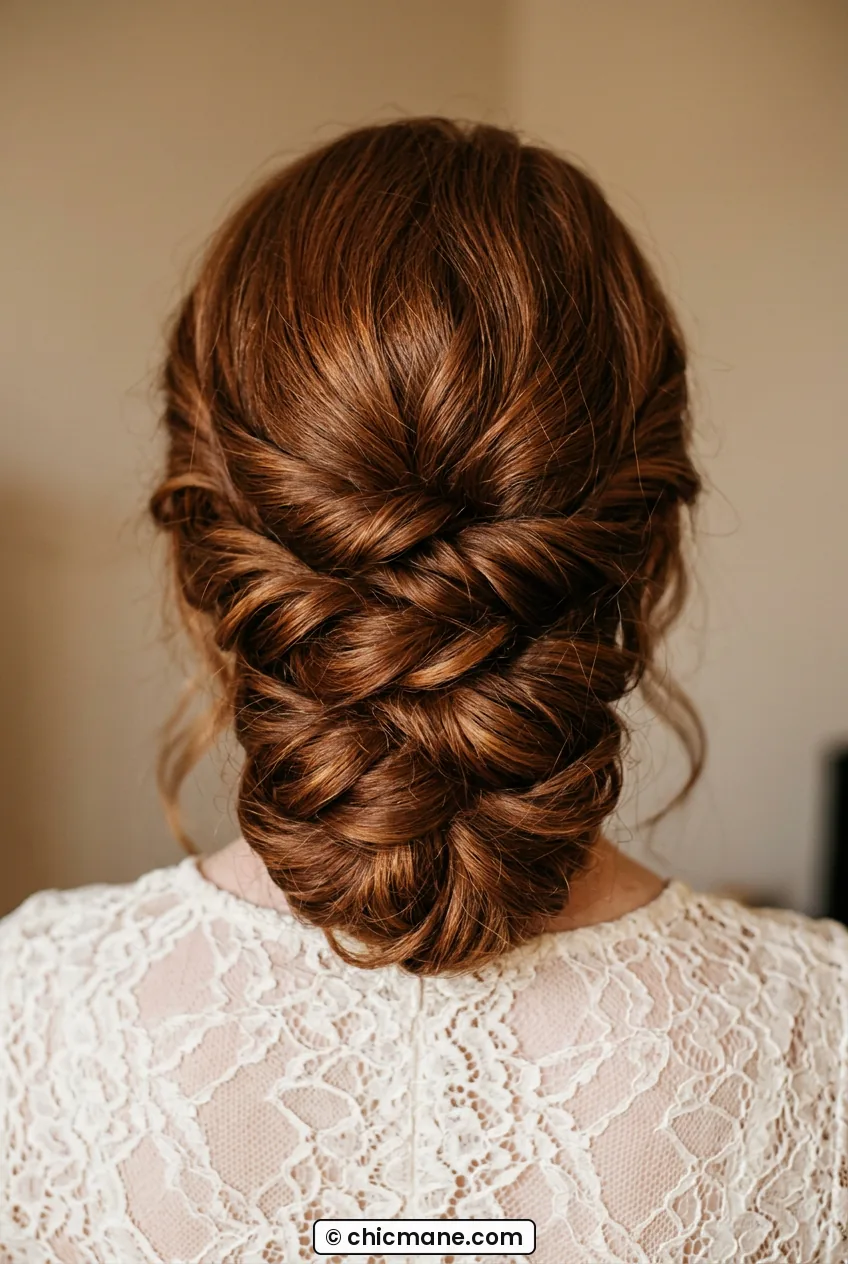
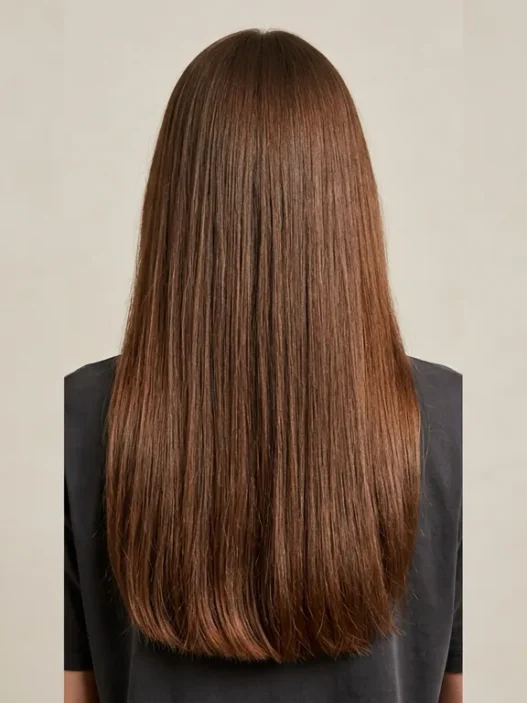
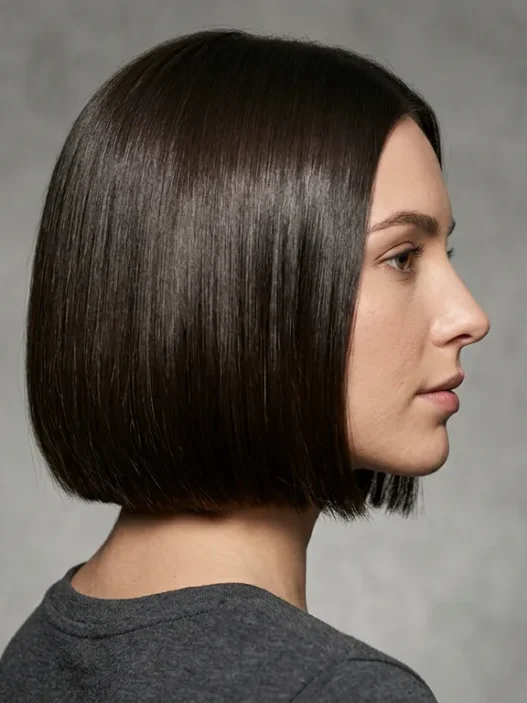
This back three-quarter view is my favorite reference to save. Look at how she’s wearing hers, low and slightly off-center, with the pins hidden underneath. That shape is exactly what I try to copy when Maya isn’t around to fix my lopsided attempts.
Baby Elastics
Baby elastics are what Maya calls tiny rubber bands, those little clear or black loops about the size of a dime. They’re meant for detail work, not for holding all your hair. One tiny braid, a bubble section, the tail of a twist, that’s their job. They’re strong for their size, which is why they’re both useful and risky.
What they do to hair is very specific. They clamp a small section cleanly so your braids and twists look sharp. Because they grip so tightly, they can snap fine hair if you roll them down or yank them out dry. I ripped out a whole clump last year trying to pull one off a mini braid after the gym. Never again. Now I slide the tip of a rattail comb under, or dab a drop of oil on the band and gently break it with tiny scissors instead of pulling.
My favorite way to use them is for a three-bubble pony down the back. I secure each bubble with a baby elastic, then pancake the sections by tugging gently to make them full. It looks intricate in photos but takes me five minutes. I also love two tiny face-framing braids secured with clear babies, then gathered into a low pony with a soft band. The combination gives me detail without putting all the tension on my hairline. Just keep them away from wet, extra-stretchy hair, and never double them on the same spot if you can avoid it.
When to ask for it? Say, “I want to try tiny rubber bands but I’m scared of breakage, what’s the safest way for my texture?” A good stylist will show you placement, removal, and how often is too often. I limit detailed elastic styles to twice a week, and I never sleep in them. You can also read about gentle bubble braid techniques for a low-tension approach that actually holds.
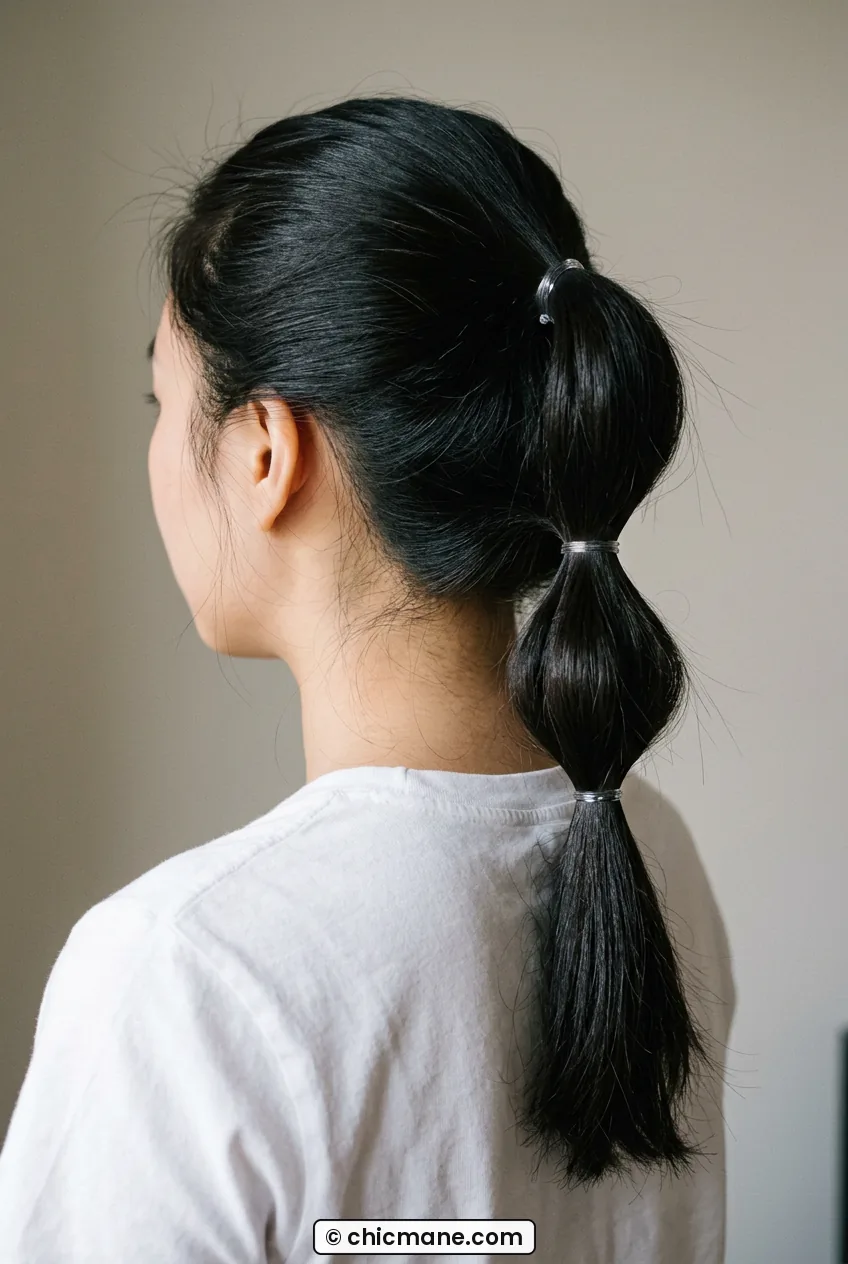
And yes, I have opinions about hair envy is expensive. Seeing perfect bubble ponies online made me overuse these for a month. My ends told me to stop before my brain did.
Tiny Elastics Without the Snap
Hair Band Questions I Still Hear in the Chair
Can a hair band really cause breakage or is that just fine-hair drama?
It can, on any texture. I have medium-thick hair and I still got a fuzzy halo from wearing the same narrow elastic in the same spot. Switch width and position, and give your hair pin-only days.
How do you get tiny rubber bands out without ripping hair?
Don’t pull down. I add a drop of lightweight oil, slide a pin or comb tip under the loop, and snip the band itself. It takes twenty seconds and saves a week of regret.
What’s the least damaging option for everyday long hair?
For me it’s a wide covered band worn a little loose, rotated between high, mid, and low. On lazy days I do a loose pinned twist. My scalp is so much calmer since I stopped chasing that super-slick pull.
So if you take one thing from my chair-side crash course, let it be this. A hair band and a covered elastic sound like the same thing, but they’re not. One is the whole family, the other is the gentle, fabric-wrapped member you actually want touching your hair every day. I mix those up less now, my ponies hurt less, and I finally feel like I speak a little salon. I’m off to redo my bubble pony, wish me even bubbles this time.