







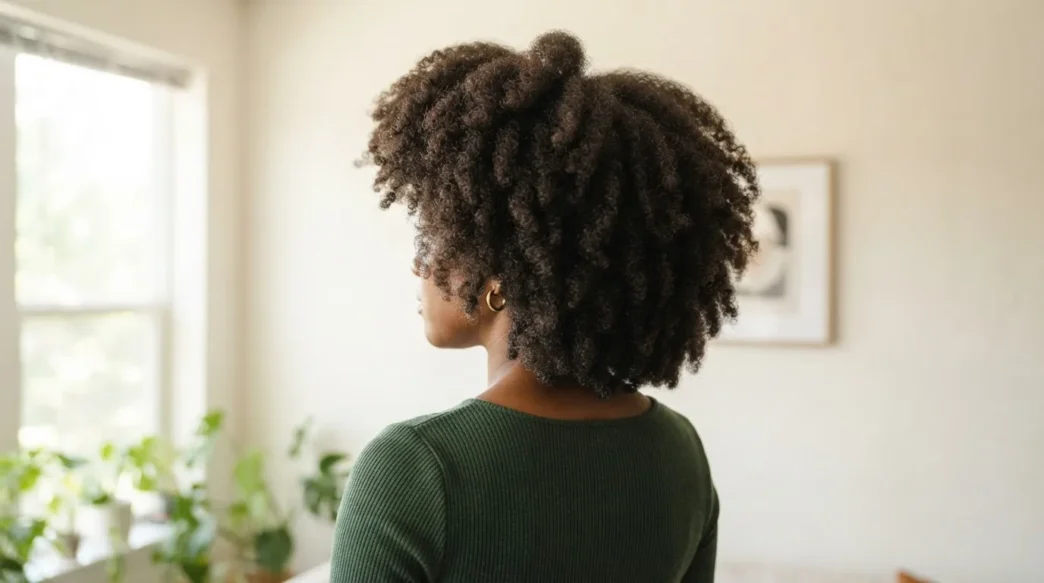
I sat in the stylist’s chair, nodded confidently when she said my hair needed “better clumping,” and absolutely did not know what that meant. I smiled. I said “mm, yes, definitely.” I went home and Googled it for forty-five minutes. If you have ever done that — or ever stood in the product aisle staring at words like “porosity” and “diffusing” and quietly put everything back — this one is for you. Curly hair styles have their own entire language, and nobody gives you the dictionary.
Shrinkage
Shrinkage is the gap between how long your hair actually is and how long it looks when dry. A curl springs upward as it dries, shortening its visible length — sometimes dramatically. My hair is shoulder-length when wet and stretched. Dry? It sits somewhere between my ears. That jump is shrinkage.
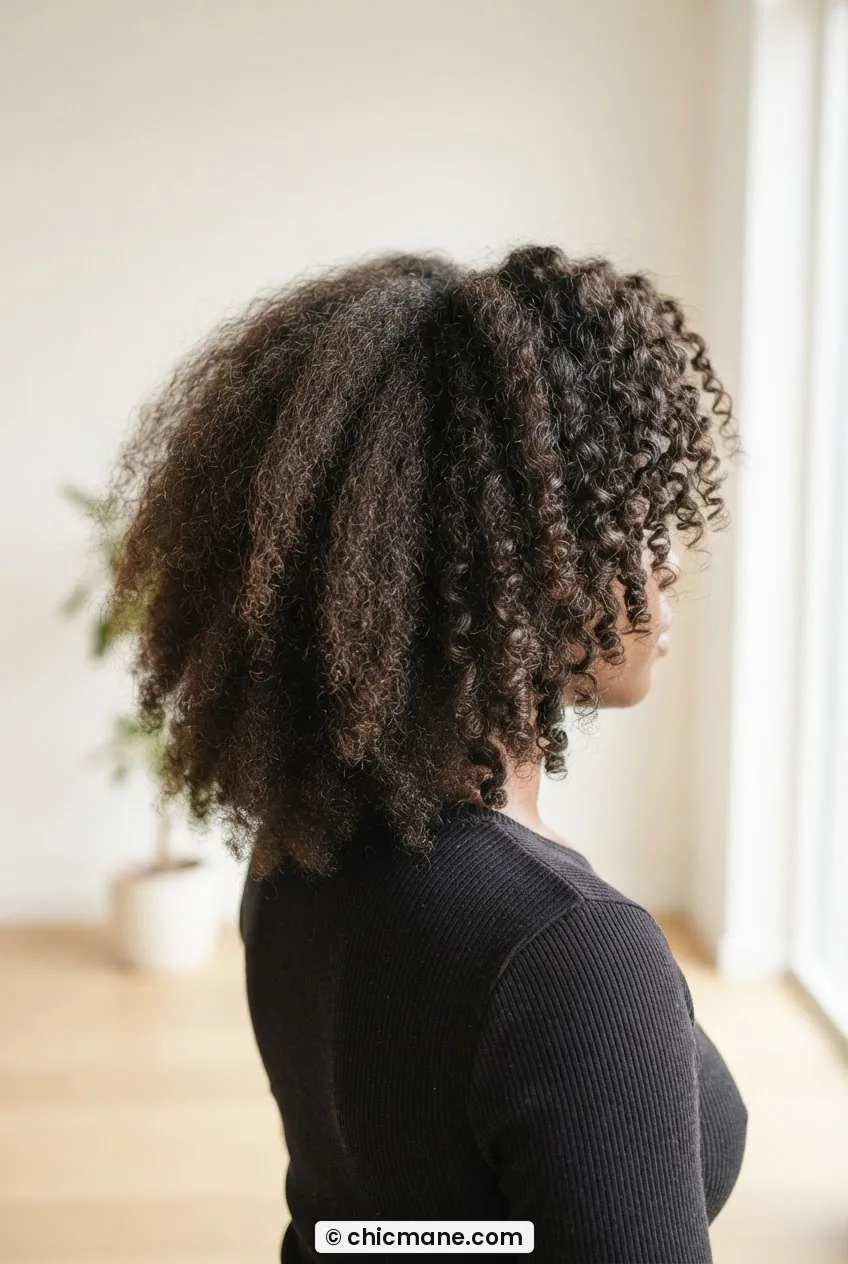
It is not damage. It is not something to fix. High shrinkage actually signals healthy elasticity — the curl is coiling back to its natural shape with strength. Tighter curl patterns, especially 4C coils, can shrink up to 75% of actual length. So when someone says “my hair barely grew,” shrinkage is often the quiet culprit. The length is there. The curl is just keeping it close.
When to bring it up at the salon: if your stylist keeps cutting away what feels like real length, ask them to trim on stretched hair so you both agree on where “the end” actually is.
Clumping
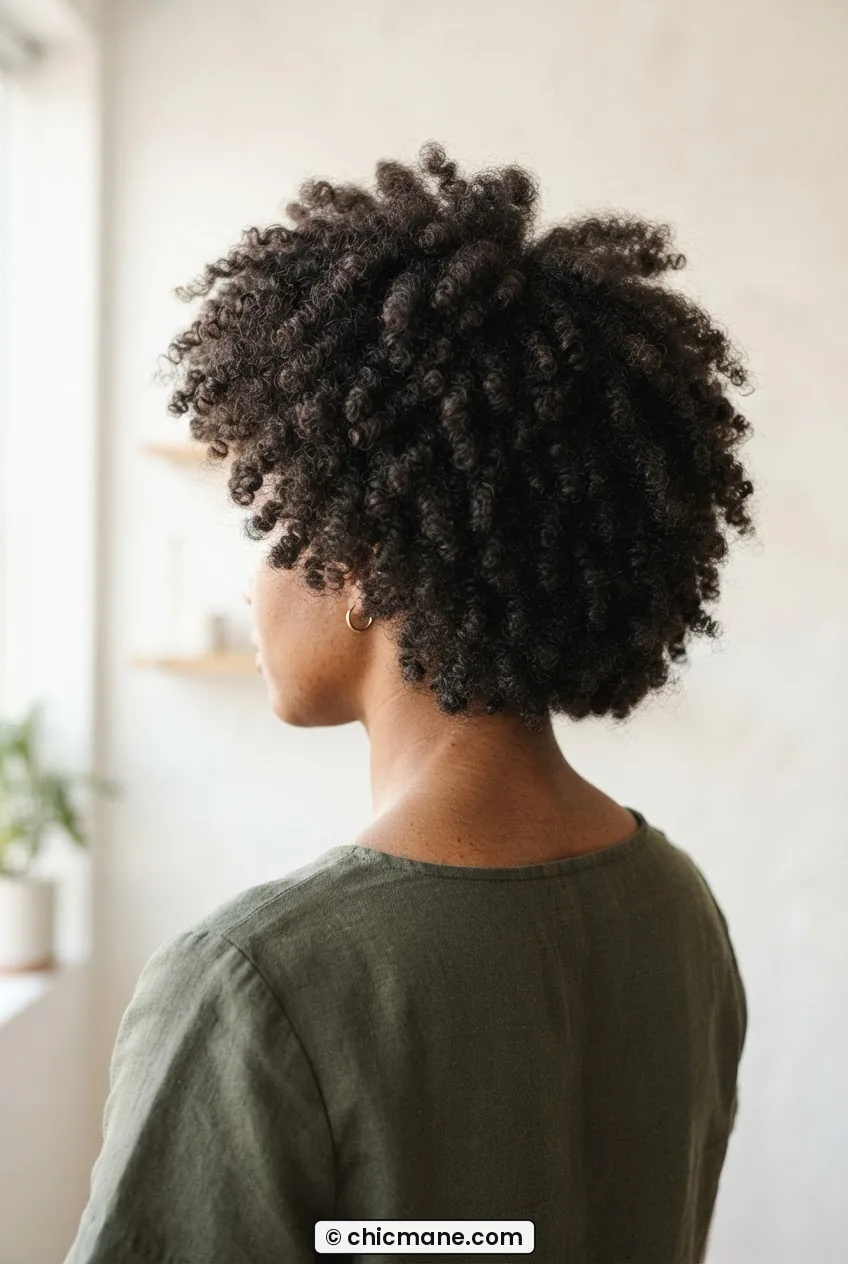
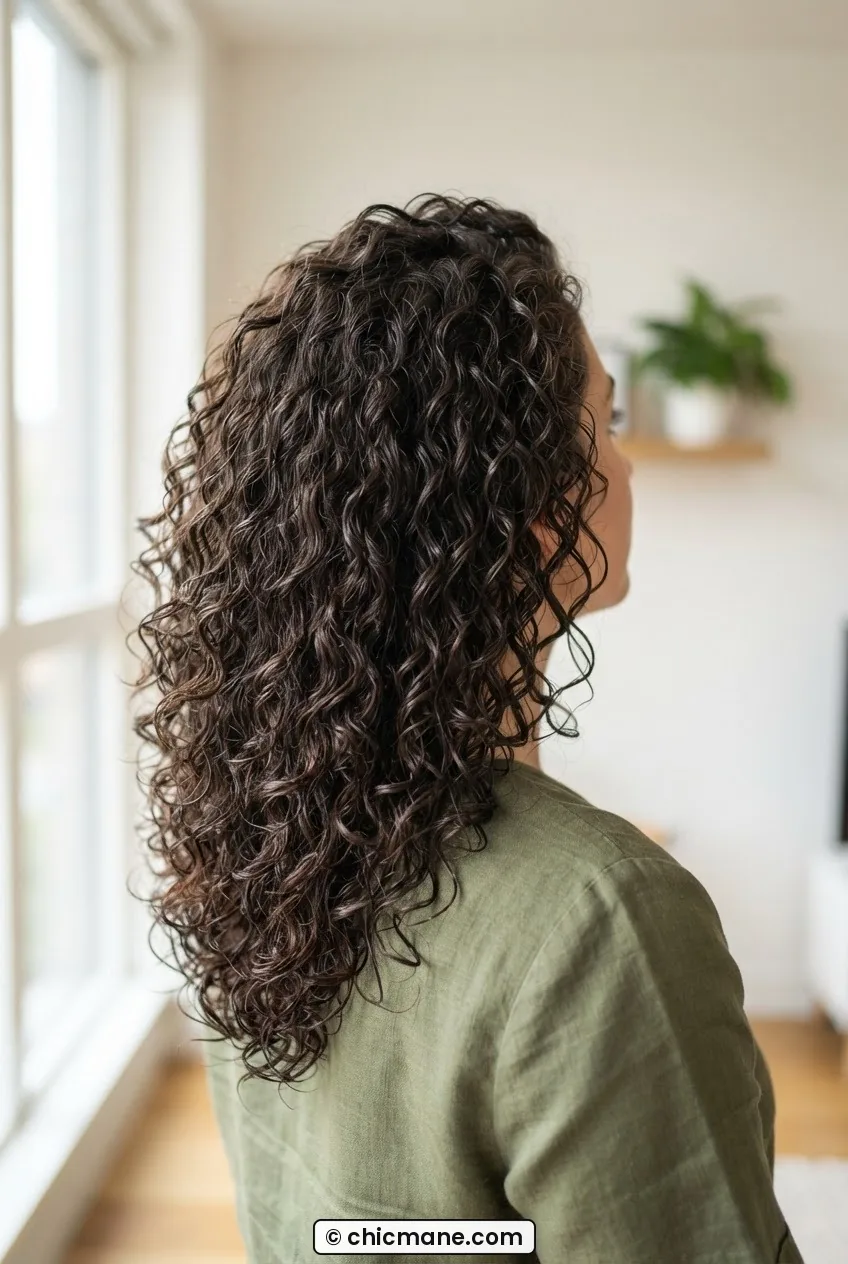
Clumping is when individual strands of curly hair bond together into a defined group — a curl cluster — instead of separating into frizzy singles. Good clumps = defined, bouncy curls. Poor clumping = a halo of individual strands that never quite decided what shape to be.
This is the thing my stylist was talking about that day, and honestly, once I understood it, everything shifted. You encourage clumping by applying products to soaking-wet hair (not just damp — soaking), working from ends to roots, and letting your curls find their natural groupings without disturbing them too much while they dry. Raking your fingers through dry curls breaks clumps apart. Scrunching water in while still wet encourages them to form.
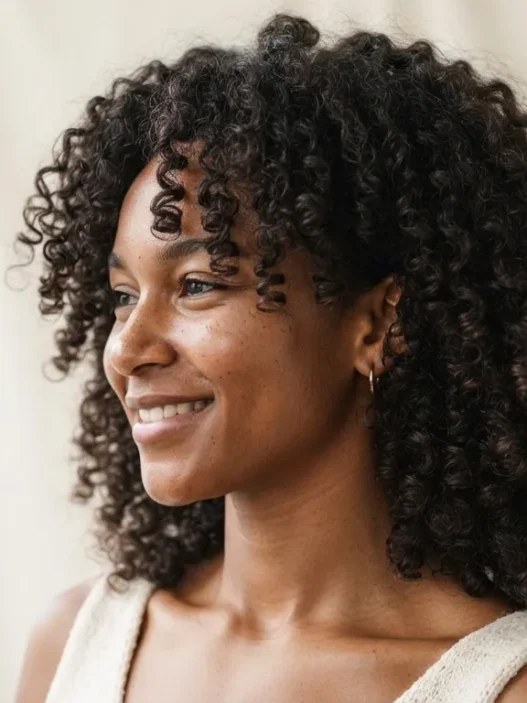
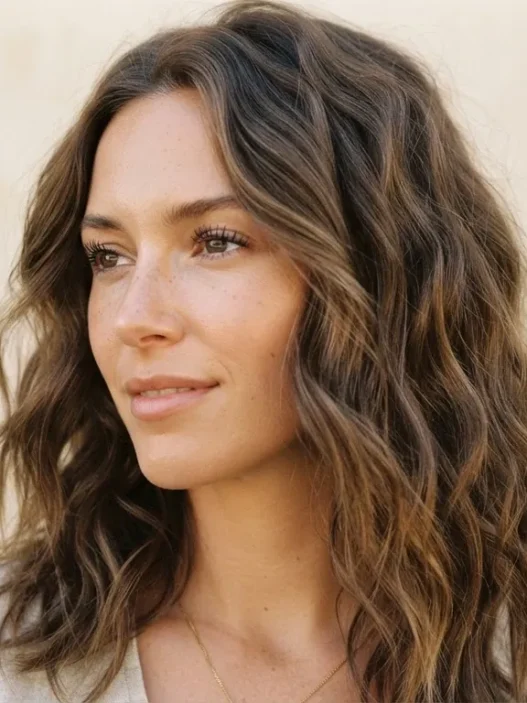
The woman in the photo here has clumps that are doing exactly what you want — see how each spiral holds its shape all the way to the tip? That is what well-clumped hair looks like, and it is the difference between “curly” and “fluffy.”
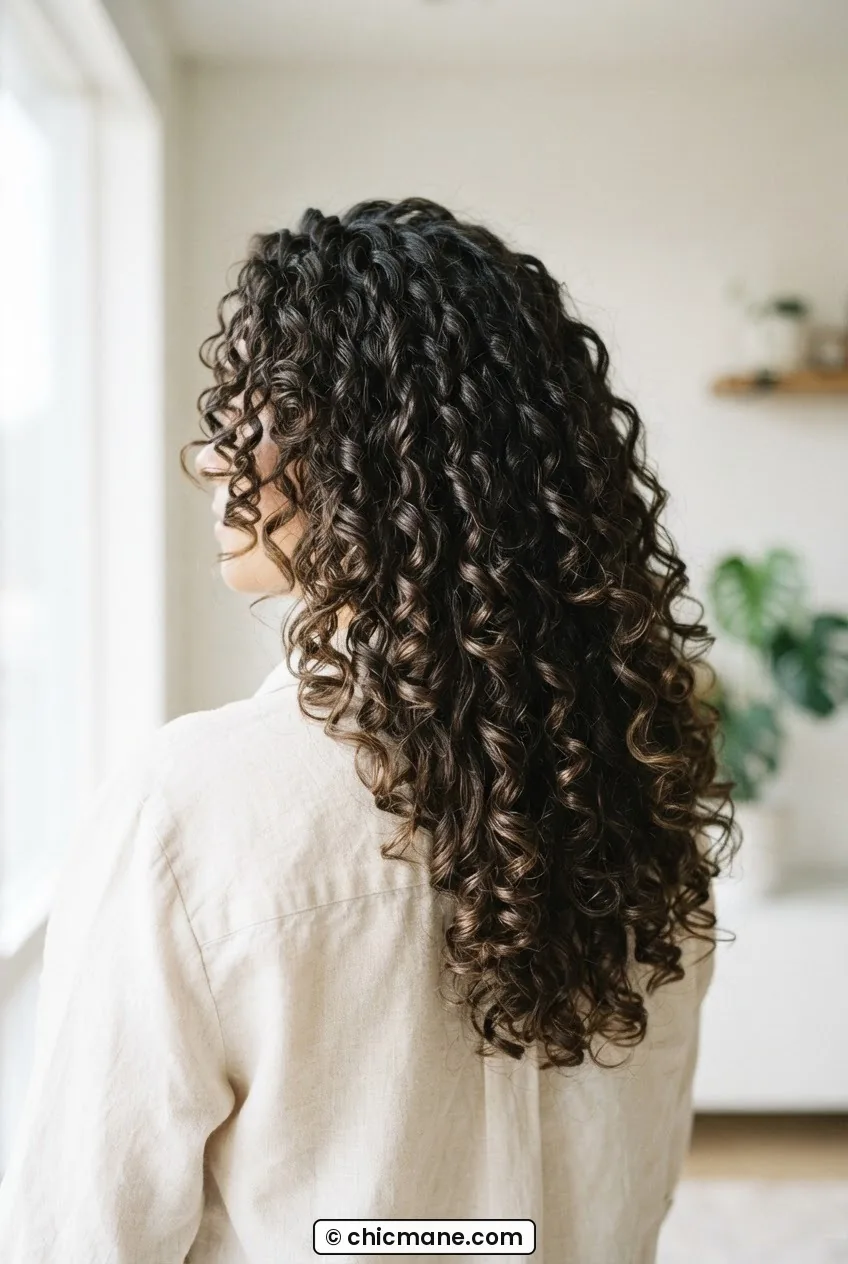
Diffusing
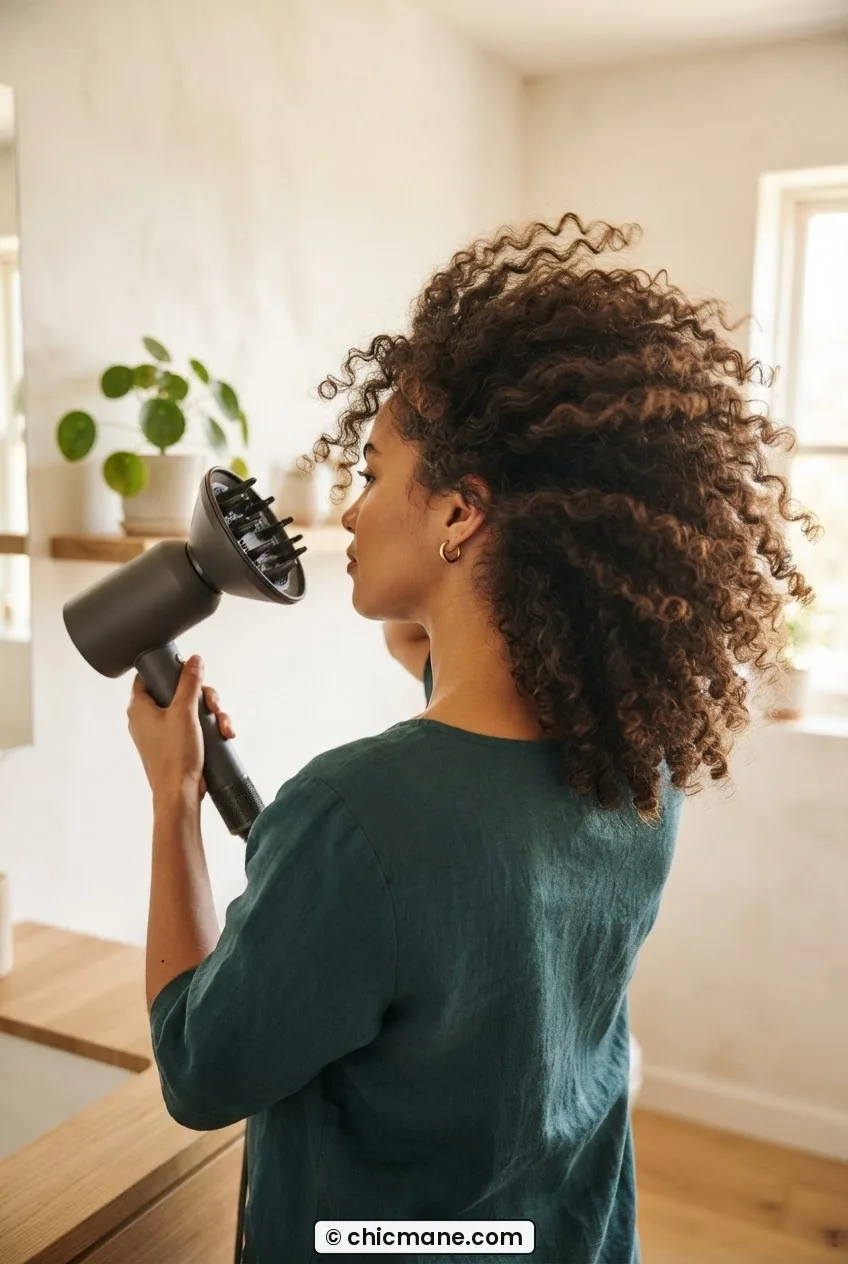
A diffuser is an attachment for your blow dryer. It spreads the airflow over a wide bowl-shaped head so the heat hits your curls gently and evenly, rather than blasting them with direct force (which causes frizz). Diffusing means drying your hair using that attachment.
The technique matters as much as the tool. You cup sections of your hair in the diffuser bowl and hold it up toward your scalp, letting the curl sit still inside the bowl rather than dangling in the wind. Moving too fast = frizz. Patience = definition. I dry mine in four sections and it takes about twenty minutes, which feels long until I remember air-drying takes two hours and leaves me with a flat spot at the back.
Hot tip that took me embarrassingly long to discover: use the diffuser on medium heat and medium speed. High heat is not your friend here, no matter how much of a hurry you are in. You can also diffuse without frizz by finishing on a cool shot to set the curl in place.
The Curly Girl Method
This one sounds like a lifestyle brand but it is actually a haircare system developed by stylist Lorraine Massey. The core idea: certain ingredients and habits — specifically sulfates (harsh shampoos), silicones (the coating agents in many conditioners), and heat styling — strip and coat the hair in ways that block moisture and disrupt curl pattern. The method removes them.
In practice that means cleansing with a gentle co-wash or sulfate-free shampoo, avoiding any product containing silicones (they build up without a sulfate to remove them), and either diffusing on low or air drying. You rake in generous conditioner, maybe add a gel or cream on top, and scrunch. That is mostly it.
My honest and slightly controversial opinion: it is not magic for everyone. I followed it strictly for three months and my hair felt weighed down and limp. Some curls — especially finer ones — need a light sulfate cleanse every few weeks to feel clean and bouncy. The no-sulfate-ever rule works brilliantly for thick, coily hair that craves every drop of moisture. For others, it needs adjusting. For a genuinely thorough look at the method and its variations, the 12 hair inspiration styles matched to your curl pattern page here breaks down which approaches suit which curl types — it helped me understand why my 2C waves needed a different strategy than my friend’s 4A coils.
Plopping
The name is ridiculous. The technique genuinely works.
Plopping means wrapping your freshly washed, product-loaded hair in a microfiber towel or cotton T-shirt — not a regular terrycloth towel, which creates friction and frizz — in a way that stacks your curls on top of your head while you wait for them to set. You lean forward, place the towel flat on a surface, lower your hair into the center, then wrap the back of the towel up and the front edges around to secure it. Your curls pile gently on themselves instead of being rubbed or stretched.
Leave it for fifteen to thirty minutes, then either diffuse or air dry. The result is curls that have already started clumping before you have even touched the dryer. If you want a quick morning option that skips heat entirely, check out these five-minute open hairstyle options — some of them pair brilliantly with a plop-and-go routine. And for days when you want more structure without heat, half-up styles look incredible on plopped curls because the definition is already there.
A Plop Tutorial Worth Watching Twice
Porosity
Porosity describes how easily your hair absorbs and holds moisture. It is determined by the state of your cuticle — the outermost layer of each strand. High porosity hair has gaps or lifted cuticles, so it drinks in water fast but loses it just as quickly. Low porosity hair has tightly closed cuticles, so moisture struggles to get in but stays put once it does.
Why does this matter for curly hair styles specifically? Because the products that work for high porosity hair actively work against low porosity hair. Heavy butters and oils on low porosity hair just sit on the surface and cause buildup — the cuticle will not let them in. That same hair needs heat or steam to open the cuticle and allow moisture through. High porosity hair, on the other hand, needs sealing ingredients like heavier creams to lock in what it just absorbed. Understanding how to test your own porosity takes about three minutes and changes everything about which products you buy.
The simple at-home test: drop a clean, dry strand in a glass of water. If it sinks fast, high porosity. Floats for a long time, low porosity. Somewhere in the middle, medium — which is where most people land and where the widest range of products work well.
The Two Terms People Swap Constantly
Before I go — the pair I see confused most often, in comment sections, in salons, in group chats: frizz and flyaways. They feel like the same problem but they are not.
Frizz is what happens when individual strands or the outer layer of a curl puff outward due to humidity or dryness — the curl itself loses its shape and swells. Flyaways are short, new-growth hairs that stand up because they are too short to be pulled down by weight. Flyaways are controlled with a light gel or edge smoother. Frizz needs addressing at the product and technique stage, not just the finishing stage. Calling flyaways “frizz” leads people to buy anti-humidity sprays when what they actually need is a tiny amount of gel on new growth. You can read up on controlling frizz to understand which ingredient categories actually help each issue.
Two different problems. Two different solutions. Now you know.
Questions I Keep Getting Asked
Does porosity change over time?
Yes — and usually in one direction. Chemical processing, heat damage, and sun exposure raise porosity over time by lifting or breaking the cuticle. You can manage high porosity with the right products, but you cannot permanently lower it once it has been raised. Protective styles and minimal heat genuinely slow the process down.
Is the Curly Girl Method safe for colour-treated hair?
Mostly yes, with one caveat. Colour-treated hair is almost always higher porosity, so the moisture-first approach of the method suits it well. The thing to watch is that a strict no-sulfate rule can lead to buildup on chemically processed strands — a very gentle clarifying wash every few weeks keeps things balanced without stripping colour.
Can I plop with any type of towel?
A regular terrycloth towel will create friction and break curl clumps apart — so technically you can, but you will notice the difference. A microfiber towel or a plain cotton T-shirt (an old one works perfectly) is genuinely worth the swap. The fabric is smooth enough to let curls sit without roughing up the cuticle.
What does “second day curls” actually mean?
It refers to how curly hair often looks better on the day after washing than on wash day itself — the products have settled, the curl has relaxed slightly, and there is a natural softness that freshly styled hair sometimes lacks. Many curl routines are specifically built around refreshing second-day hair with a spritz of water and a little product rather than rewashing, because that is when the hair is at its best. Some people plan their whole week around it.
If you are just starting to navigate all of this — or starting over after a long time of ignoring your curl pattern entirely — I promise the vocabulary gets easier once you have heard each term in context a few times. You will go from nodding blankly in the salon chair to actually knowing what you want. That feeling is worth the forty-five-minute Google spiral. Questions or a term I missed? The contact page is always open.