










Every single stylist I’ve ever sat in front of has handed me a style that worked beautifully on someone else’s curls and looked completely unhinged on mine. I have a mix of 2C and 3A — loose at the crown, tighter underneath — and the “just do a wash-and-go” advice was doing me dirty for years. So I stopped treating cute curly hairstyles as one universal category and started sorting them by what curl pattern they’re actually built for. Game changer. What follows is my honest breakdown: grouped by wave and coil type, named cuts included, and notes on whether you work them wet or dry — because that part matters more than anyone tells you.
Jump to Your Curl Pattern
Loose Waves
Type 2A through 2C. This is the curl pattern that looks effortless on Pinterest and then deflates into a limp S-shape by 11am if you look at it wrong. The key is usually removing weight — strategically — so the wave has something to do. These cuts are built around that principle.
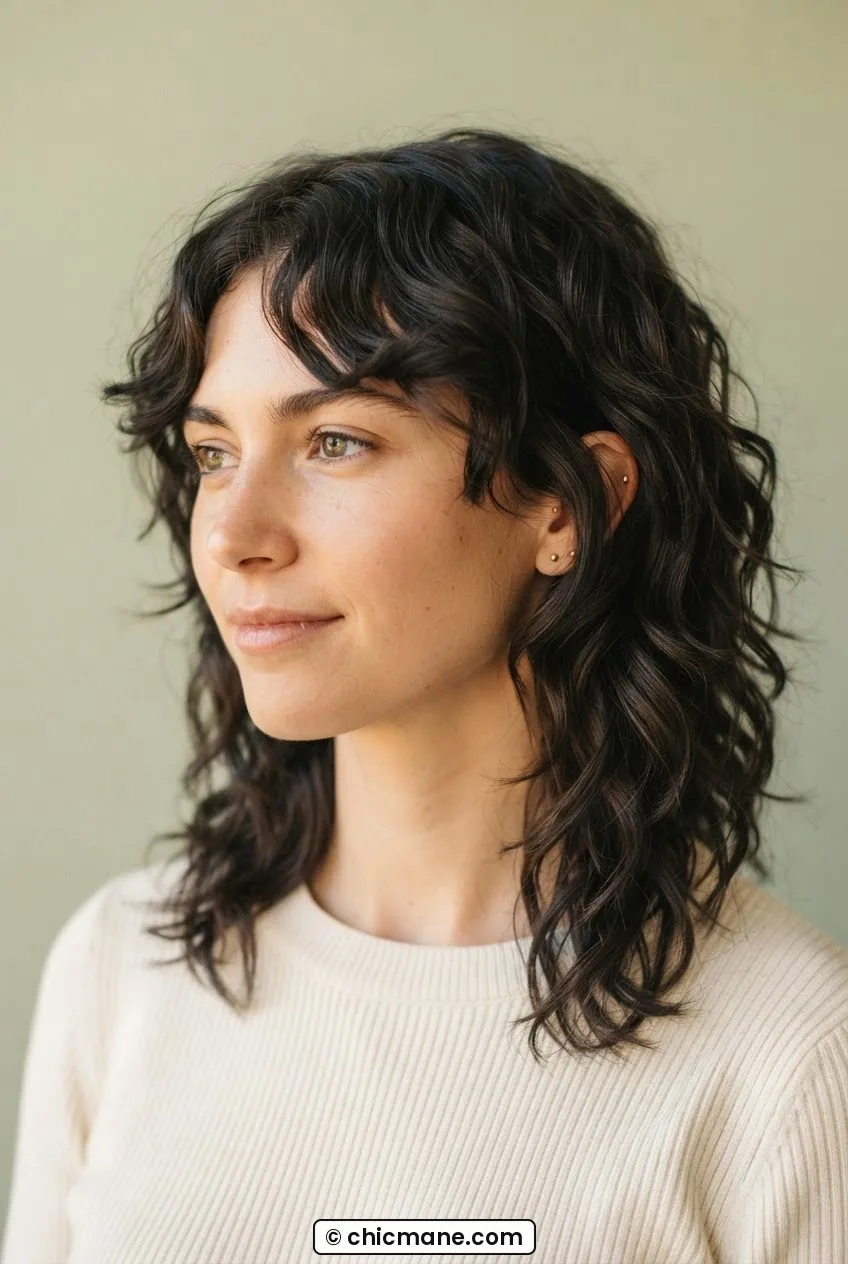
1. The Collarbone-Length Shag
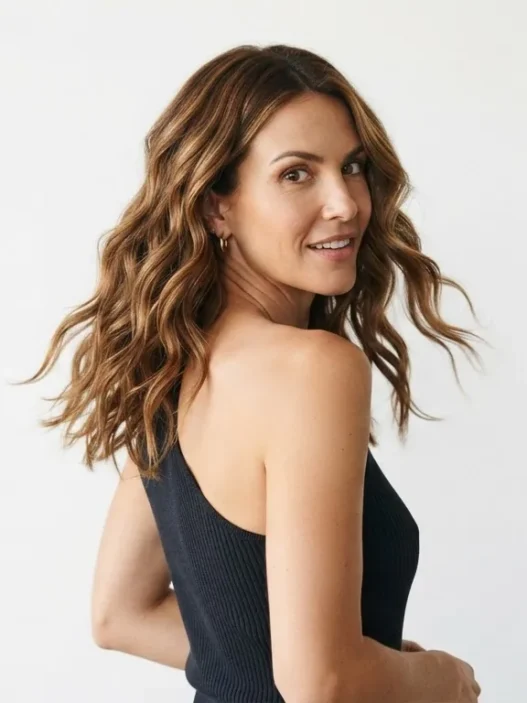
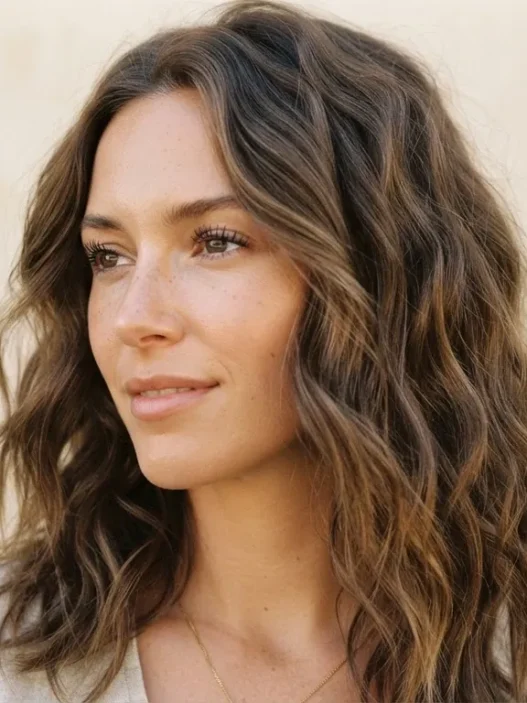
Cut: a shag with heavy interior layers, curtain bangs optional. The length sits right at the collarbone so when the wave shrinks up, it lands at a flattering mid-neck position. Ask your stylist to point-cut the ends on DRY hair — this is essential for type 2 waves. Cutting wet stretches the wave out and you end up losing an inch and a half of length you didn’t account for. I’ve seen this happen to people who went in for a trim and left with something almost chin-length. Look at the wave definition she’s got in this photo — that crinkled texture through the mid-shaft is exactly what interior layering does.
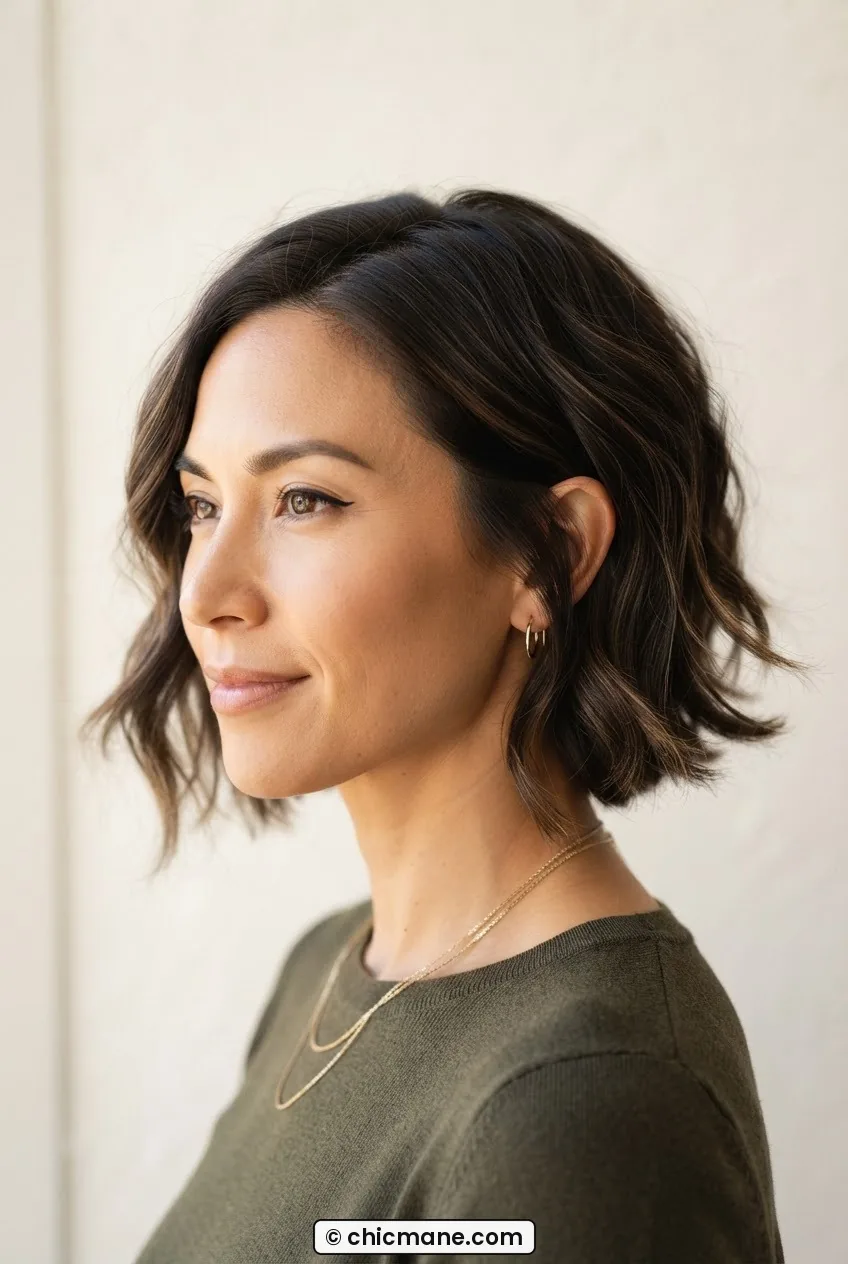
2. The Bixie with Tapered Ends
Somewhere between a bob and a pixie — hence bixie — with the ends tapered so they flick outward instead of dragging down. This one actually works well for 2B waves because the shorter length removes the weight that usually flattens them. Cut dry, definitely. Wet cutting a 2B bixie is how you end up with something that looks cute in the salon chair and then springs up into a poofy triangle the next morning.
3. The Soft Lob with Face-Framing Pieces
Classic long bob, but with two or three curtain-style face-framing pieces cut slightly shorter so they wave forward around the face. Cut the body of the lob wet if your stylist is precise about shrinkage — but those face-framing pieces should be shaped dry. For cute hairstyles for short hair that sit at this in-between length, the lob is honestly one of the most consistent performers for loose wave types. You get movement without the drama.

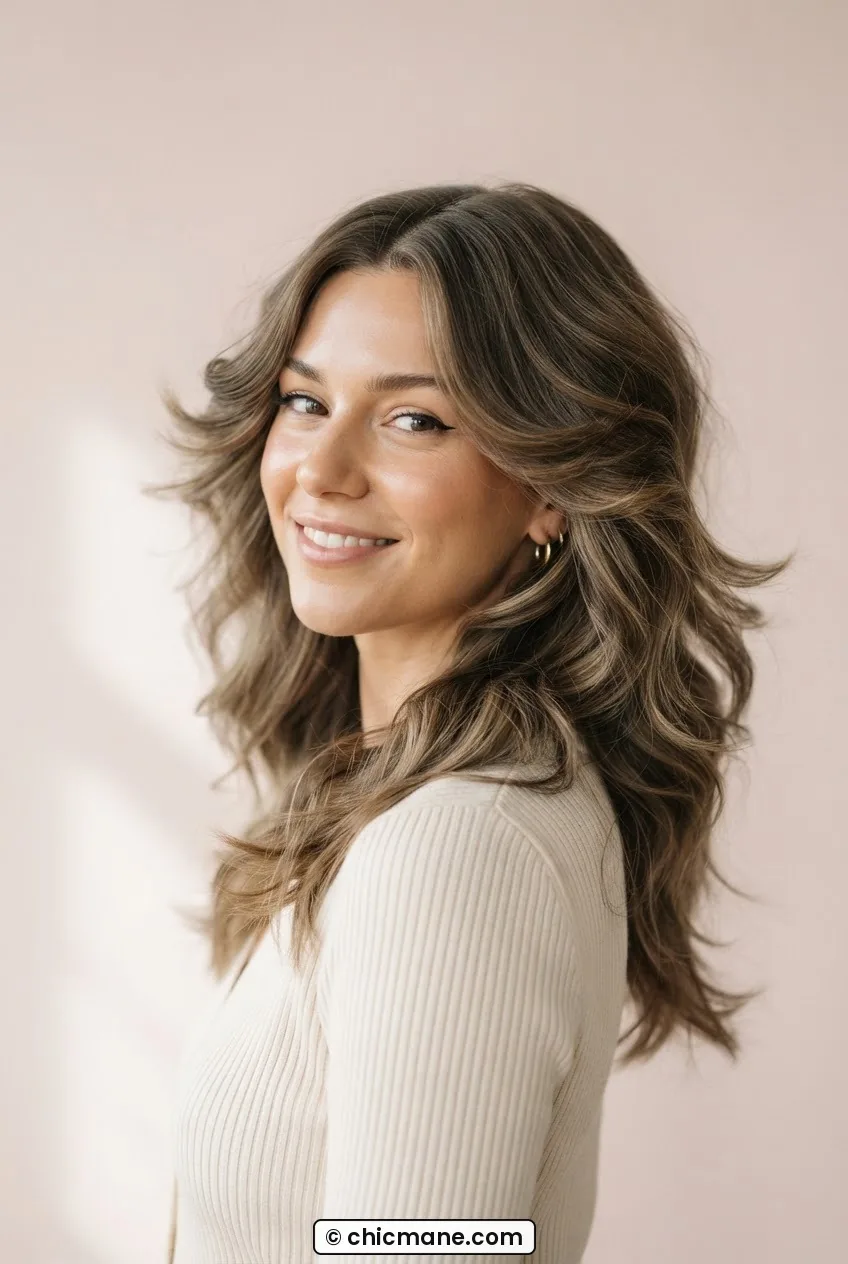
4. The Butterfly Cut
This one’s had a moment and I think it’s earned it, especially for 2C waves. Layers are cut in a way that creates a butterfly-wing silhouette when the hair is parted down the middle — shorter at the crown, flaring out at the sides. Ask for it cut DRY. Wet butterfly cuts tend to collapse the wings. Styling-wise, scrunch in a light mousse while damp and let it air dry without touching it. The result is big, romantic, and genuinely low-effort once you know your curl’s drying time.
Springy Curls
Type 3A through 3C. This is my territory, and honestly it’s the most varied category — a 3A curl behaves almost nothing like a 3C. But they share one trait: significant shrinkage, and a tendency to get huge and undefined if the cut isn’t removing bulk in the right places. These styles all deal with that. To understand how different curl patterns respond to the same cut, the breakdown on hair inspiration styles matched to your curl pattern is worth reading before your next appointment — it’s genuinely useful for knowing what to ask for.
5. The Curly Bob (DevaCut Style)
Cut dry, curl by curl, with the head in its natural position. The DevaCut method was built for exactly this pattern range. A curly bob for 3A-3B sits anywhere from chin to shoulder depending on your shrinkage — tell your stylist your desired dry length, not your desired wet length. She’s wearing hers tucked behind one ear in this shot and the volume distribution is so even. That’s what a well-executed curly bob looks like at rest.
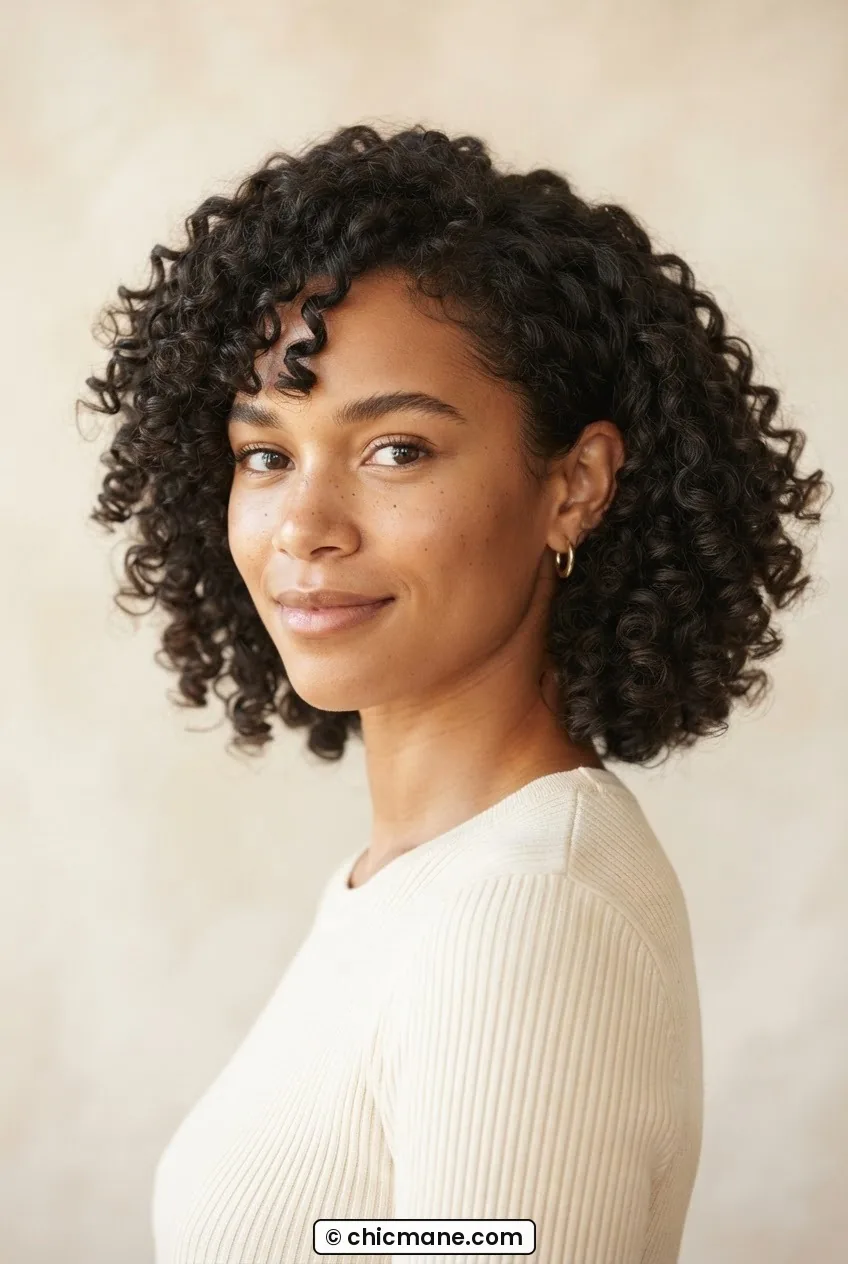
Personal pick: the curly bob is the cut I always come back to after experimenting with length. It removes enough bulk that my 3A-ish sections don’t swallow my 3B sections, and it photographs well in literally every lighting condition. If you’re unsure what to ask for at your next appointment, start here.
6. The Elongated Wolf Cut
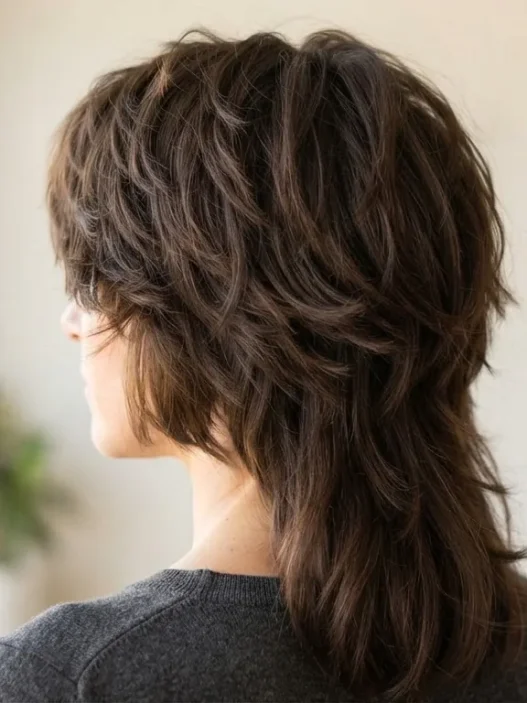
A wolf cut for 3B curls is almost a different category from the wavy version. The layers need to be much more graduated — too blunt and you get a triangle, too short and the top layer frizzes out as its own separate entity. Best cut dry, with the stylist working in sections and checking the curl-by-curl balance. If you know you have layered cuts for curly hair bookmarked somewhere, bring a screenshot to your consultation — stylists respond well to visual references for this particular cut.

7. The Wash-and-Go with a Dusting
Not really a “cut” in the traditional sense — more of a maintenance trim that keeps the shape without disrupting the natural curl pattern. A dusting removes split ends without taking off length: the stylist twists each curl and snips only the very tips that stick out. Done wet. This is the move when your curls are thriving but the ends are starting to fray. I do this every eight to ten weeks and it’s the reason my length has actually grown over the past year. If you want to keep your curls intact between appointments, the approach outlined in natural hair styles that don’t disturb your curl pattern is exactly what I follow at home.

8. The Layered Half-Up with Twisted Crown
This is a style, not a cut — but it requires a specific haircut underneath it to work properly. You need layers that start at the crown and blend into the length so when you pull the top half up and twist it, the layers below fall in a cascade rather than a blunt wall. The cut itself should be done dry on a 3B-3C texture. Then styling is simple: take the top section while hair is fully dry, twist loosely, pin. Done. It’s one of the fastest open hairstyle options I know for a busy morning.
9. The 3C Frohawk
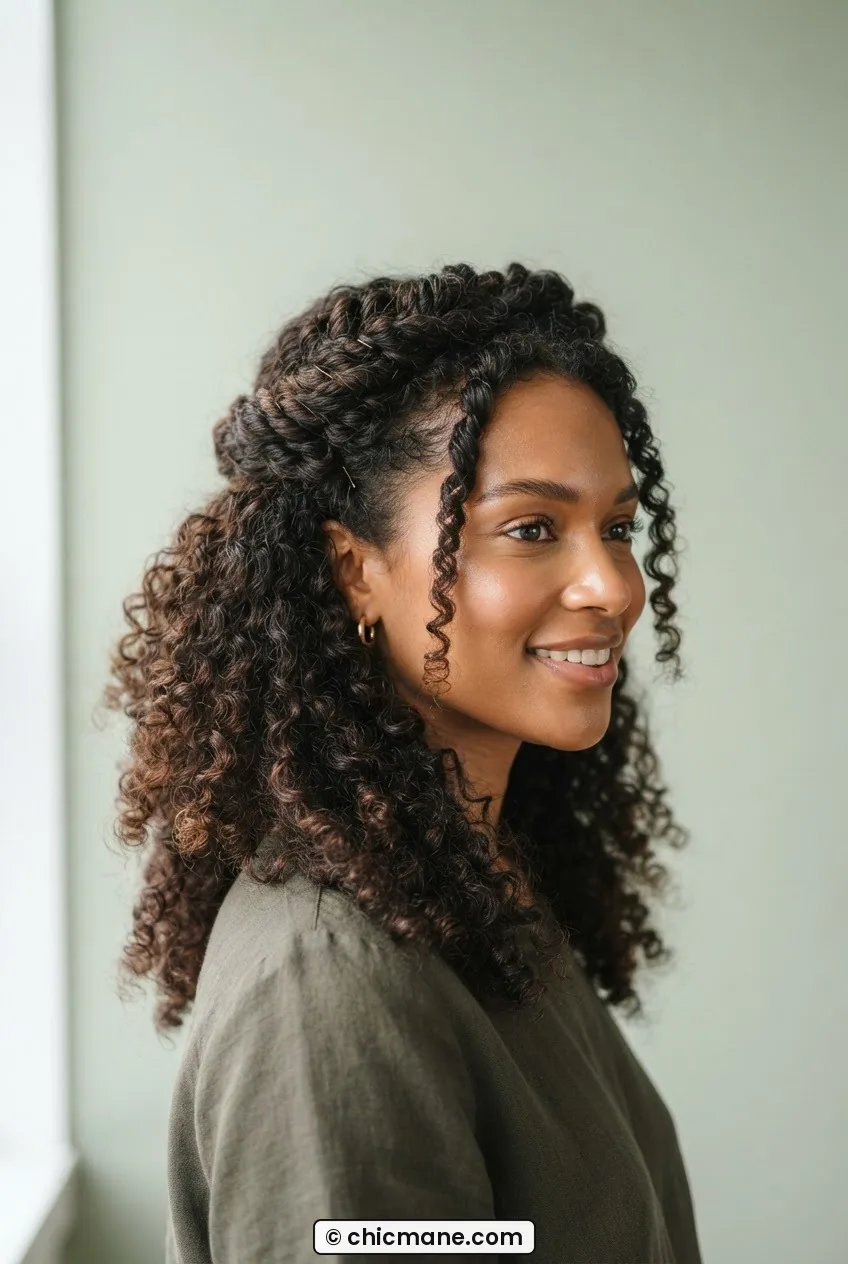
For tighter 3C curls, a frohawk — where the sides are either smoothed down or braided flat and the crown section is left to expand — is one of the most stunning styles out there. No actual cutting required, though the shape is helped by having some length uniformity at the crown. This is a wet-style: apply your leave-in conditioner and gel to damp hair, braid or smooth the sides, then let the top section dry fully before releasing it. The definition you get is worth the wait.

A Tutorial That Finally Gets the 3B Bob Right
Tight Coils
Type 4A through 4C. This is where the one-size approach completely falls apart. A 4C coil has shrinkage of up to 75% — which means a cut that looks like a TWA (teeny weeny afro) in the salon might reveal itself as something much shorter once the moisture fully dries. All of these styles account for that reality. And if you’re still fuzzy on what terms like TWA, shrinkage, or porosity actually mean when people throw them around, the guide to curly hair style words that confuse everyone is a genuinely helpful read.
10. The Tapered TWA
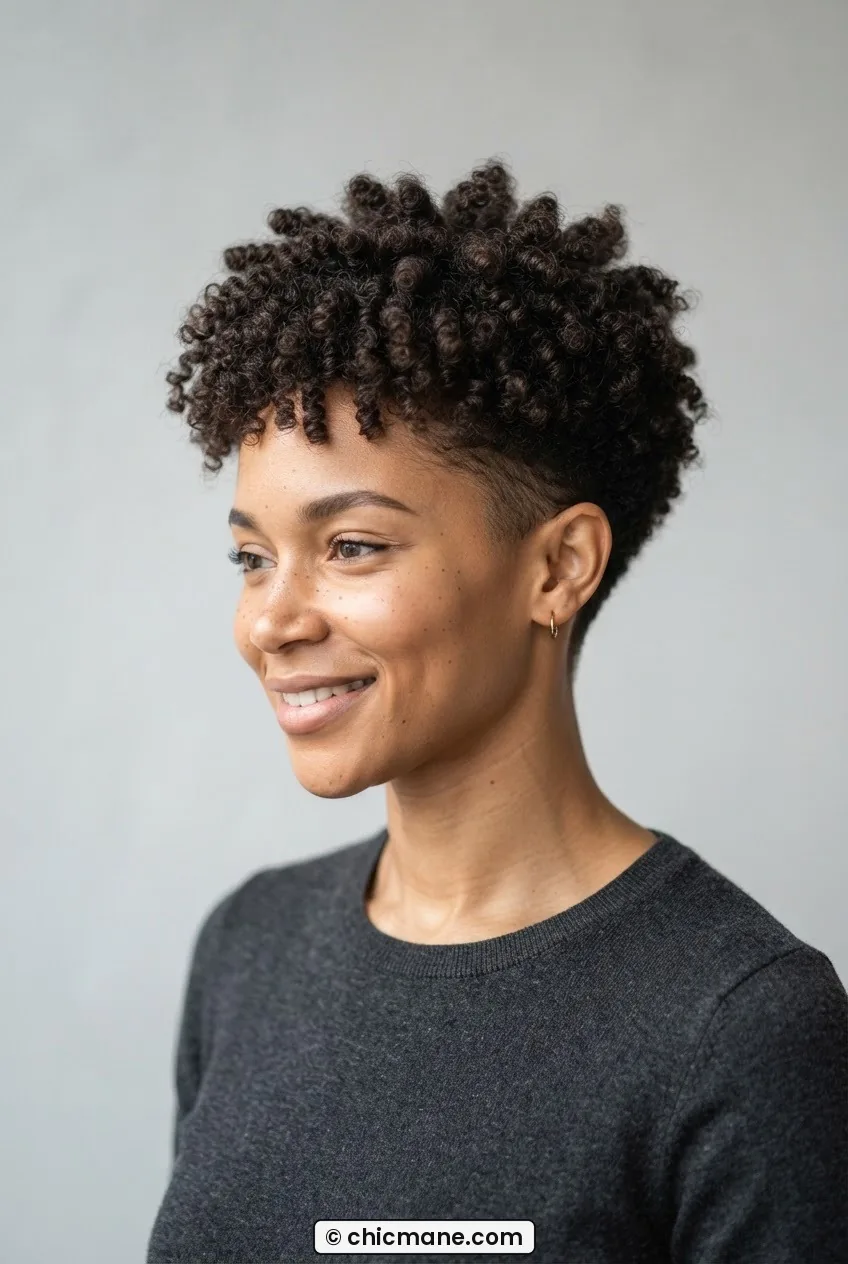
A tapered TWA has a close fade or taper at the sides and nape, with more length and volume at the crown. It’s one of the most architectural cute curly styles for 4A-4B textures. Cut dry — always — so the stylist can see exactly where the coil sits at rest. The contrast between the tapered sides and the crown volume creates a really intentional shape that grows out beautifully too. She’s got hers sitting about two inches at the crown in this shot and the definition is immaculate.
11. The Defined Twist-Out on Grown-Out Length
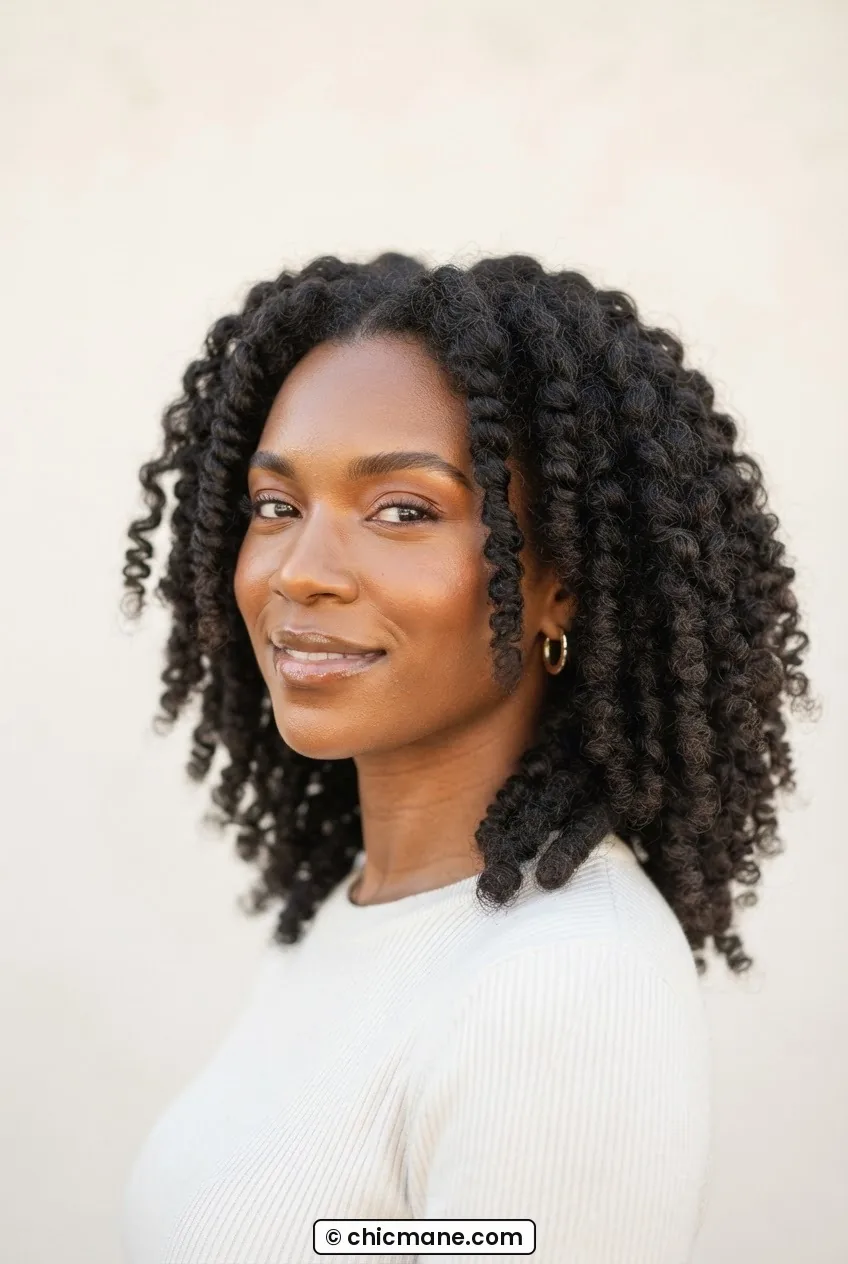
A twist-out is a style, obviously — but it works best with a specific haircut: minimal layers, relatively uniform length, so the twists unravel evenly. For 4B-4C coils, style on soaking wet hair with a thick cream, twist tightly in sections, and let dry completely before unraveling. Rushing the unravel is the most common mistake. Partially damp coils lose their definition within the hour. Twist-out technique varies slightly by coil tightness, so look for tutorials that specifically show your type.
12. The Full Natural Afro with Shaped Perimeter
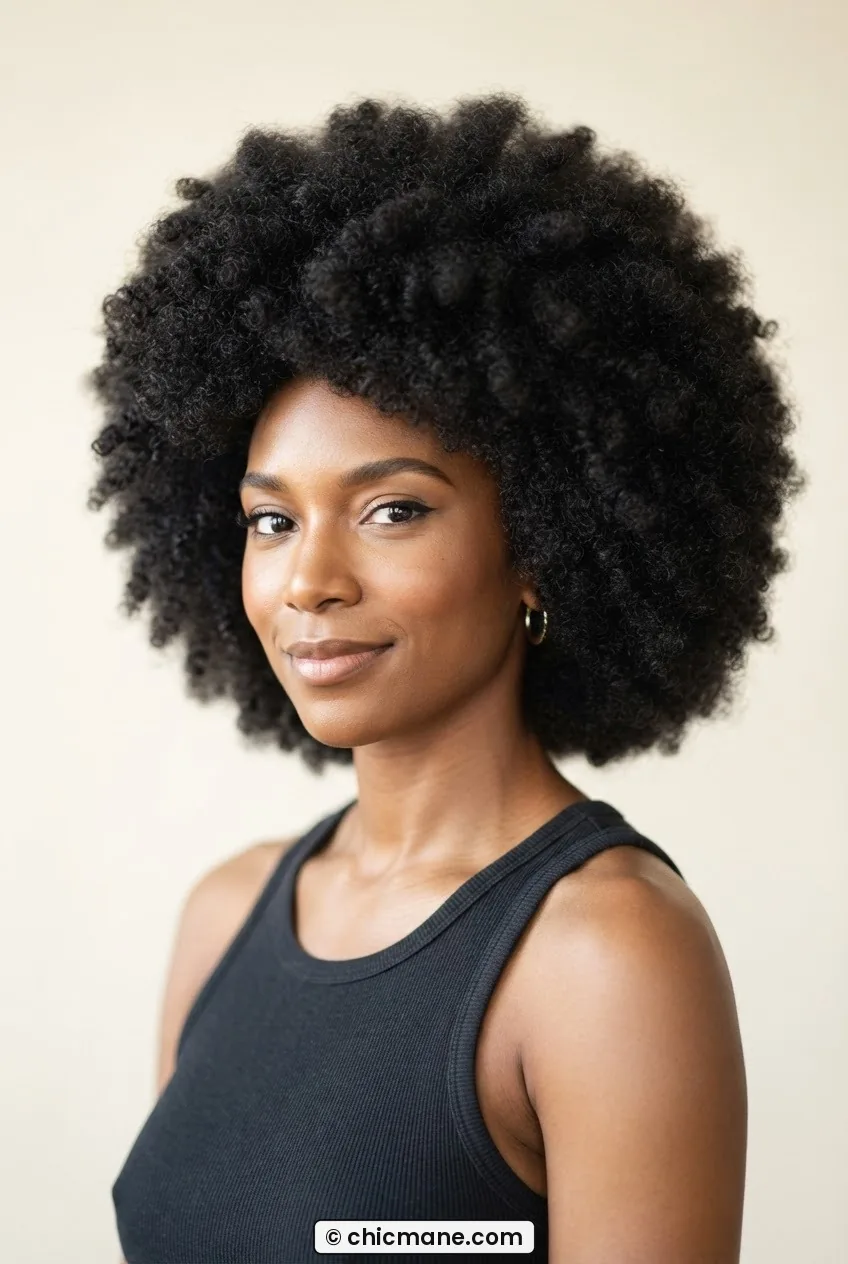
The afro is not a low-maintenance style pretending to be one. It’s a high-craft style that requires consistent shaping to keep the perimeter round and symmetrical — because coils grow at different rates in different sections. Cut the perimeter dry, using an afro pick to lift the hair to its full natural height first, then trim to shape. The pick-then-trim method is the only way to get an honest look at where the silhouette actually sits. This is one of the most powerful and beautiful styles in the whole texture range, and it deserves that level of care.
Questions I Get About This
Should I always ask for a dry curly haircut?
Not always — but for anything above a type 2C, dry cutting is almost always more accurate. Wet cutting is fine for a basic length trim on looser waves, but once you’re into springy curls and coils, the shrinkage factor makes wet cuts genuinely risky. Ask your stylist what they prefer and why. If they say wet without hesitation on a 4A texture, that’s a red flag worth discussing.
What’s the single most common cutting mistake for curly hair?
Blunt cutting across multiple curl types in the same head of hair. Most people have more than one curl pattern — tighter underneath, looser at the top — and cutting everything at the same angle creates a shape that works for neither. The fix is sectioning by curl pattern and adjusting the technique for each zone. It takes longer. It’s worth it every single time.
How do I figure out my actual curl type before going to the salon?
Wash your hair with no product, let it air dry completely without touching it, and then look at it in natural light. What you see is your actual curl pattern — not the stretched version, not the product-enhanced version. Take photos from multiple angles. Bring those photos to your appointment. It’s the clearest brief you can give a stylist, and most of them will appreciate it enormously.
Can I switch between these styles without damaging my curl pattern?
Yes, as long as you’re not using heat to switch between them. Transitioning from a twist-out to a wash-and-go or a frohawk is all low-manipulation territory. Where curl patterns get damaged is repeated heat styling, over-manipulation while wet, and elastic bands pulled too tight too often. The styles in this list are all built around working with the natural texture — so switching between them is actually a healthy way to keep your hair engaged without stressing it.
Okay, that’s the whole list. Twelve styles across three curl bands — and the one thing I really want you to take away is that asking for the right cut is as important as learning the right styling routine. If the cut isn’t right for your pattern, no amount of gel or diffusing will save it. Get the foundation right, then have fun with everything else. Your curls will catch up, I promise.