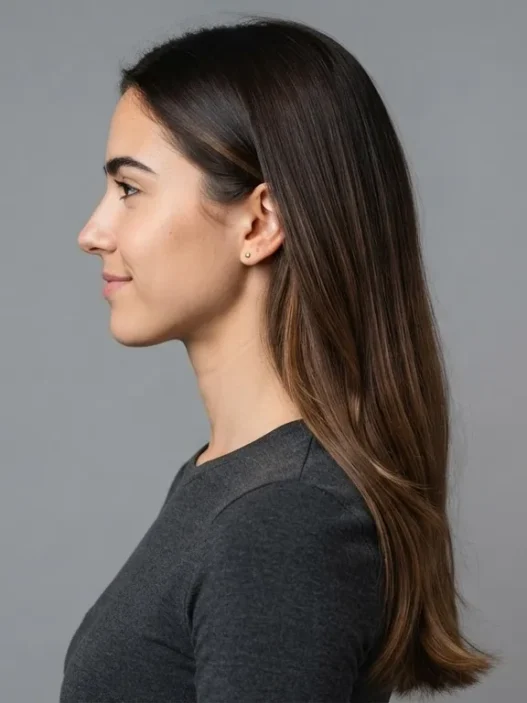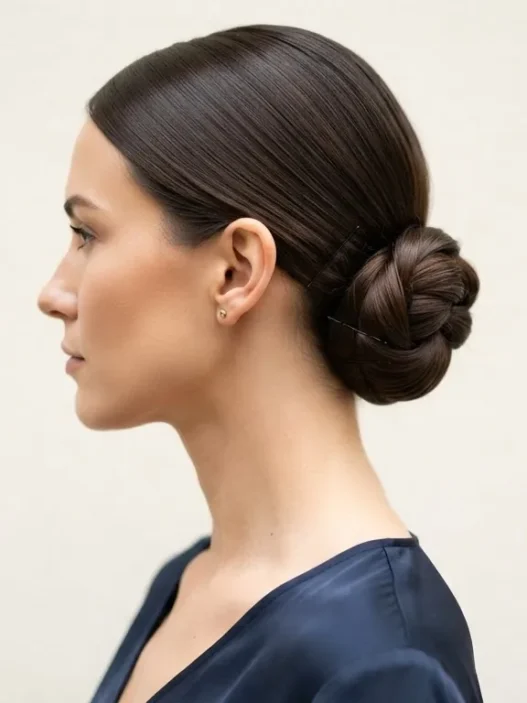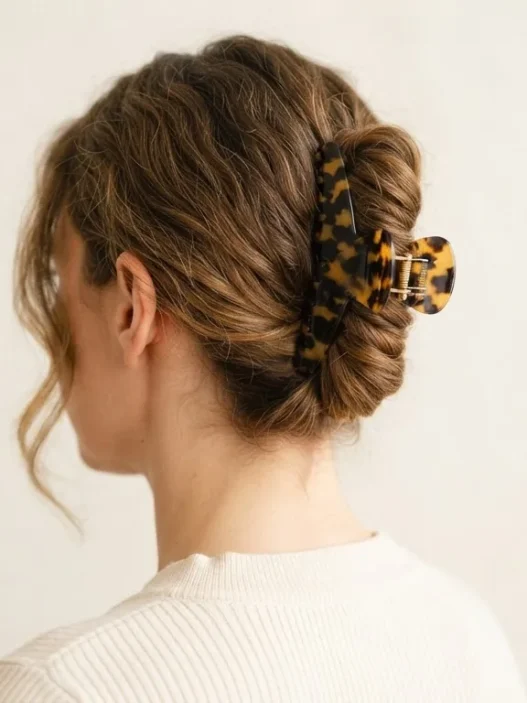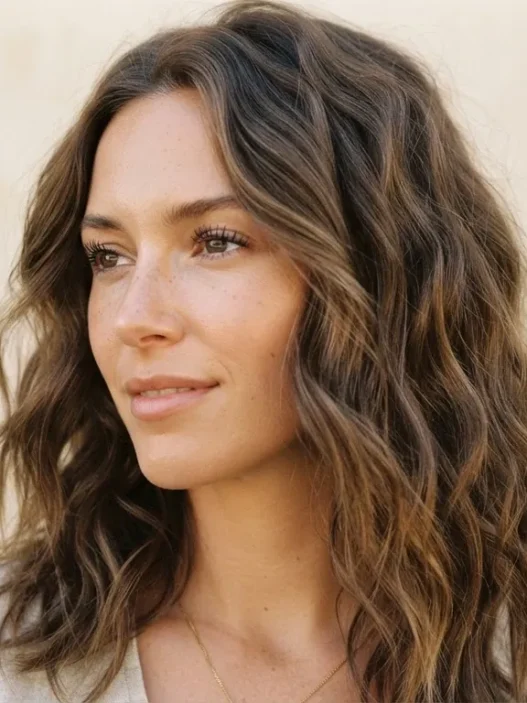







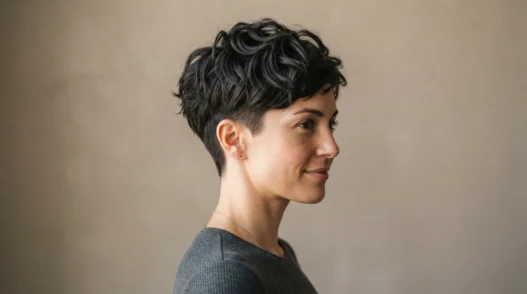
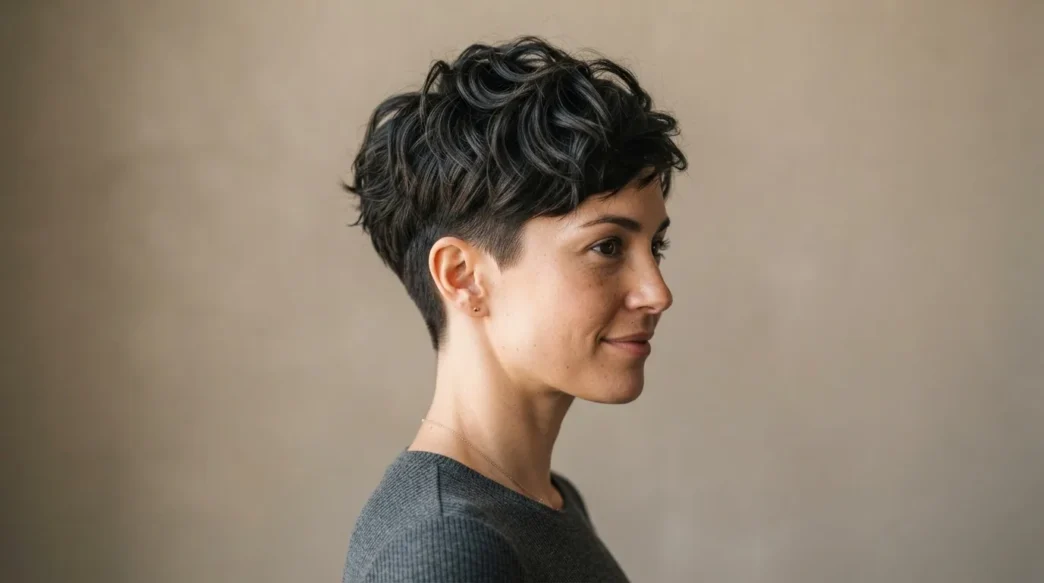
I used to think short hair was one thing — chop it off, figure it out, repeat. Then I started actually paying attention to the length bands between the two extremes, and it completely changed how I talk about cuts. There’s a huge difference between a micro pixie and a chin-length bob, even though both technically count as “short.” So I sorted everything. Pixie and crop at the top, then chin to jaw, then collarbone, then just past the shoulder for the commitment-phobes. Sixteen cute hairstyles for short hair across four bands — with the most detail in the middle, because honestly that’s where most of us actually live.
What’s Inside: Your Short Hair Style Map
Pixie and Crop Length
This is the band that takes the most nerve and gives back the most drama. Once you’re here, there’s nowhere to hide — which sounds terrifying, but is actually incredibly freeing. Your neck, your face shape, your cheekbones: all of it gets to be the star. These four cuts are my favorite arguments for going all the way short.
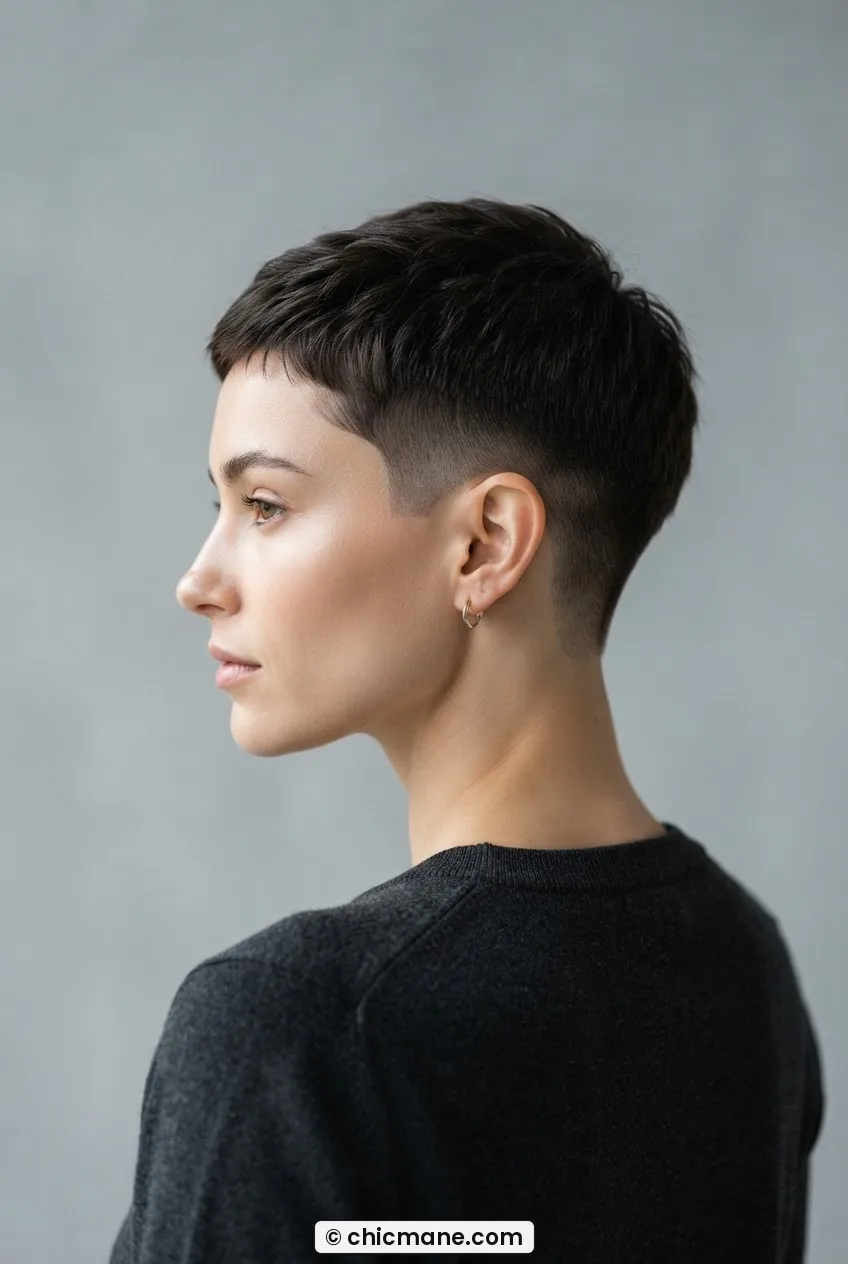
1. Micro Pixie With Tapered Nape
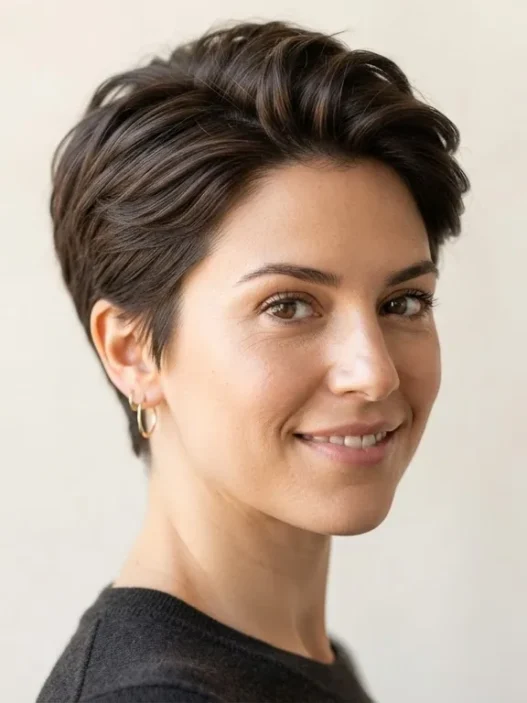
The shortest cut on this list, and genuinely the most sculptural. Everything is clipped close at the sides and nape, with just a little texture left on top — sometimes a soft quiff, sometimes a few wispy pieces swept to one side. Look at her in the photo: that tapering at the nape is what makes this feel intentional rather than just “short.” It’s architectural. It also happens to be the lowest-maintenance cut you can own because there’s almost nothing to style. A little pomade on your fingertips, work it through the top, done.
2. Classic Pixie With Side-Swept Fringe
The pixie that launched a thousand mood boards. Longer on top than the micro, with a soft fringe that sweeps across the forehead — usually falling somewhere between the brow and the eye. This one works on almost every face shape because the diagonal of the fringe cuts across whatever geometry you’ve got. Round faces, square jaws, narrow foreheads — the sweep is your friend. Pixie cuts by face shape can go deeper on the geometry if you’re unsure which version suits you.
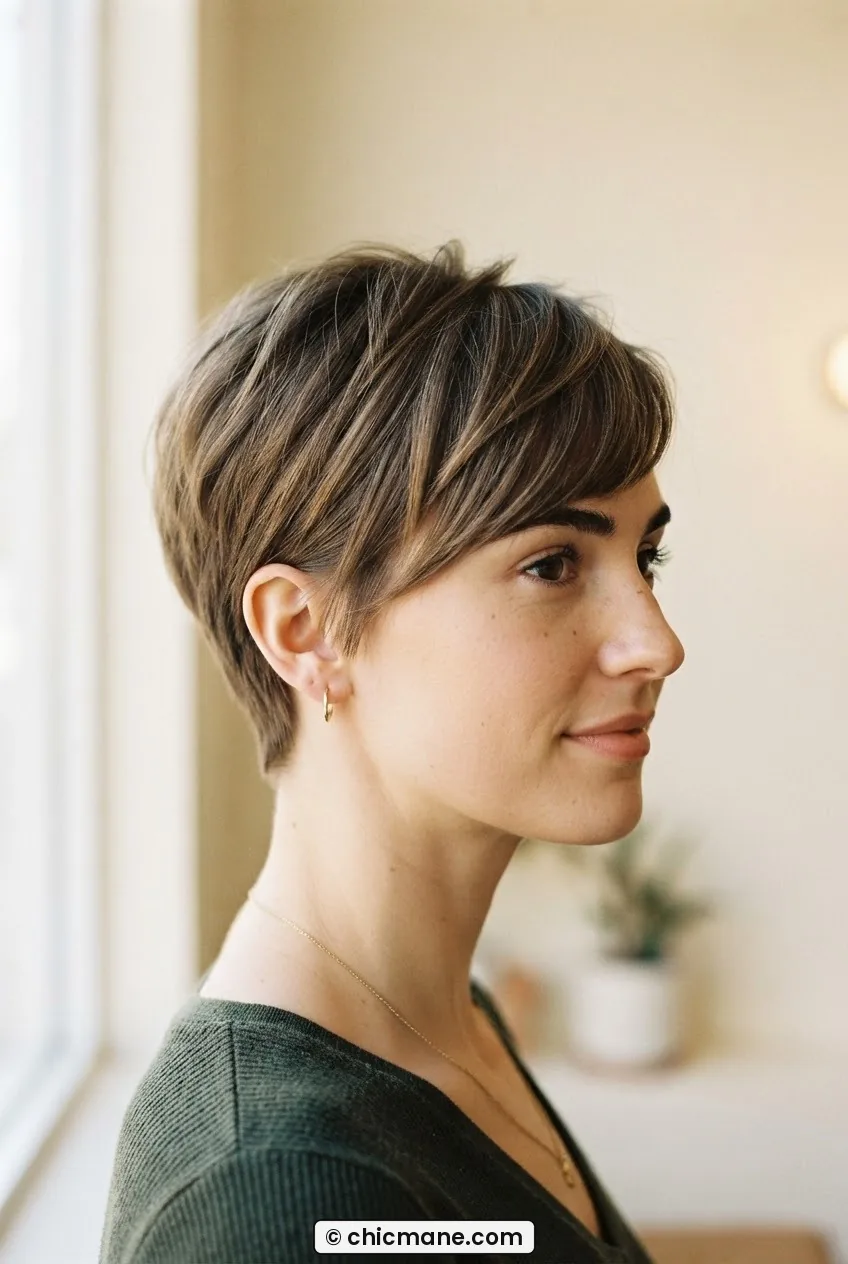
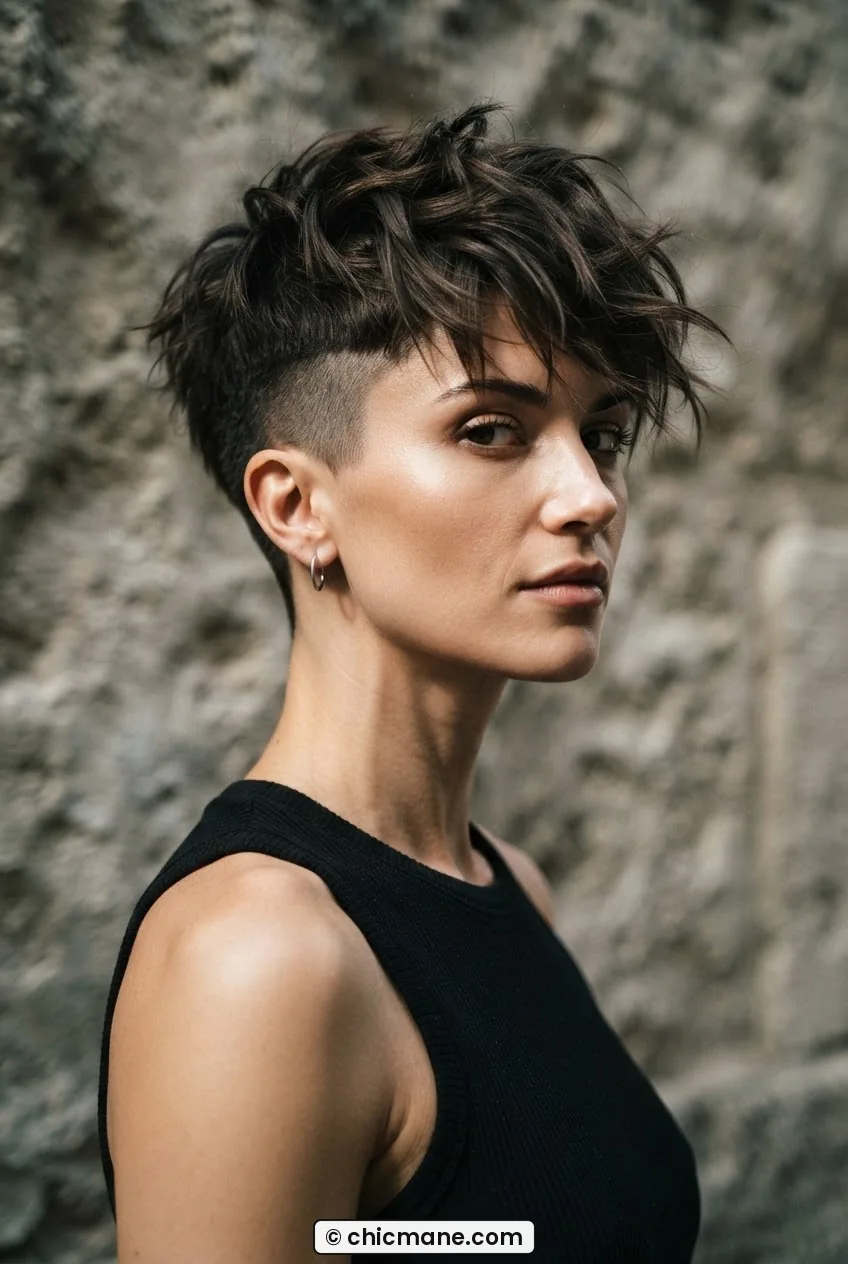
3. Textured Crop With Disconnected Undercut
This is the edgier cousin of the classic pixie. The top section is kept longer and heavily textured — think piecey, lived-in, almost deliberately messy — while the sides are shaved or clipped very close with a visible disconnection line. It’s a bold contrast. She’s wearing hers with the top swept slightly forward, and that forward push is exactly what gives the cut its attitude. I love this for thick hair especially because the disconnection removes weight without sacrificing the drama on top.
4. Shaggy Crop With Curtain Fringe
Part pixie, part mini-shag. The curtain fringe parts in the middle and falls on either side of the forehead while the rest of the cut has lots of soft layers and movement. It reads more feminine and relaxed than the other crops on this list — almost retro in the best way. This is what I’d recommend if someone loves the idea of a pixie but feels nervous about looking “too severe.” The curtain fringe softens everything. For more ideas across the full spectrum of hairstyles from crop to waist, that range is huge and worth exploring before committing.
See the Wolf Cut Transformation Live
Chin to Jaw
This is the band I think about most. It’s where I’ve spent the majority of my own hair history, where I’ve seen the widest range of styles work on the widest range of people, and where a single inch in either direction changes everything about how a cut reads. Chin to jaw is endlessly versatile — and it’s where cute hairstyles for short hair really hit their stride.
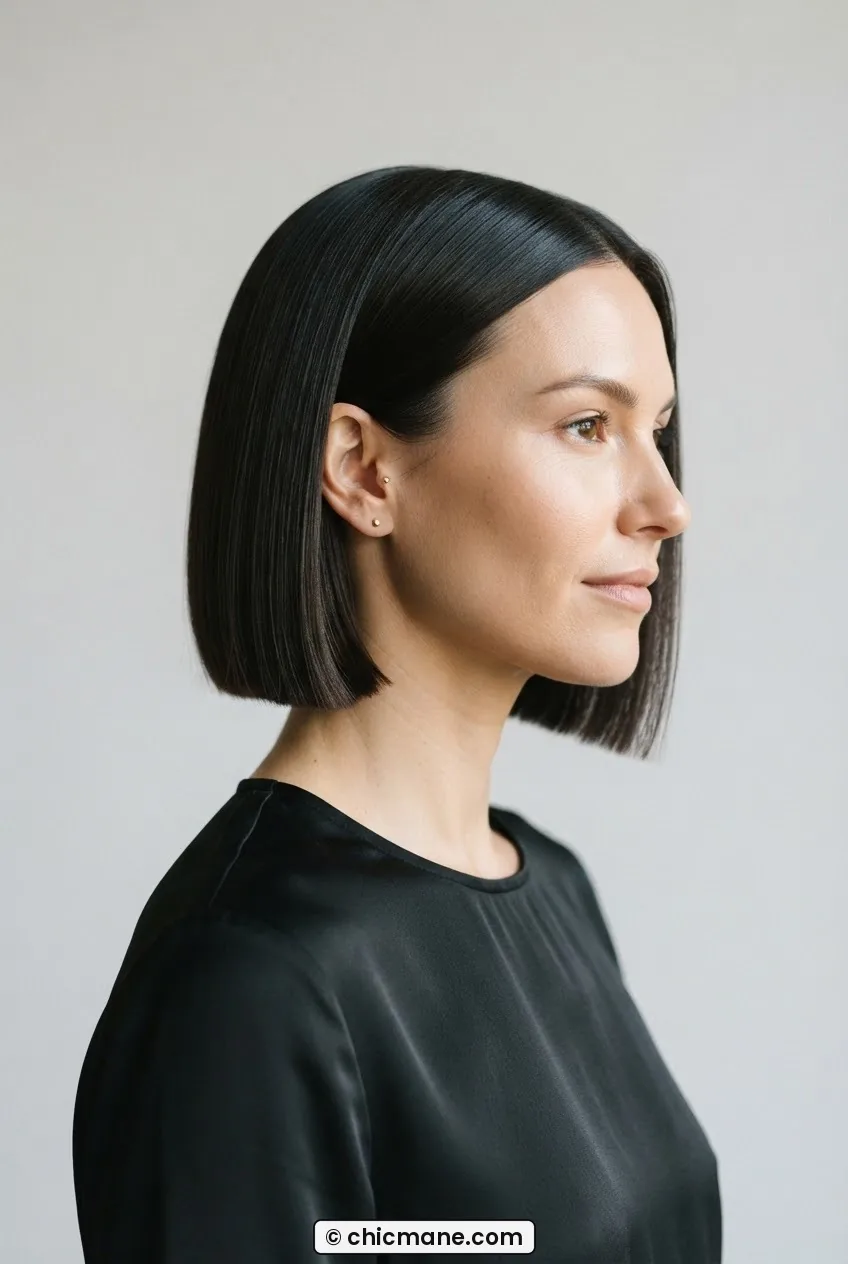
5. Blunt Chin-Length Bob
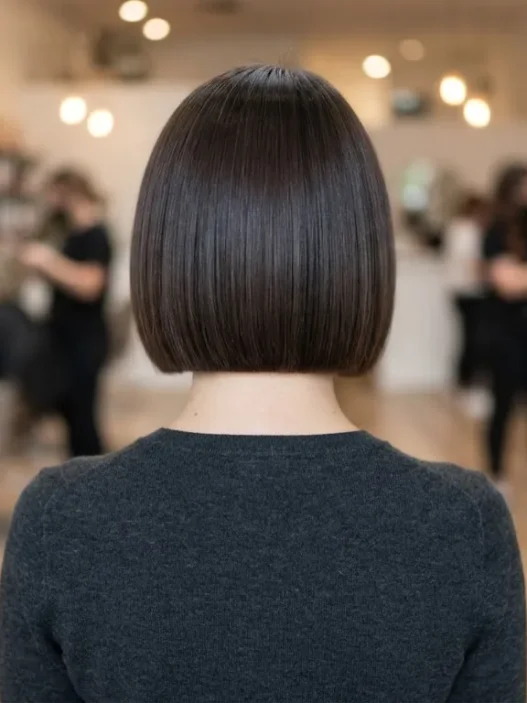
The one that started it all. A blunt bob sitting right at the chin is one of those cuts that has never actually gone out of style — it just gets reimagined in every decade. Right now in 2026 the move is to wear it with a very clean, glassy finish, no layers, all weight concentrated at that bottom line. It frames the jaw in a way that feels both bold and completely wearable. On fine hair this is especially good because the blunt line creates the illusion of density. See how her ends hit right at the point of her chin in the photo? That precision is everything — a half inch too long and you lose it.
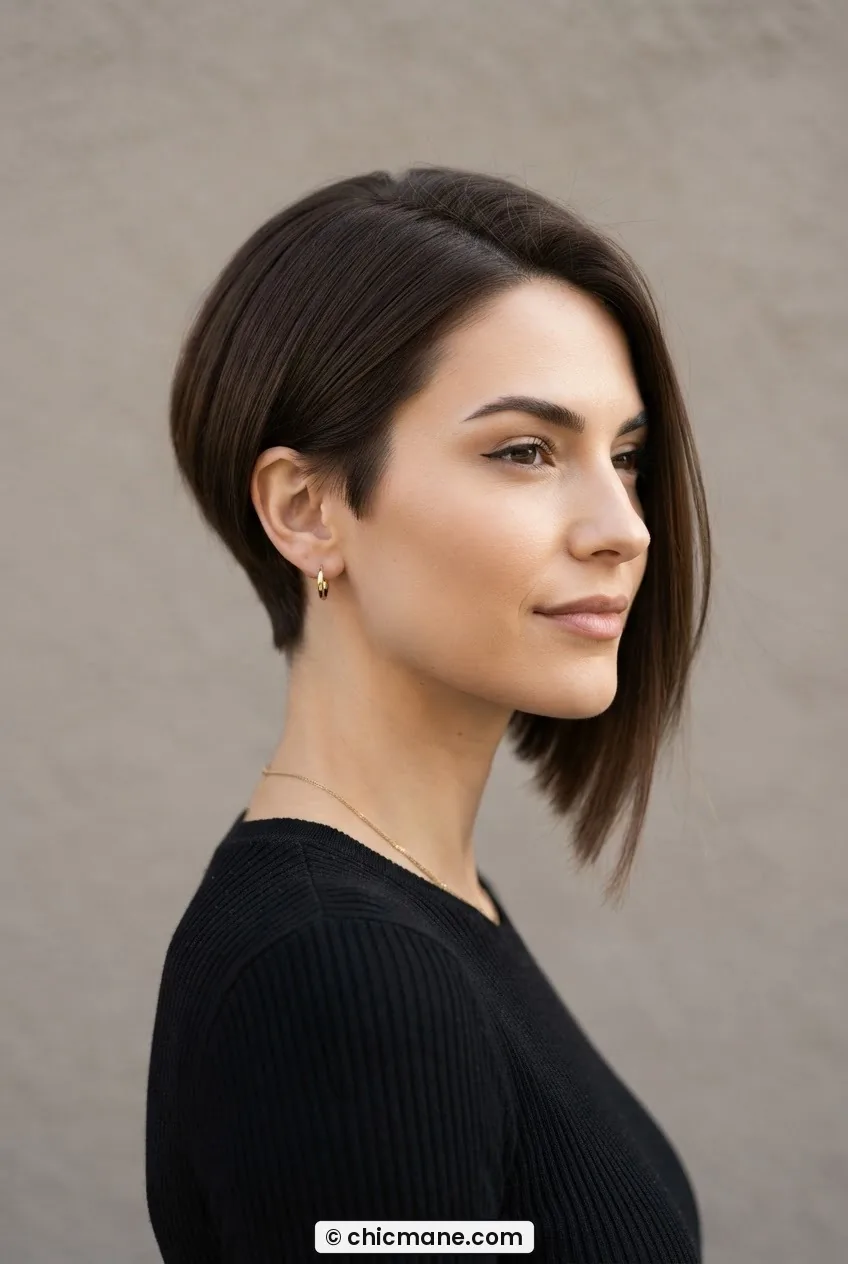
6. Asymmetrical Bob
One side longer than the other. It sounds simple because it is — but the execution is everything. The best asymmetrical bobs have a long side that grazes the jaw or cheek, and a short side that sits closer to the ear. The contrast creates movement even when the hair itself isn’t moving. I find this one especially interesting on people who feel like standard bobs are “too safe” for them. If you want something that actually turns heads when you walk into a room, an asymmetrical bob is a very efficient way to do it without going full pixie. Learning how to do a short bob on short hair is genuinely useful if you’re thinking about taking this one to a new stylist — understanding the technique helps you communicate what you want.
7. Jaw-Length Wolf Cut
Yes, the wolf cut works at this length. The key is lots of layers — shaggy, disconnected layers that create that signature lived-in volume on top and wispy, almost curtain-like ends at the bottom. At jaw length, it reads more like a choppy shag than a full-on wolf, which is honestly a good thing. It’s softer. She’s got hers styled with a little root lift and the ends flipped out slightly, and that combination gives the cut its bite. If you’ve got wavy texture naturally, this length and style will work with almost zero effort on your part. Wolf cut styling guide is worth reading before your appointment so you know what products to ask your stylist about.
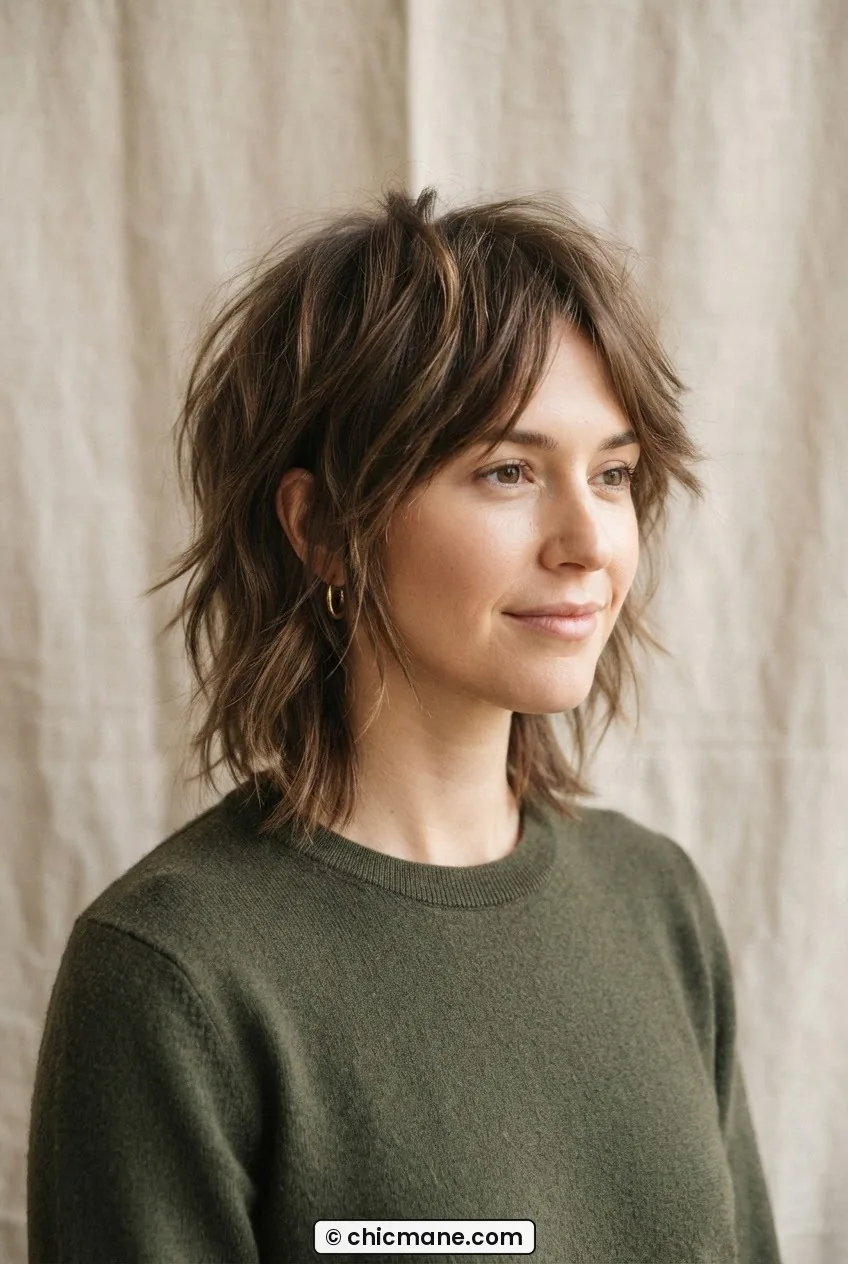
My personal pick in this whole lineup is the jaw-length wolf cut. I convinced someone close to me to try it last year and she called me two weeks after her appointment to say it was the best hair decision she’d ever made. The layers do the work for you — it genuinely looks styled even when it isn’t.
8. Textured Bob With Bangs
A bob with fringe — specifically, a blunt or slightly wispy fringe that sits just above the brows. The rest of the bob has layers worked through it to create texture and movement rather than a stiff, helmet-like shape. This is the combination that comes up constantly in my feed and in client inspiration photos, and for good reason: the bangs reframe your face entirely, and the textured bob keeps the overall look light. It’s one of the most complete cute short hairstyles you can ask for because every angle looks intentional. The fringe also makes growing out the length feel less awkward — there’s always something to style.

9. Bixie — The Bob-Pixie Hybrid
Longer than a pixie, shorter than a proper bob. The bixie sits right in the no-man’s-land between the two and manages to be its own thing rather than just an awkward in-between. Think pixie-length at the back and sides, but with more length left at the front — sometimes enough to tuck behind the ear, sometimes enough to frame the cheek. It’s a forgiving cut because you have options. Pin the front back on days you want it off your face; let it fall forward when you want a softer look. For anyone wondering what to do with short hair when there isn’t much length to work with, the bixie is exactly the kind of shape that works with minimal length while still looking deliberate.
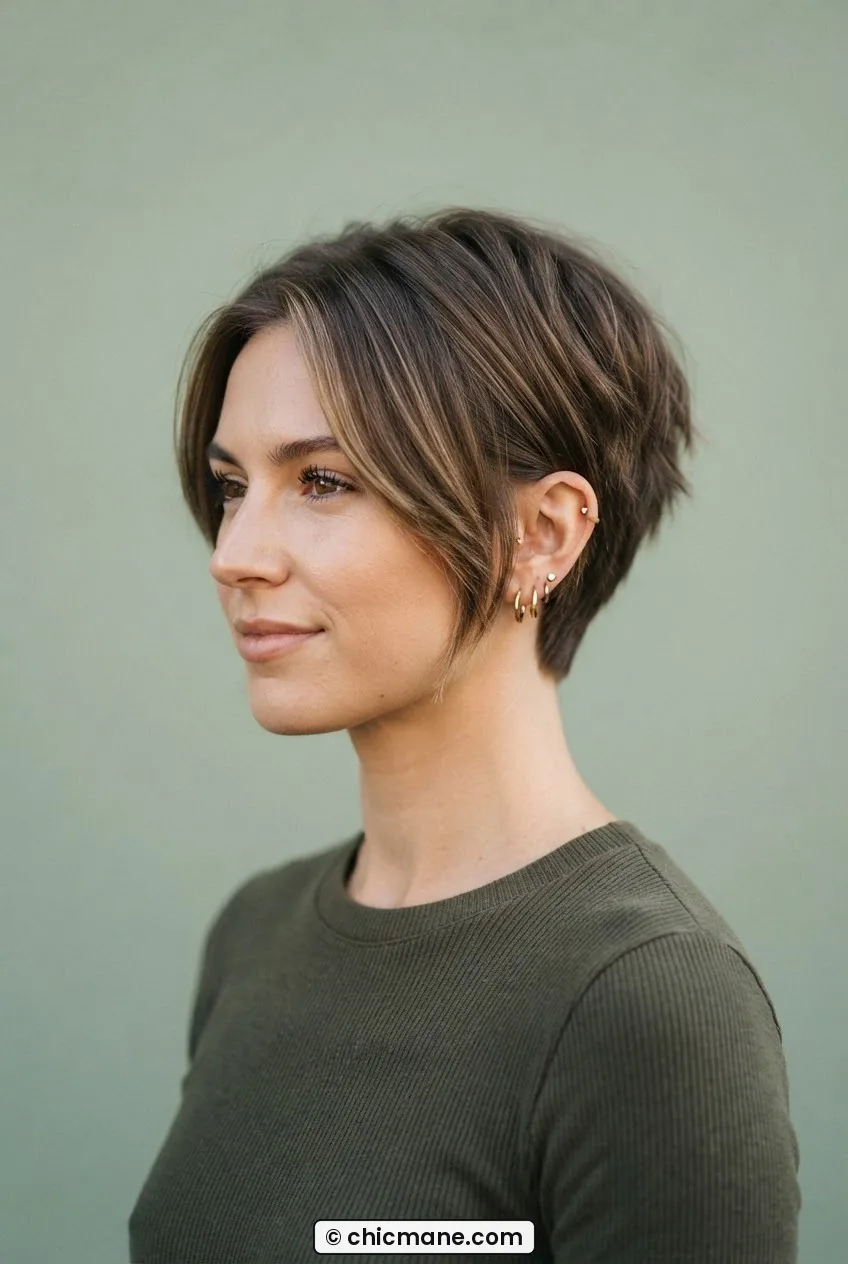
Collarbone
Collarbone length is where short hair starts negotiating with medium. It’s a smart place to land if you want versatility — you can still put it up (barely, but you can), you can wear it loose, and it falls long enough to style with more heat tools. This band rewards texture more than any other.
10. Lob With Face-Framing Layers
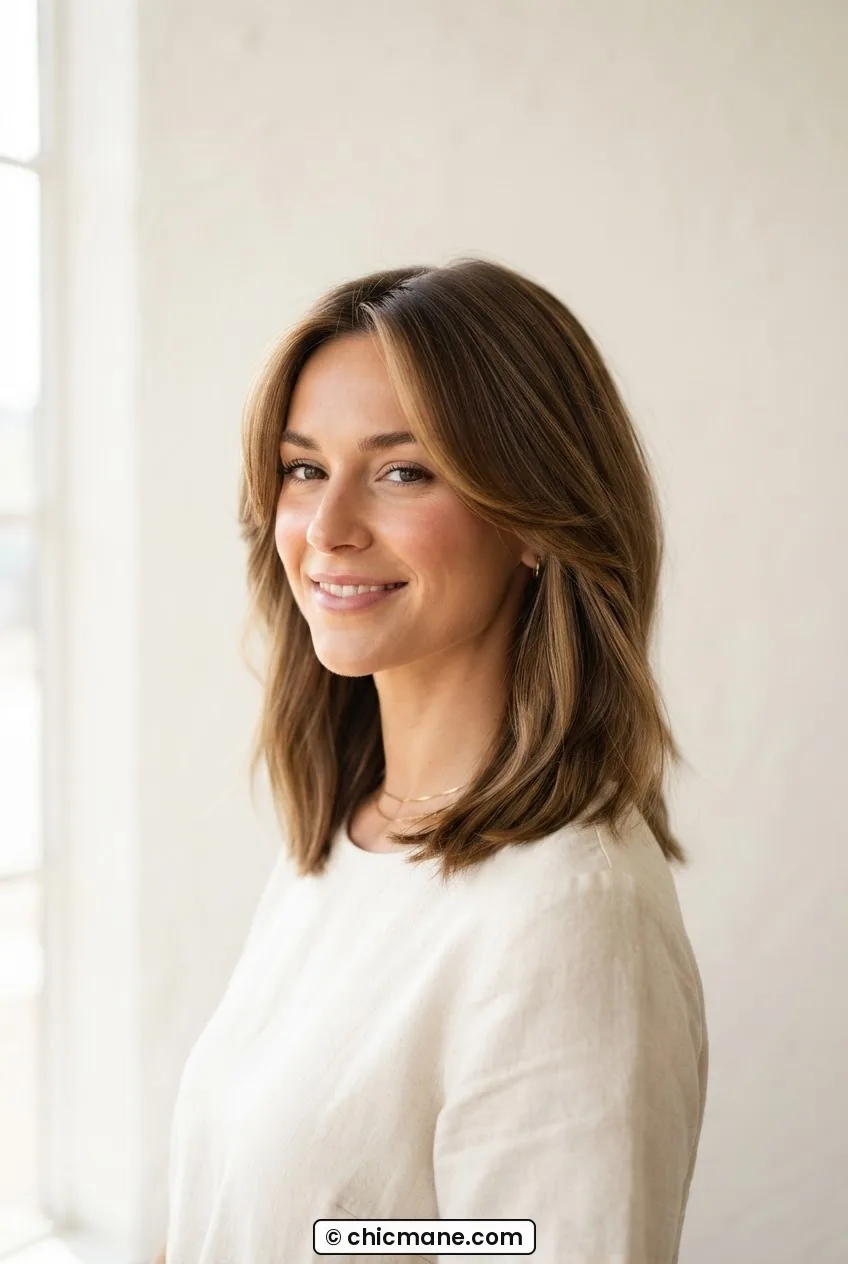
The lob — long bob — at collarbone length with layers specifically cut to frame the face is one of the most universally flattering things a stylist can do. The face-framing pieces sit shorter at the front, pulling the eye inward toward your features, while the rest of the length stays at the collarbone. It’s a cut that photographs beautifully because of the dimension those layers create. Look at the way the light catches her shorter front pieces differently from the body of the cut — that contrast is the whole point. On straight hair this looks sleek and intentional; on wavy hair it looks effortlessly cool.
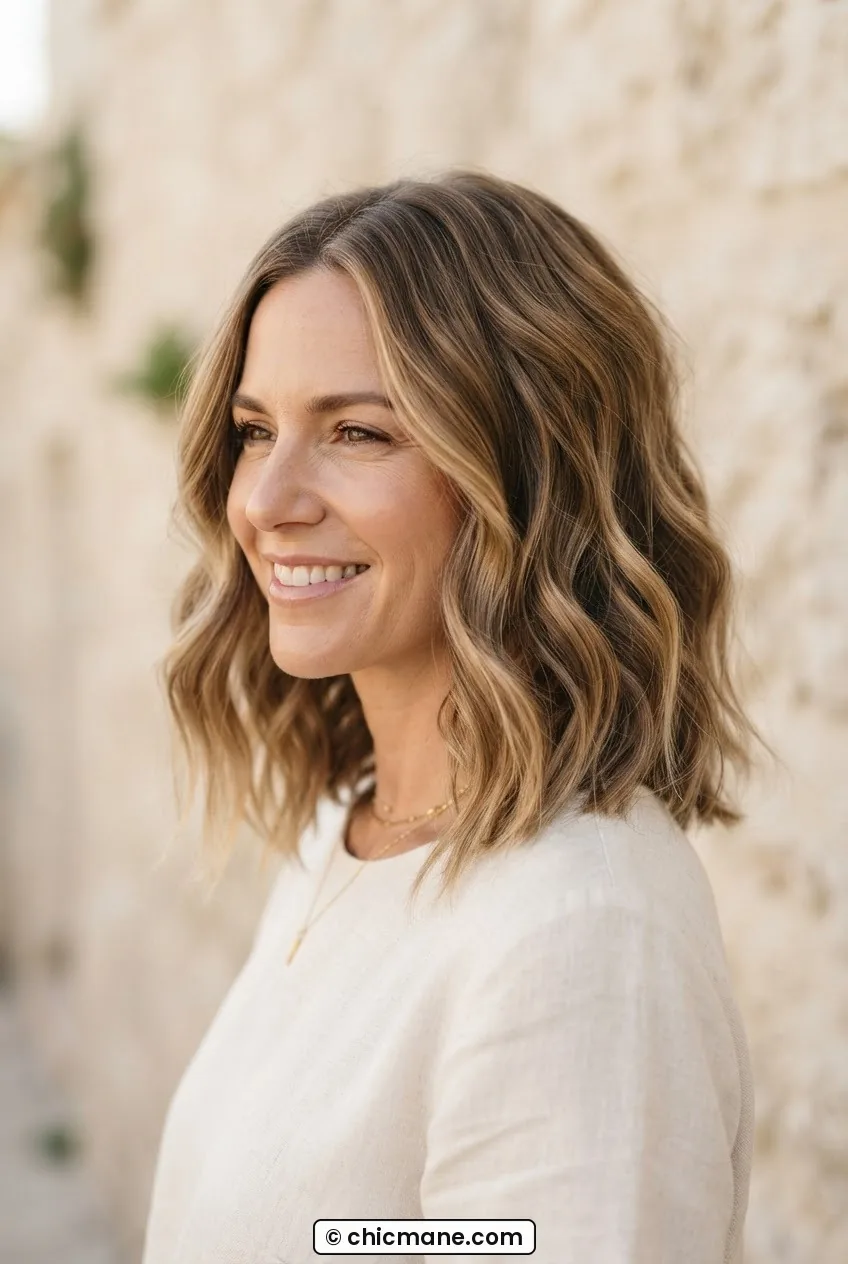
11. Wavy Collarbone Lob
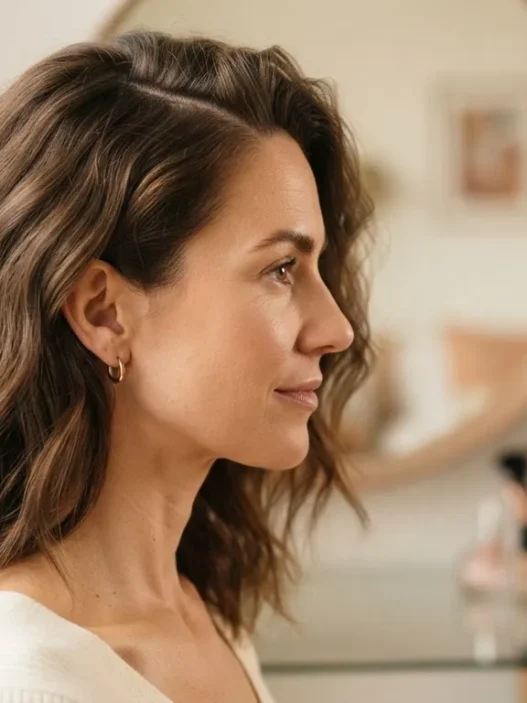
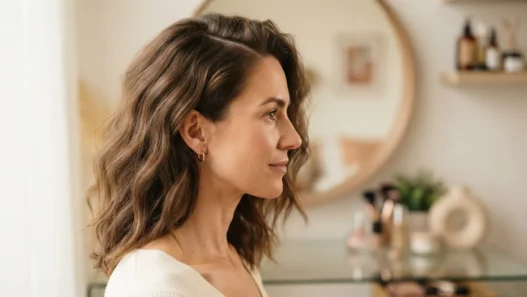
This is the “I woke up like this” cut. A collarbone-length lob with loose, beachy waves styled through it looks effortless in a way that takes maybe ten minutes with a large-barrel wand. The key is letting the waves set before you break them up — run your fingers through gently, not a brush, and then leave it alone. She’s wearing hers with a soft middle part and the waves falling forward on both sides, and that’s exactly the right approach for this length. It frames the face without covering it. For anyone who wants to do more with this kind of styling, there are genuinely good options for quick open hairstyles in under five minutes that work beautifully at this length.
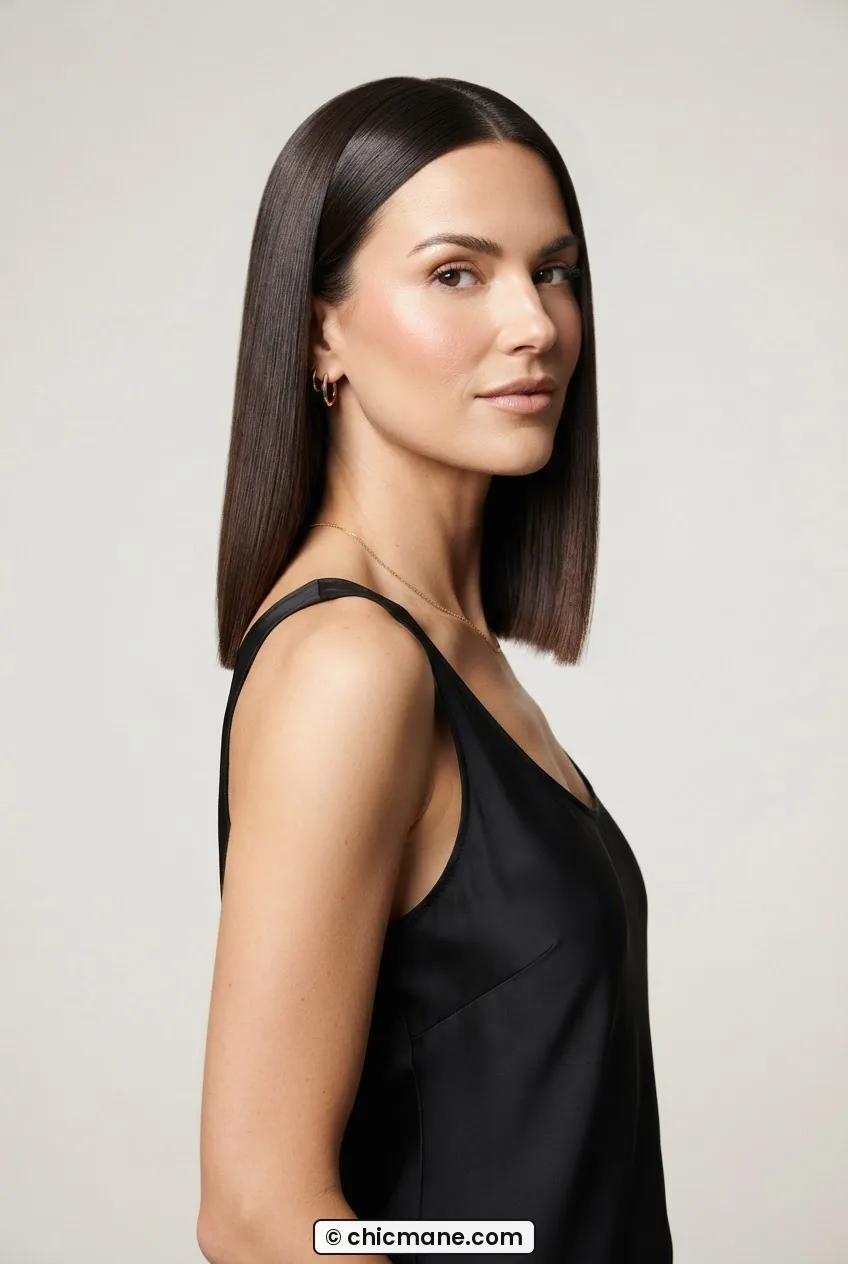
12. Sleek Straight Lob Without Bangs
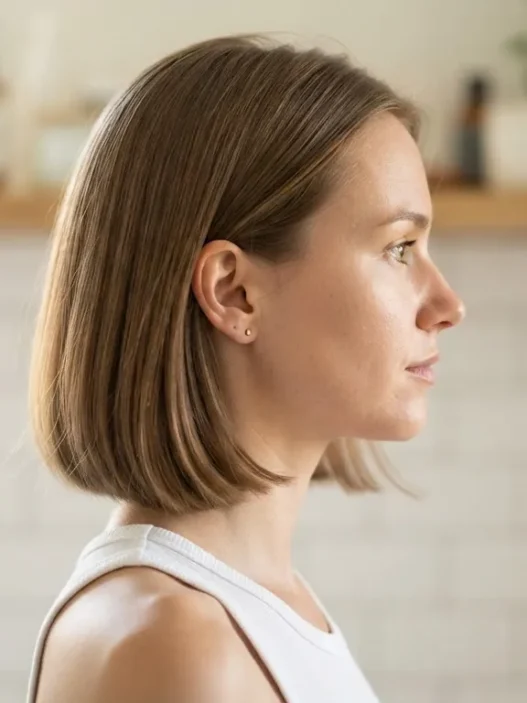
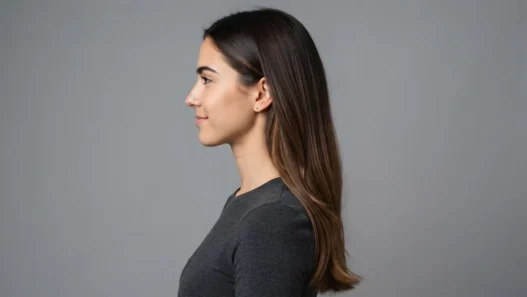
No fringe, no layers, no fuss. Just a clean, straight lob with all the weight sitting at one length. This is the cut for people who want something that looks polished and put-together with very little styling time. A round brush blowout, a flat iron pass if you feel like it, and you’re done. It also happens to be one of the best cuts for growing your hair out from something shorter because it’s always a defined shape rather than an undefined in-between. And contrary to what people think, skipping bangs doesn’t make a short cut look less interesting — it makes your bone structure the focal point instead.
Past the Shoulder
Technically the borderland of short hair — these cuts hang just below the shoulder or at shoulder level and are the gentlest entry point into the short-hair world. They’re also the easiest to grow if you change your mind, which is a completely valid consideration. I won’t judge you.
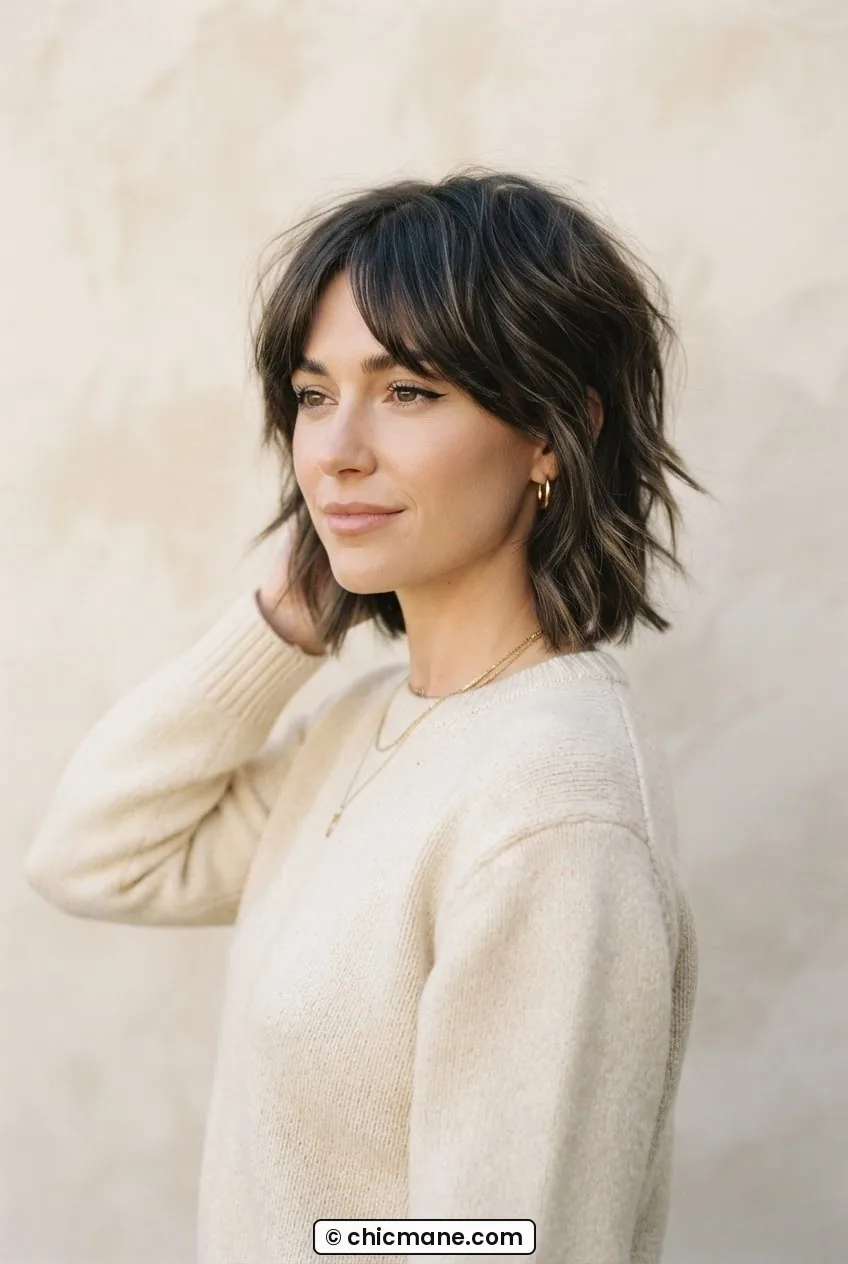
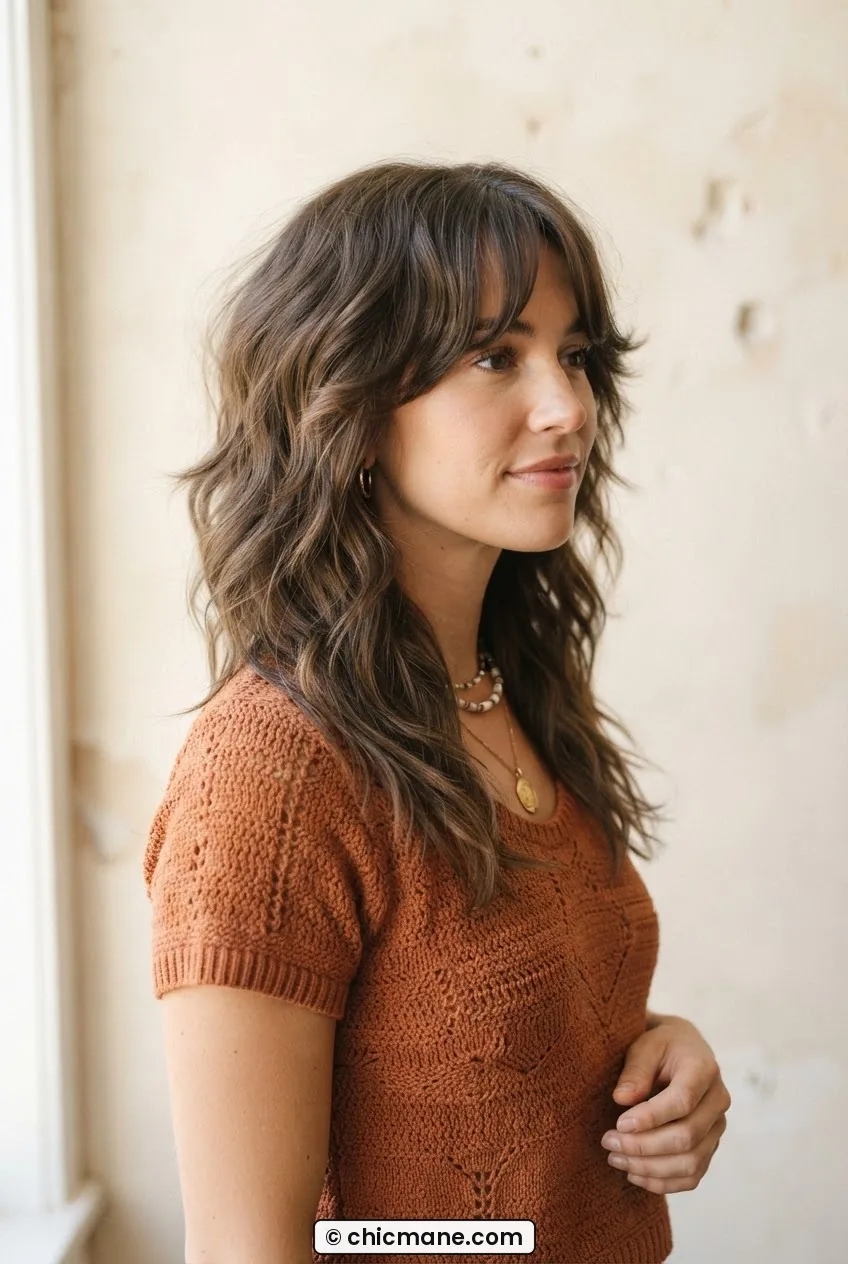
13. Shoulder-Length Shag With Curtain Bangs
The shag at shoulder length is incredibly popular right now in 2026 and I completely understand why. It’s got the layers, the fringe, the texture — all the things people love about the wolf cut — but with just enough length that it still feels approachable. The curtain bangs part naturally in the center and frame the forehead in a soft, almost 70s way. On anyone with natural waves or curls, this cut becomes something truly special because the layers encourage the texture to curl up and spring into shape. Minimal product, maximum payoff.
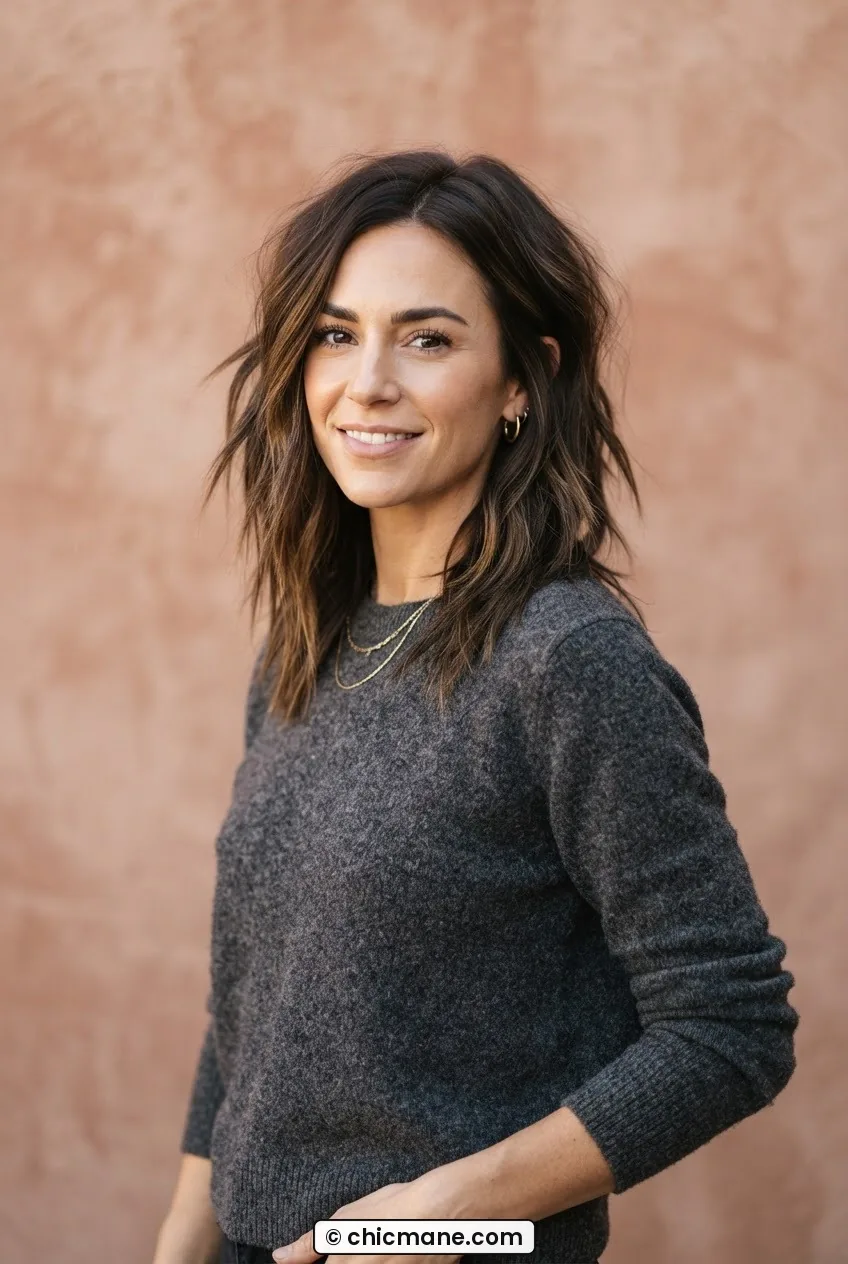
14. Choppy Layered Shoulder Cut
Layers cut with point-cutting or razor techniques so the ends are deliberately uneven and piecey. It’s not a polished cut — it’s intentionally undone, and that’s the appeal. This one works especially well on thick hair that tends to get heavy and shapeless at longer lengths because the choppy layers remove bulk without sacrificing the overall length. She’s wearing it with a slight bend at the ends, just enough to show the texture rather than weigh it down. Straightening it completely would lose all the personality, so if you get this cut, commit to some wave.
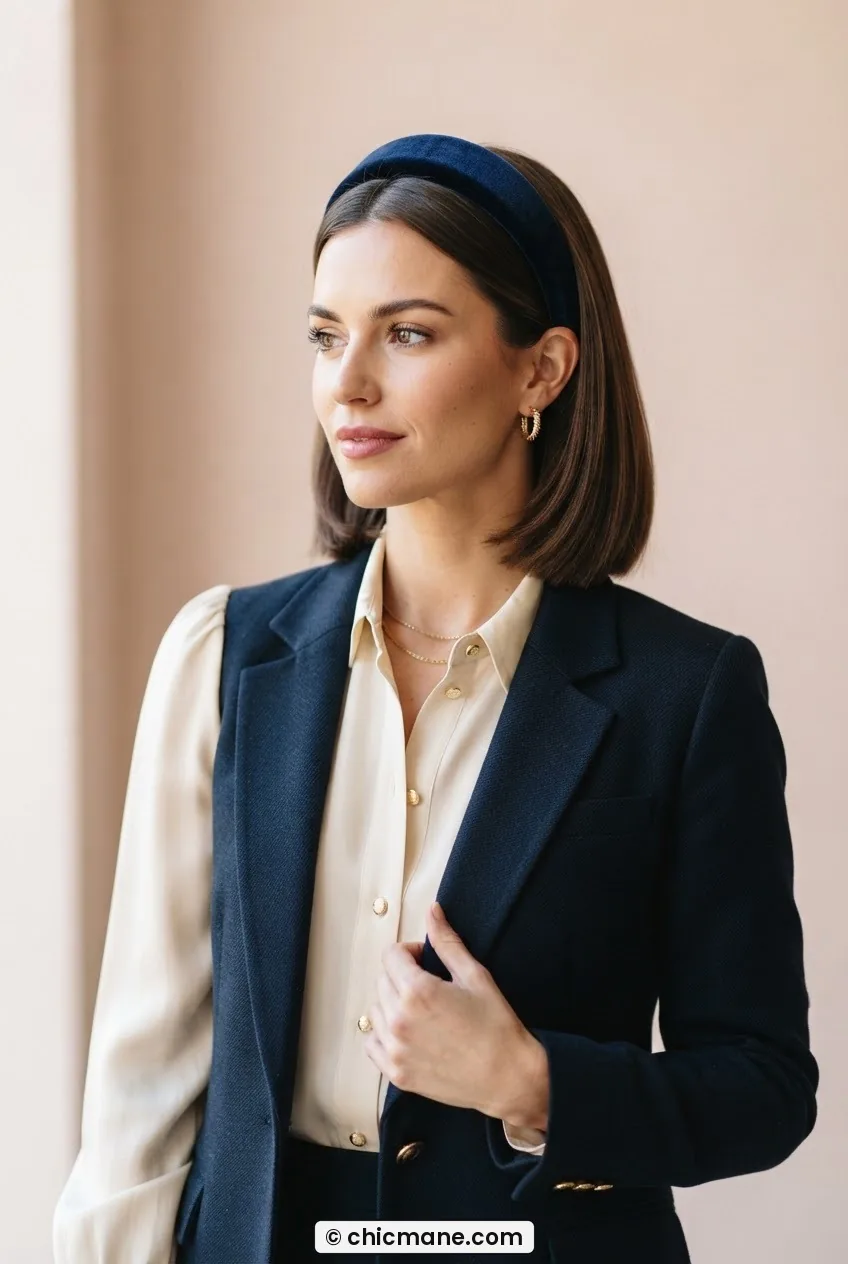
15. Shoulder-Length Bob With Headband
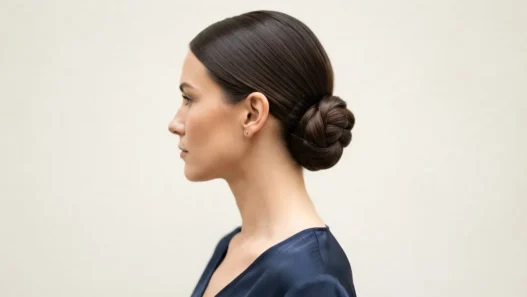
This one is as much about styling as it is about the cut. A classic shoulder-length bob — straight, clean, maybe slightly inward-curved at the ends — worn with a thick headband pushed back from the hairline. It transforms the look completely. Suddenly it’s polished, intentional, almost retro-chic. The headband also solves the “I don’t know what to do with my hair today” problem instantly. Velvet headbands, structured fabric ones, thin gold bands — they all read differently. This is the styling trick I keep recommending because it works across multiple face shapes and hair textures without requiring any actual styling skill.
16. Soft Shoulder-Length Layers, No Bangs
The grown-out lob that somehow looks better than a fresh cut. When you add soft, blended layers to a shoulder-length cut and keep the face open with no fringe, the result is something that moves beautifully with any texture. It also air-dries in a way most other cuts don’t — just scrunch in a bit of styling cream, let it dry, and you’re done. This is genuinely one of the most wearable short-hair ideas because it requires so little maintenance while still looking like you made an effort. How to air-dry without frizz is a technique worth knowing for this length specifically — the right technique at this length can completely change your mornings.

Moving Between Bands Without Regret
Here’s the thing nobody tells you about going shorter: the jump from one band to the next feels massive in your head and is almost never as dramatic as you expect in practice. Going from shoulder to collarbone? You’ll adjust in a week. Going from collarbone to jaw? Two weeks. Going from jaw to pixie? That one takes a moment, but people almost always say they should have done it sooner.
What I’d actually suggest: if you’re nervous about a cut, go one band shorter than your comfort zone. Not two. Not from shoulder directly to pixie. One band. Live with it for three months, see how you feel, and then decide if you want more. Growing out is always possible — it’s just slower than cutting. And while you’re in an awkward grow-out phase, there are genuinely clever easy short hair styles for when there isn’t much length to work with that will carry you through it painlessly.
Also worth saying: every single band in this list becomes a better version of itself with the right short hair styling products worked through it. Products matter more at shorter lengths because there’s less hair to hide mistakes. A light pomade or a texturizing spray changes everything.
Questions I Get About Short Hair
Which short hairstyle is easiest to maintain at home?
Honestly, the micro pixie or the blunt chin-length bob — for opposite reasons. The pixie has so little hair that there’s nothing to manage. The blunt bob requires basically zero styling because the shape does all the work. Anything with lots of layers (like the wolf cut or shag) needs a bit more effort to look intentional day-to-day.
How do I know which length band suits my face shape?
The general rule is that cuts ending at or above the chin tend to emphasize the jaw, which works beautifully for oval and heart-shaped faces. Rounder face shapes often do better with a little more length — chin to jaw or collarbone — because it elongates. But honestly these rules are guidelines, not laws. The fringe, the layers, and the silhouette within the band matter just as much as the length itself.
Can I wear short hair up in any of these styles?
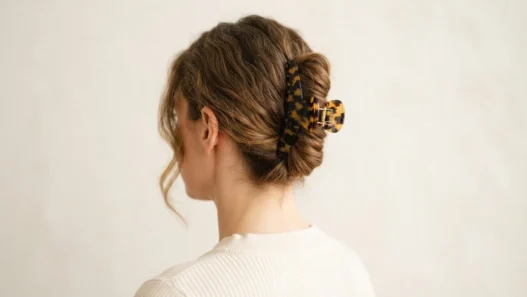
At the collarbone and past-the-shoulder bands, yes — a small bun or clip half-up is totally doable. At chin to jaw, you can pin sections back or do a tiny twist. At pixie length, your “up” options are really about accessories: headbands, clips, and pins become your best friends. Which, honestly, is its own kind of fun.
Does short hair work for thick hair?
Yes — but the cut needs to be built for it. Thick hair needs weight removed through layering or thinning, especially in the jaw-to-pixie range. A blunt bob on very thick hair can get boxy and heavy without the right interior layering. Ask your stylist to remove weight from underneath while keeping the shape on the outside — that’s the move for thick hair at short lengths.
Sixteen cuts across four length bands and I still feel like I only scratched the surface — that’s how rich this territory is. Whether you’re eyeing a dramatic micro pixie or just dipping a toe in with a shoulder-length shag, there’s a version of short that works for your hair, your face, and your actual morning routine. Pick your band, find your cut, and go. You can always grow it out. But you probably won’t want to.