






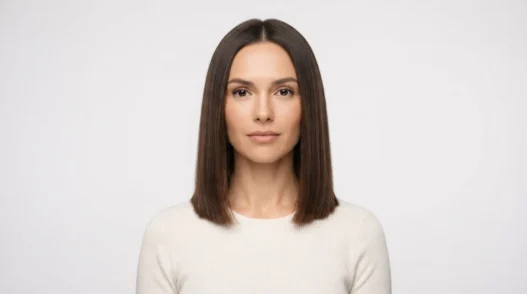
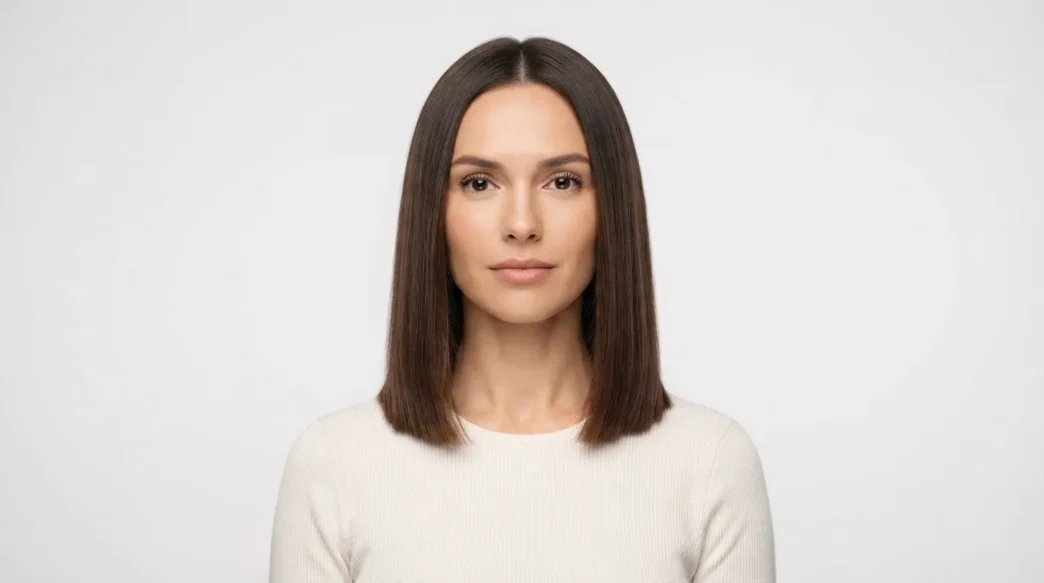
I have walked into salons with nothing but a vague feeling — “I want something different but not too different” — and come out looking exactly like I did going in, just with a blowout. Never again. The single biggest upgrade I made to my salon visits was bringing a specific name and a specific ask. Not just a photo. An actual sentence. This post is basically that sentence, written out for twelve of the best cuts trending right now so you can walk in prepared and walk out obsessed.
Your Salon Cheat Sheet — 12 Cuts at a Glance
- 1. The Soft Blunt Collarbone Cut
- 2. The Grown-Out Shag
- 3. The Face-Framing Curtain Bang Bob
- 4. The Invisible Layer Long Cut
- 5. The Textured Pixie With Longer Top
- 6. The Blunt Micro Fringe With Length
- 7. The Classic Collarbone Shag for Fine Hair
- 8. The Rounded Mid-Length Cut
- 9. The Bixie — Between a Bob and a Pixie
- 10. The Long Straight One-Length With Bangs
- 11. The Over-60 Soft Layer Cut
- 12. The Butterfly-Inspired Volume Cut
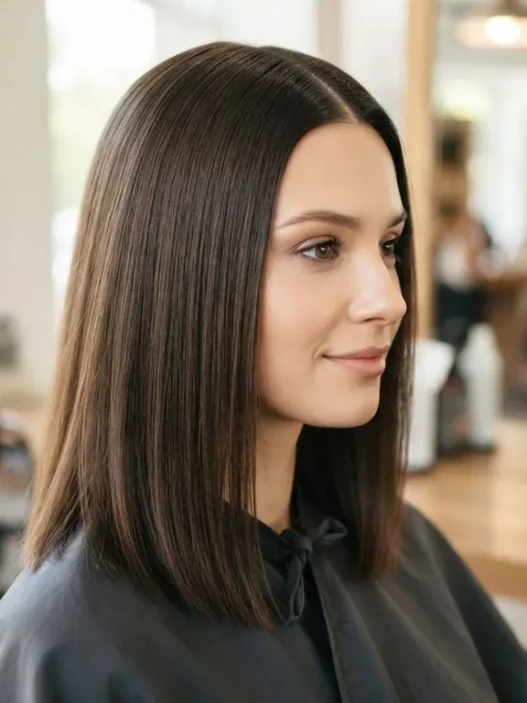
1. The Soft Blunt Collarbone Cut
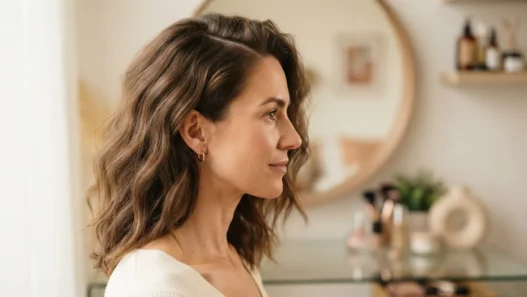
This is the cut I recommend to literally everyone who says they want “something polished but low-maintenance.” It sits right at the collarbone — not above, not below — and the ends are cut blunt but then point-cut softened so it doesn’t read as severe. The weight line does the work. You get movement and shape without needing to style it much at all.
It flatters almost every face shape because the length hits at a universally proportional point. Round faces get elongation, long faces get balance, square faces get a gentle frame. Look at the model in this photo — see how the ends just graze her collarbone and the whole cut looks intentional? That’s the goal.
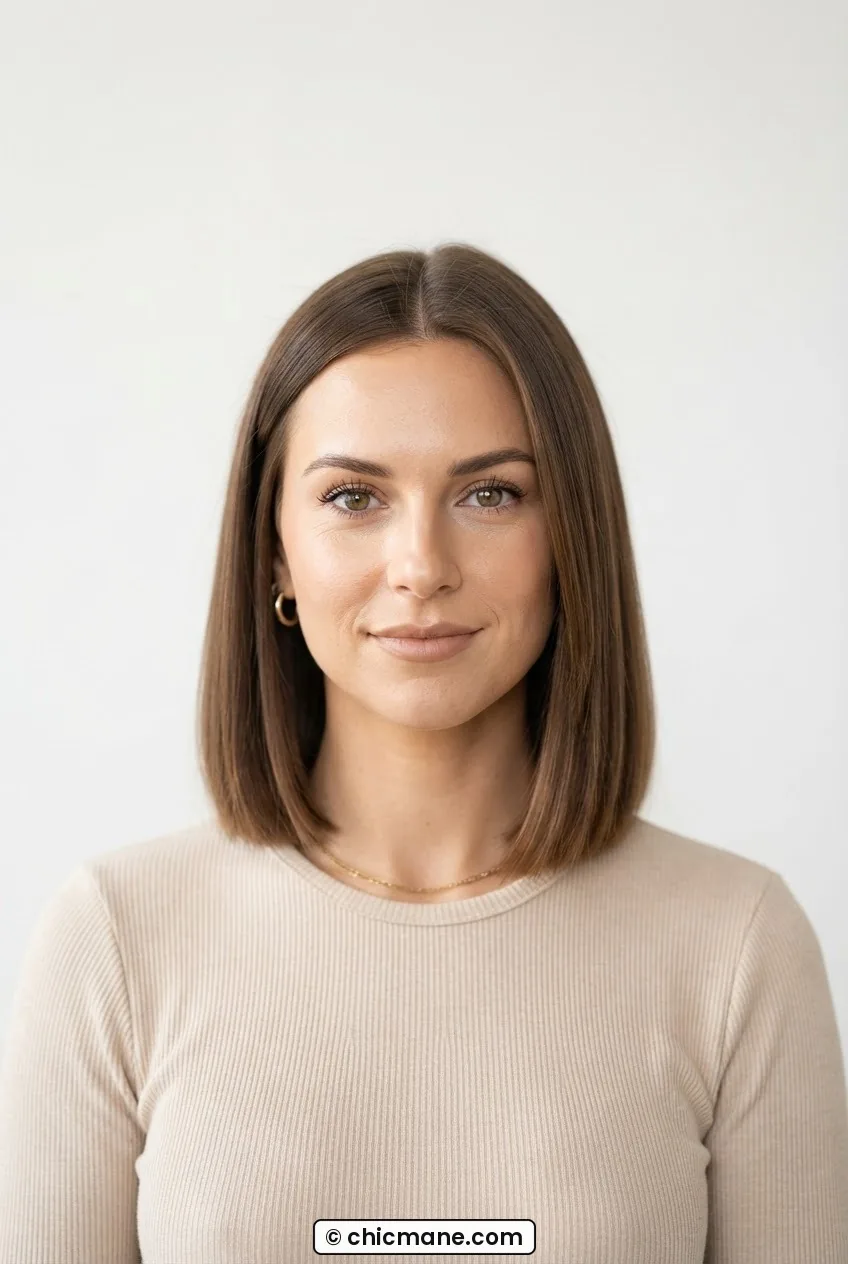
What to ask for: “I want a one-length cut that sits exactly at my collarbone, cut blunt but with a little point-cutting at the ends to soften the line. No layers inside, just weight at the perimeter.”
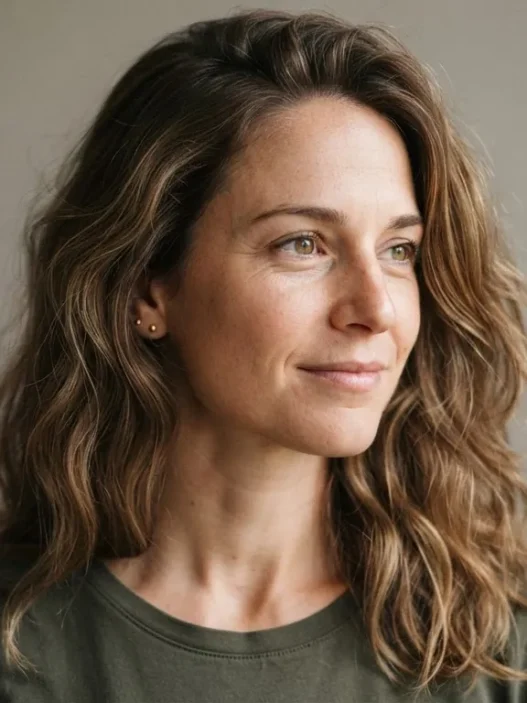
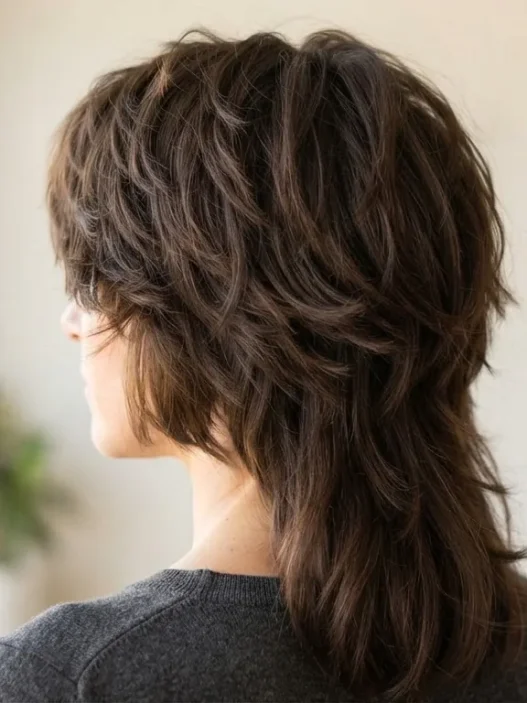
2. The Grown-Out Shag
Not the choppy new shag. The grown-out version — like a shag that’s had six months to settle into itself and become something effortlessly cool. The layers are longer, the curtain fringe is soft and slightly overgrown, and the whole thing has this relaxed, undone quality that looks incredible on wavy and naturally textured hair.
I think this works especially well on medium-length hair. If you’ve been growing out a shorter shag and feeling awkward about it, this is your moment — the awkward phase IS the cut. Lean into it. For more ideas on navigating that exact length, the hair styles for medium hair length guide I keep going back to is genuinely helpful.
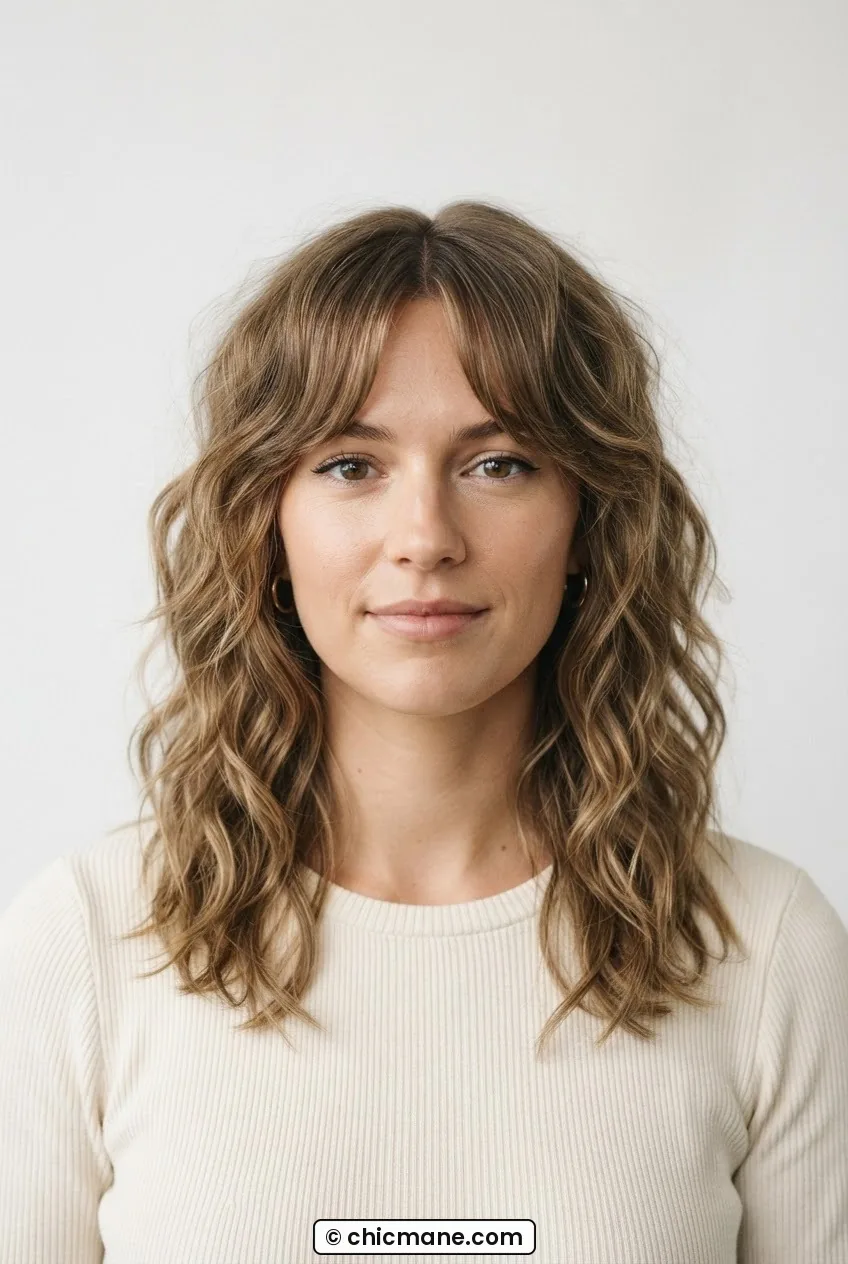
What to ask for: “I want a grown-out shag — longer layers throughout, softer curtain fringe that’s not blunt, and texture at the ends. I want it to look lived-in, not freshly cut.”
Seeing the Grown-Out Shag Built in Real Time
3. The Face-Framing Curtain Bang Bob
The bob isn’t going anywhere, and I’m genuinely glad. But the version that’s having a real moment right now is the one paired with curtain bangs — those soft, center-parted pieces that sweep away from the nose and blend back into the length. It’s a totally different energy than a classic bob. More romantic. Less power-suit.
The face-framing effect is dramatic. She’s got high cheekbones and the curtain pieces are drawing your eye straight to them — that’s exactly what this cut does. It’s one of the better haircuts for women who want structure with femininity.
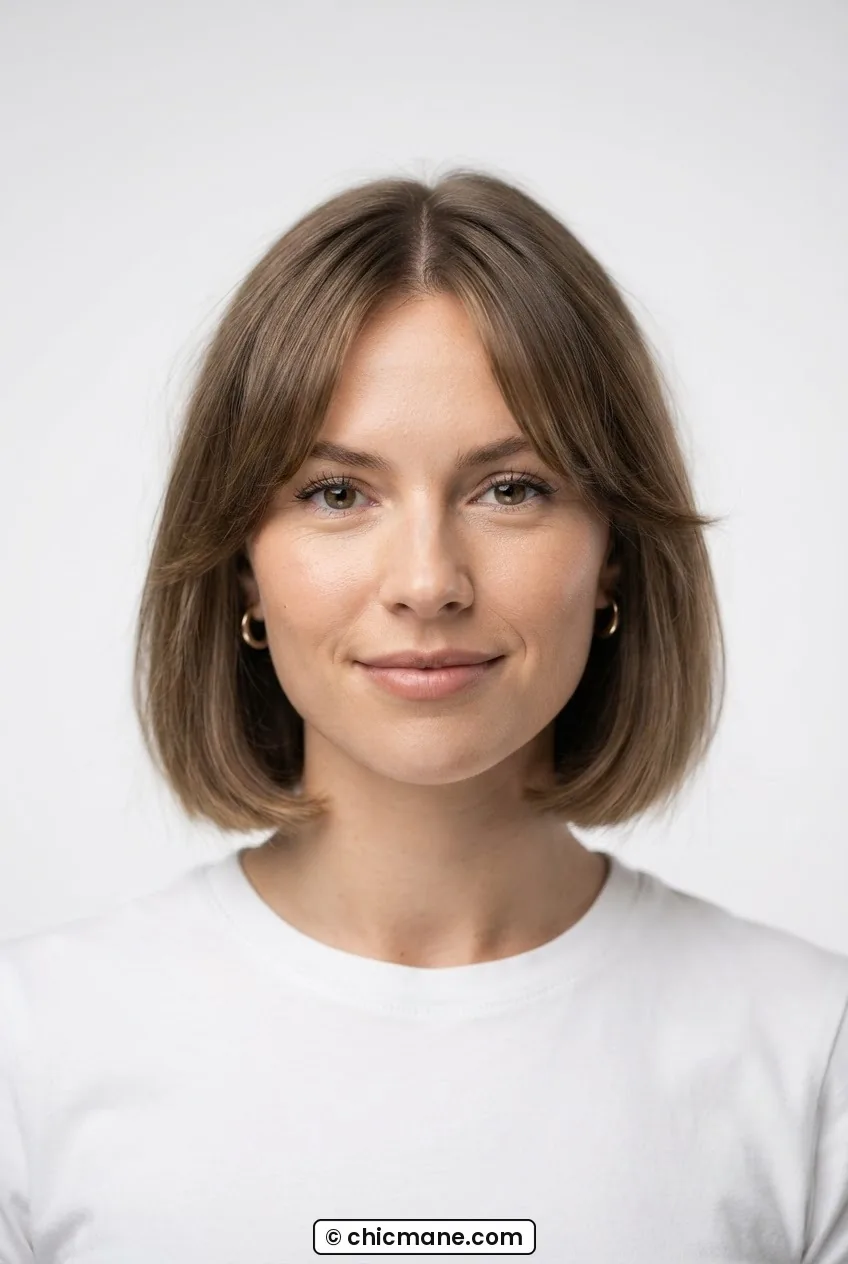
Works best with straight to lightly wavy hair. Curly hair can do it, but the bangs need extra attention to keep that curtain shape.
What to ask for: “I want a chin-to-collarbone bob with curtain bangs — parted in the center, long enough to tuck behind my ear, and blended into the sides rather than cut as a separate fringe.”
4. The Invisible Layer Long Cut
This one is for the long-hair devotees who keep asking me how to get their hair to move without losing the length. Invisible layers — also called internal layers or slide-cut layers — remove bulk from underneath without touching the perimeter. From the front, your hair still looks long and full. But it actually swings and has body now.
If you have thick hair and you’ve been avoiding layers because you’re afraid of a triangle, this is your answer. The exterior stays intact. It’s basically a secret upgrade that only you and your stylist know happened. For a full breakdown of how lengths and layers interact, the 14 hairstyles from crop to waist piece really maps it out well.
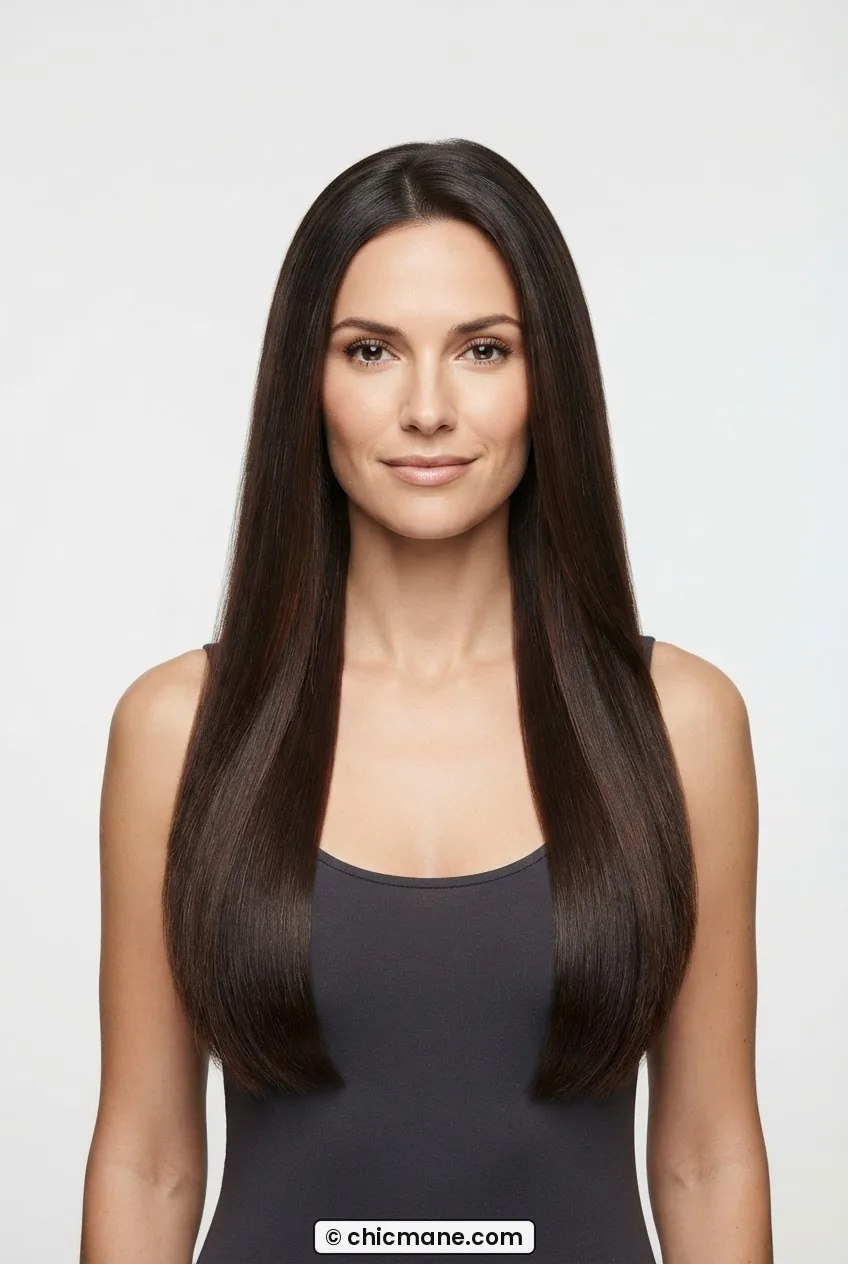
What to ask for: “I want to keep my length but add internal layers through the mid-shaft and ends to remove weight. No layers near the face, and don’t touch the perimeter line.”
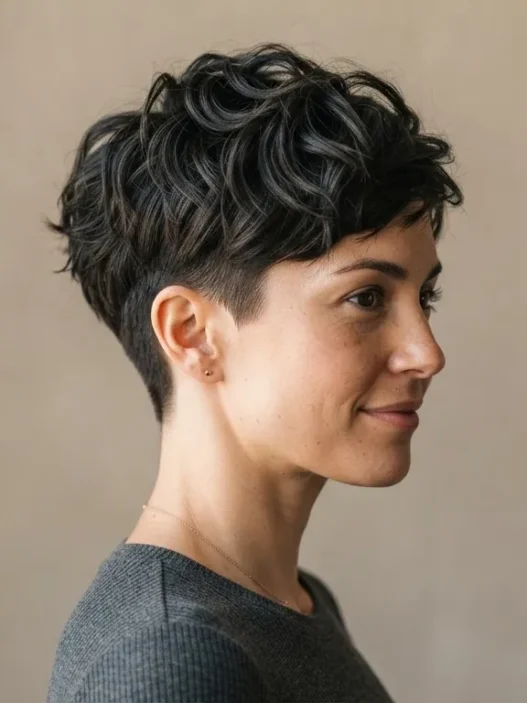
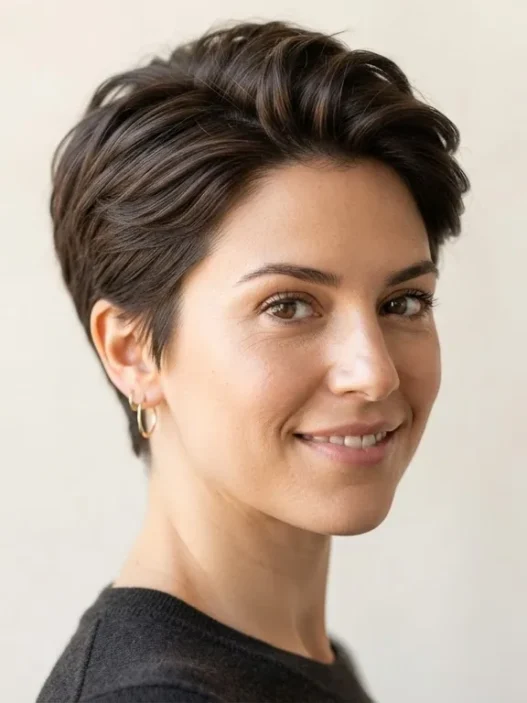
5. The Textured Pixie With Longer Top
Short haircuts for women get a bad reputation for being “mature” or “safe,” and I want to dismantle that immediately. The textured pixie with a longer top is one of the edgiest, most versatile short cuts out there right now. The back and sides are close, but the top has enough length to push forward, sweep to the side, or even do a tiny quiff. It’s genuinely playful.
It looks particularly stunning on women with strong jawlines and defined cheekbones. But honestly? I’ve seen it work on rounder faces too when the top is styled with some height. You can read up on how to style a pixie to see the range of looks this one cut can produce before you commit.
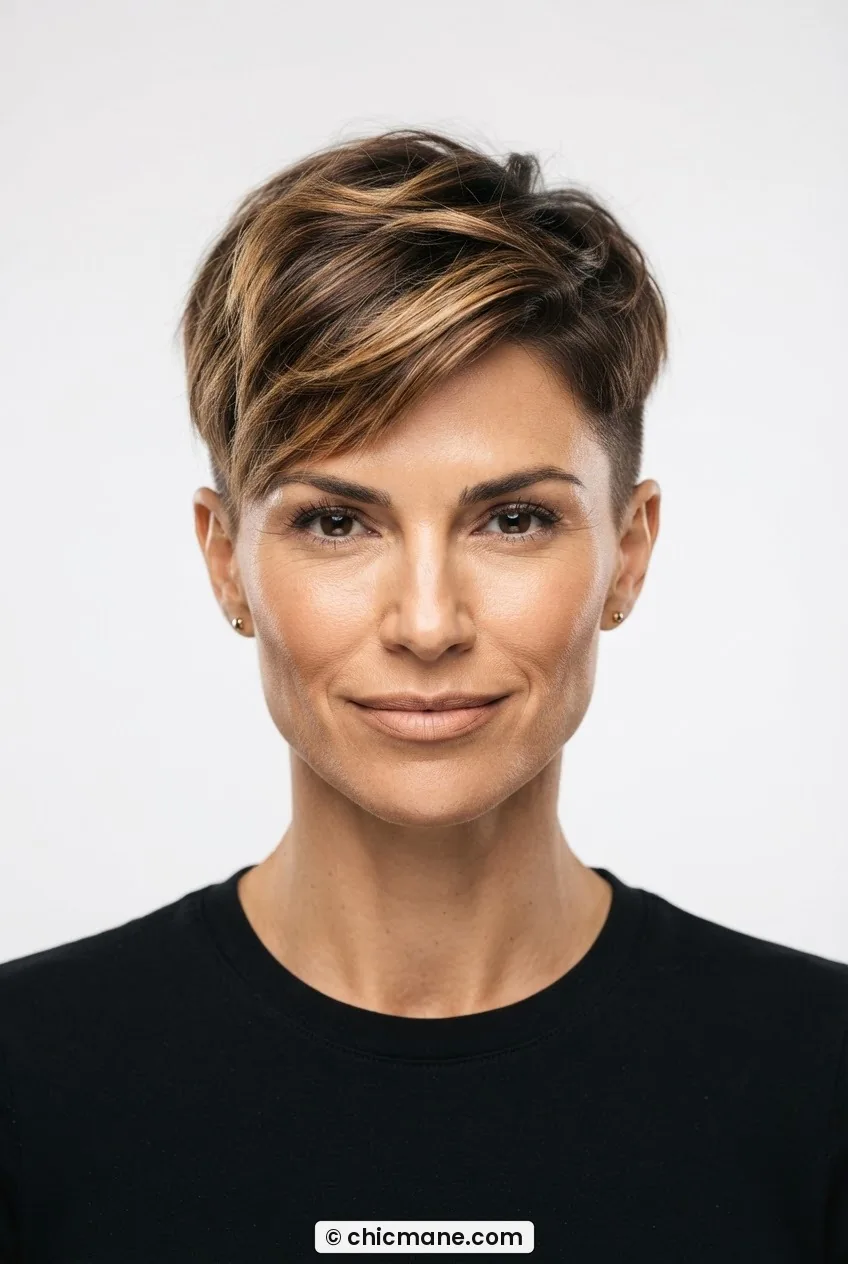
What to ask for: “I want a disconnected pixie — short back and sides with at least two to three inches on top, point-cut for texture. I want to be able to push the top in different directions depending on the day.”
My personal pick from this entire list is actually the grown-out shag — I wore a version of it for almost two years and it was genuinely the least-effort cut I’ve ever had. Air-dried beautifully, looked intentional even when I did nothing, and every single month it just looked a little better. If you’re torn, start there.
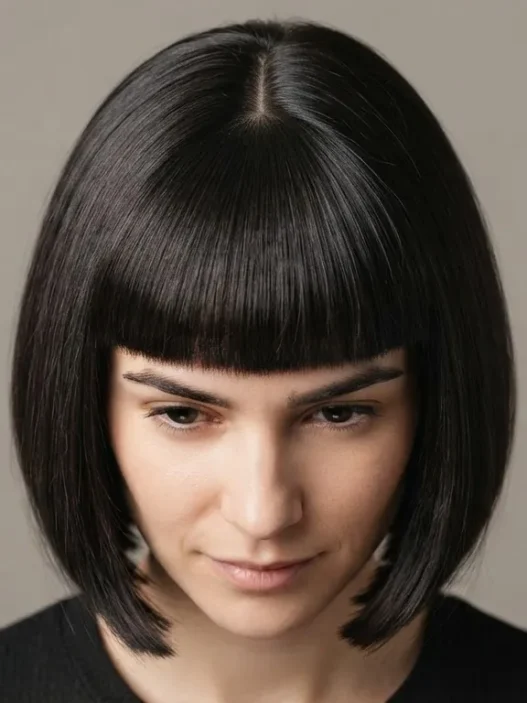
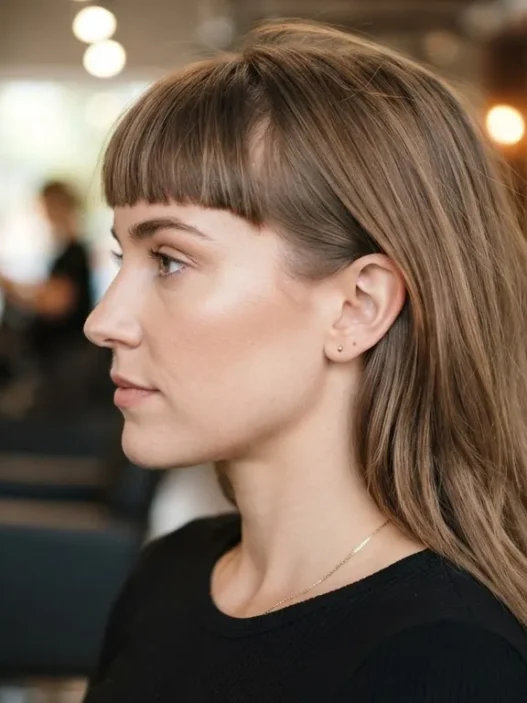
6. The Blunt Micro Fringe With Length
A short, blunt, eyebrow-grazing fringe paired with long length. This contrast is having a serious moment and I completely understand why — it’s bold, it’s graphic, and it changes your whole face with just a fringe cut. You don’t have to chop the length at all. The drama is all up front.
Not for the faint of heart, but not as high-maintenance as it looks. The blunt line needs a trim every four to six weeks, but the rest of the cut is just regular long hair. This is the front bangs haircut version that actually gets searched — and for good reason.
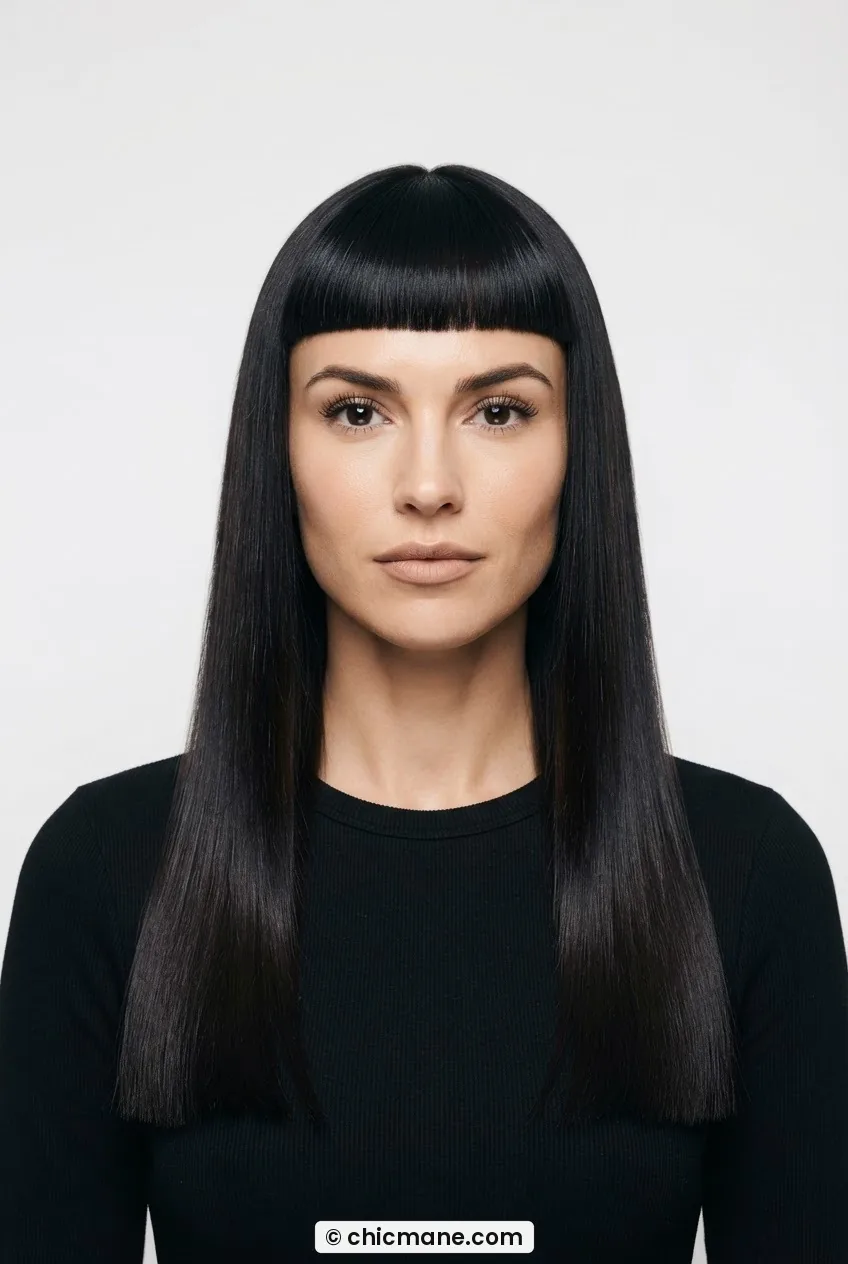
What to ask for: “I want a blunt fringe cut to just above my eyebrows — no angling, no curtain shape, straight across. Keep the rest of my length as-is.”
7. The Classic Collarbone Shag for Fine Hair
Fine-haired women have been burned by layers before — cuts that removed too much weight and left the hair looking thin and stringy. The collarbone shag for fine hair is specifically designed to avoid that. It keeps bulk at the perimeter (so there’s always visible density) while using face-framing layers and a soft fringe to create the illusion of body at the top.
The key difference from a regular shag is that the layers are longer and less aggressive. Think long steps, not short choppy ones. She’s rocking this length in the photo and you can see how the ends still look full even though there’s clearly movement and texture happening throughout. That’s the fine-hair sweet spot. For more detail on navigating hairstyle fine hair challenges, you’ll want to check out the research on best cuts for fine hair because the wrong cut genuinely makes thinness worse.
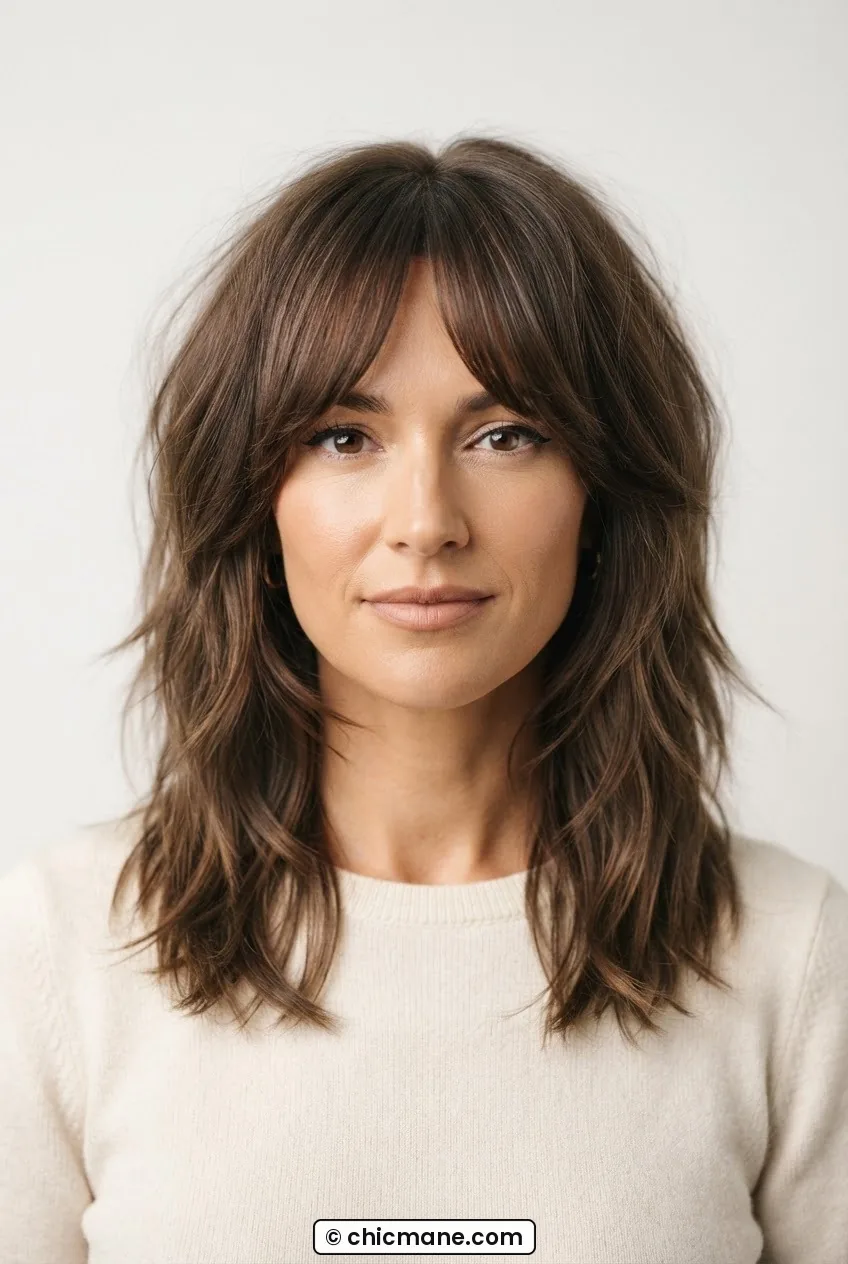
What to ask for: “I have fine hair. I want a shag at collarbone length but with longer, gentler layers — nothing above my chin. Keep weight at the perimeter and use face-framing pieces only near the front.”
8. The Rounded Mid-Length Cut
This one is quieter than the others on this list but I think it’s underrated. A rounded mid-length cut — where the perimeter curves slightly longer in the front than the back — creates this beautiful, face-softening shape that suits a huge range of face types. It’s what gives a lob that vintage, almost 70s quality.
Haircut ideas women medium length tend to default to straight-across cuts, but the rounded version adds real sophistication. It’s subtle — you might not even clock what’s different about it until you see someone without it next to someone with it. Then you can’t unsee it.
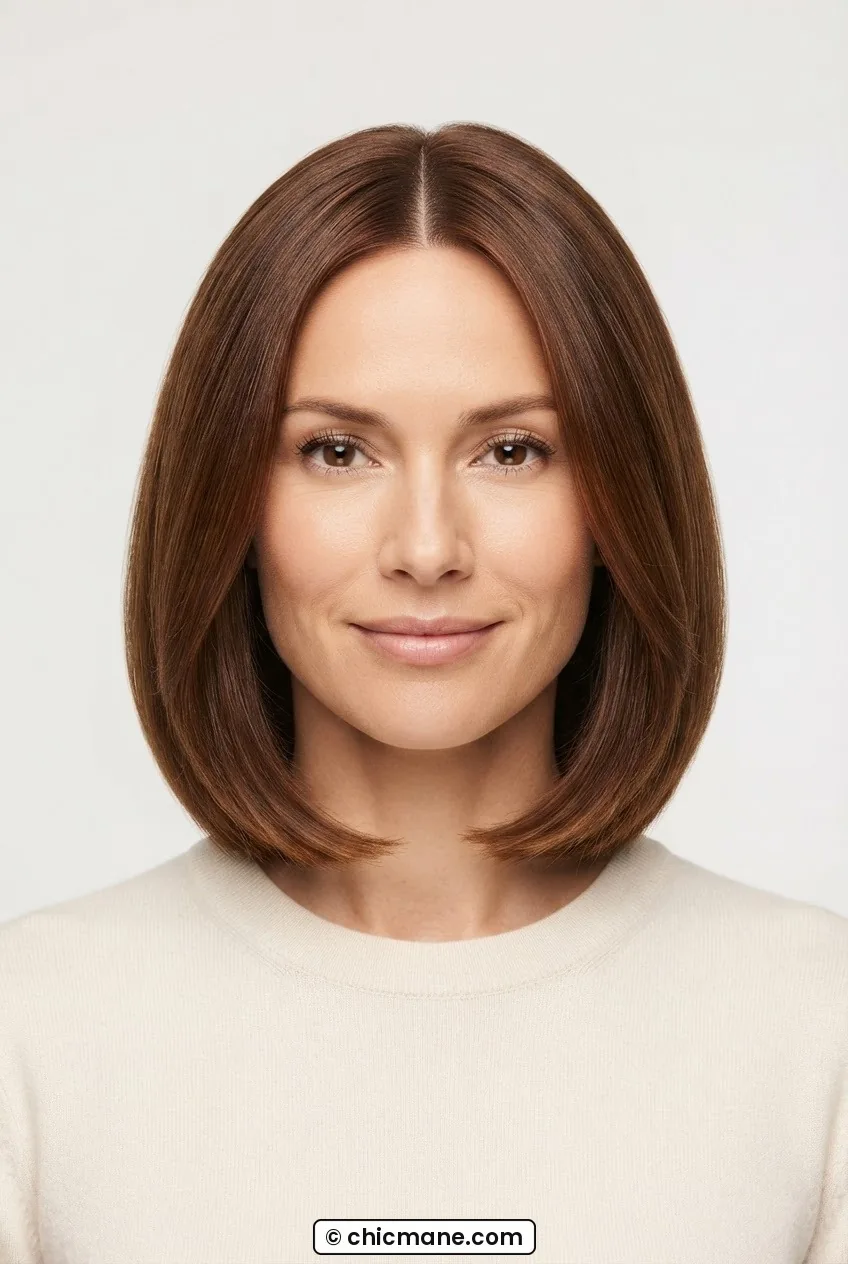
What to ask for: “I want a mid-length cut — around bra-strap to collarbone — with a rounded perimeter. The front pieces should be about an inch longer than the back, and I want the shape to feel curved rather than straight across.”
9. The Bixie — Between a Bob and a Pixie
The bixie is exactly what it sounds like. Longer than a pixie, shorter than a bob — landing somewhere around the ear to jaw range with lots of texture and personality. What makes it different from just a short bob is the lack of a defined perimeter line. It’s more disheveled, more layered, more expressive.
I love this cut for women who want to go short but aren’t ready to commit to the real closeness of a pixie. It’s a brave cut that still lets you do a tiny bit of tucking-behind-the-ear, which psychologically matters. And it grows out beautifully into a proper bob — so there’s always a clear next step if you want to grow it out.
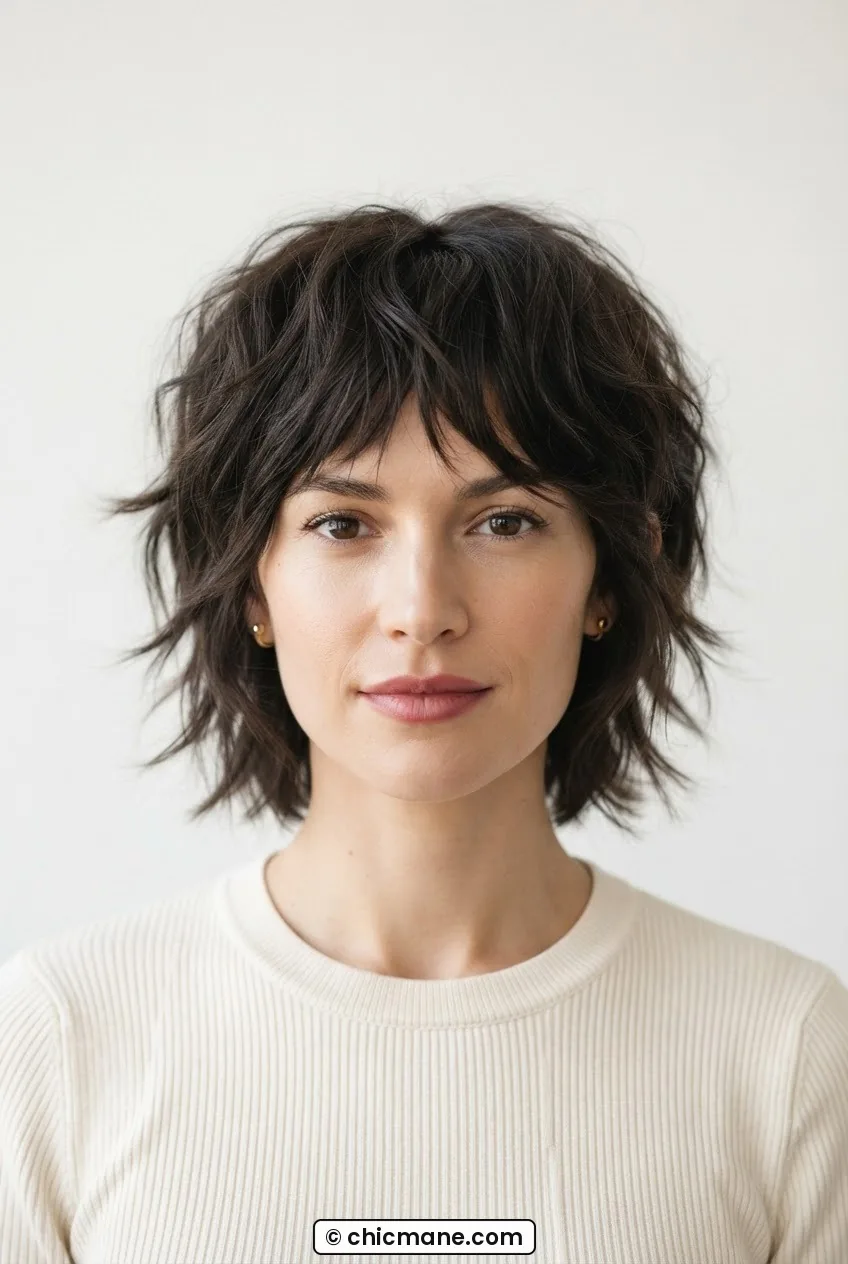
What to ask for: “I want a bixie — longer than a pixie, shorter than a bob. Ear to jaw length, lots of internal texture and point-cutting, no blunt line at the perimeter. Messy and intentional.”
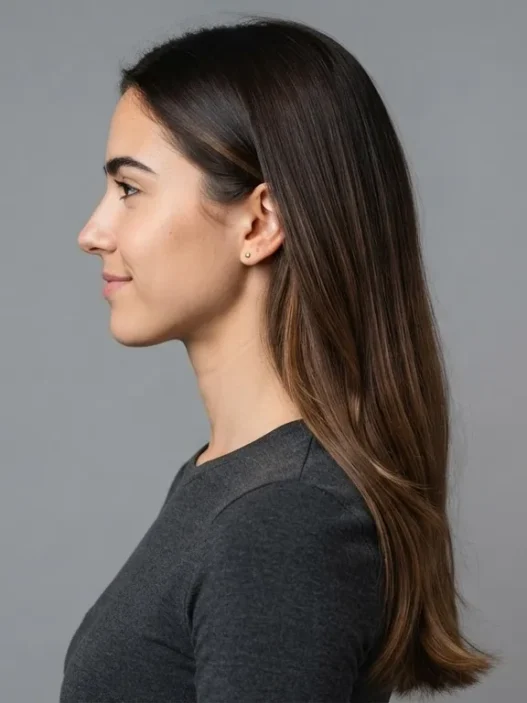
10. The Long Straight One-Length With Bangs
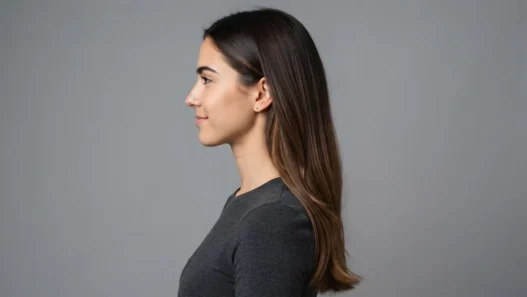
Sometimes the most striking haircuts for women are the simplest ones. Bone-straight long hair, kept in one length, with a clean straight-across fringe. No layers. No graduation. Just geometry. It’s the kind of cut that reads extremely intentional — like you made a deliberate, confident choice.
This is particularly striking on straight hair with shine. The long straight hair with bangs look needs maintenance every four to six weeks on the fringe — longer without trims and the whole graphic quality starts to fall apart. But when it’s fresh? It’s everything. See how she carries it in this photo — the clean line from the fringe through the ends creates a kind of visual frame for her whole face.
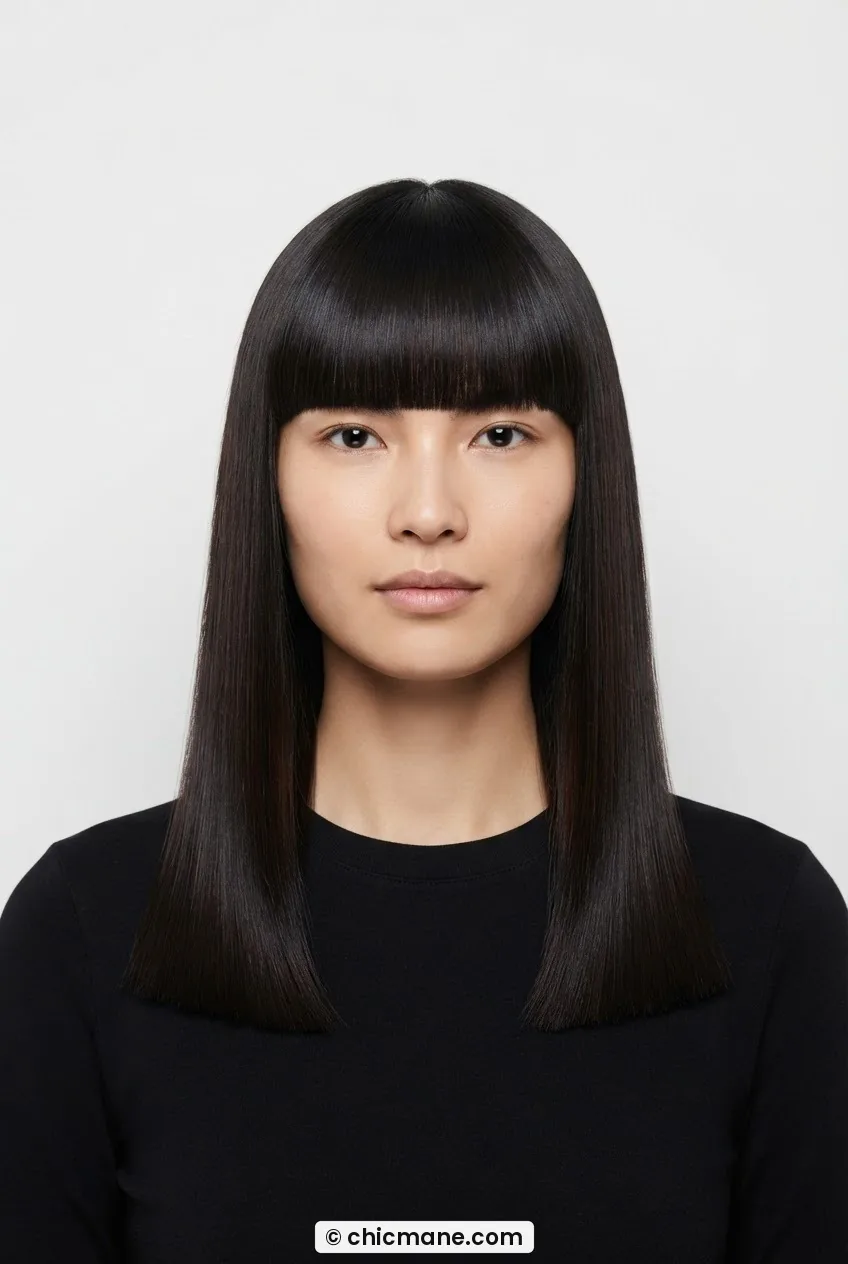
What to ask for: “I want one-length long hair with zero layers — perfectly straight perimeter cut. Add a blunt straight fringe at the eyebrows. I want the whole thing to look geometric and sharp.”
11. The Over-60 Soft Layer Cut
Let me say this clearly: the best over-60 hairstyles are not “safe.” They are strategic. As hair texture changes with age — often becoming finer, slightly wiry, or more porous — the right cut works with those changes rather than fighting them. A soft, face-framing layer cut at chin to collarbone length does this beautifully.
The layers lift at the crown without adding too much internal texture that would expose thinning. The face-framing pieces are long enough to soften the jawline area. And the length sits at a spot that photographs beautifully and feels youthful without trying too hard. This is one of the cuts where the haircut chart in your stylist’s hands matters most — have a conversation about density before they start cutting.
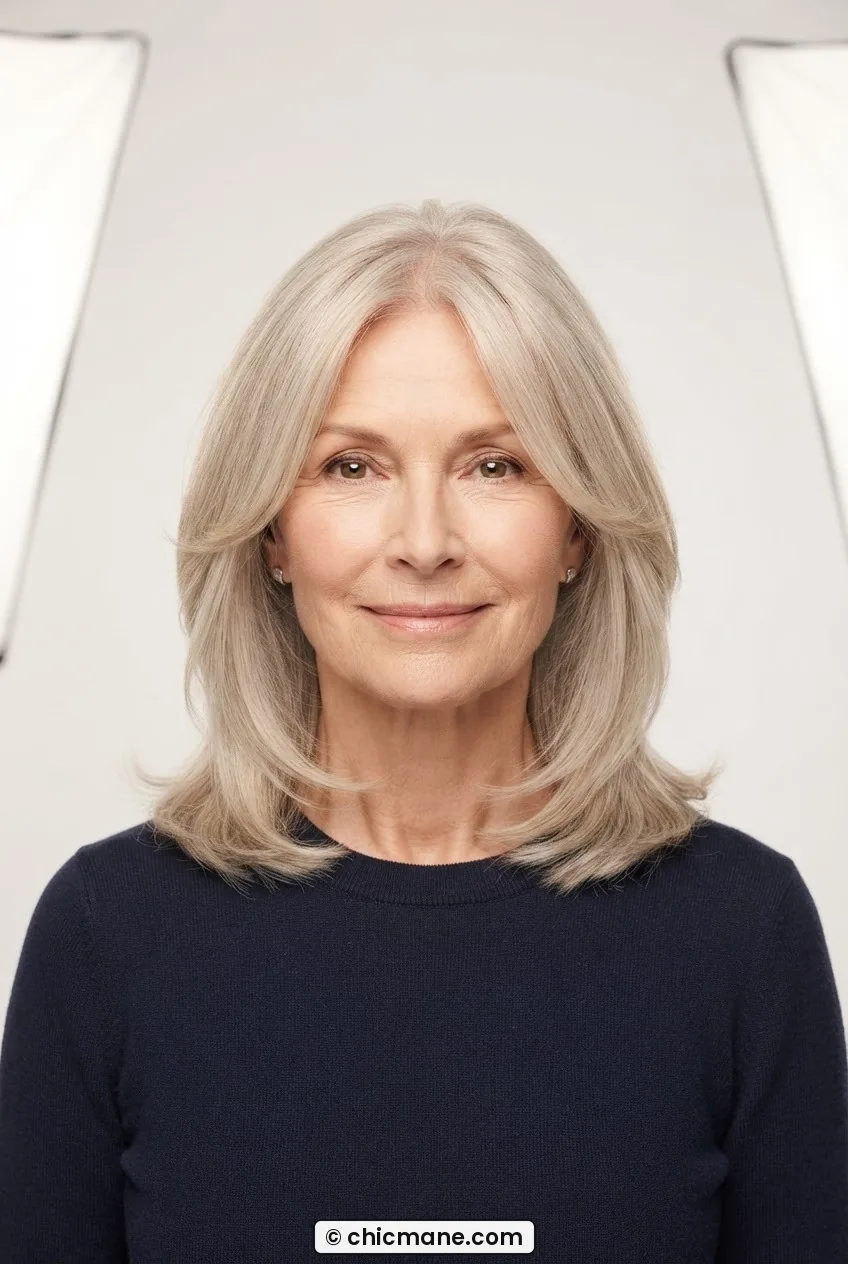
What to ask for: “My hair is finer than it used to be. I want a soft layer cut at collarbone length — layers that start below my chin, face-framing pieces that are long enough to blend in, and no layers at the crown that would expose the scalp.”
12. The Butterfly-Inspired Volume Cut
The butterfly cut took off because it solves a real problem: how to get genuine volume and movement on mid-length hair without a full shag situation. The signature is a defined shorter layer that starts around the ears or just below the cheekbones, sitting visibly over a longer length underneath. Two distinct sections. Like wings, honestly.
It’s particularly good on brown hair because the two layers catch light differently and create natural dimension even without color. The volume at the crown is immediate and real — no product required. You can explore the full open hairstyles options this cut unlocks, because it wears beautifully down and equally well in a half-up style. Speaking of which, some of my favorite half-up styles work best on exactly this cut — the shorter layer creates natural structure at the crown when you pull up the top section.
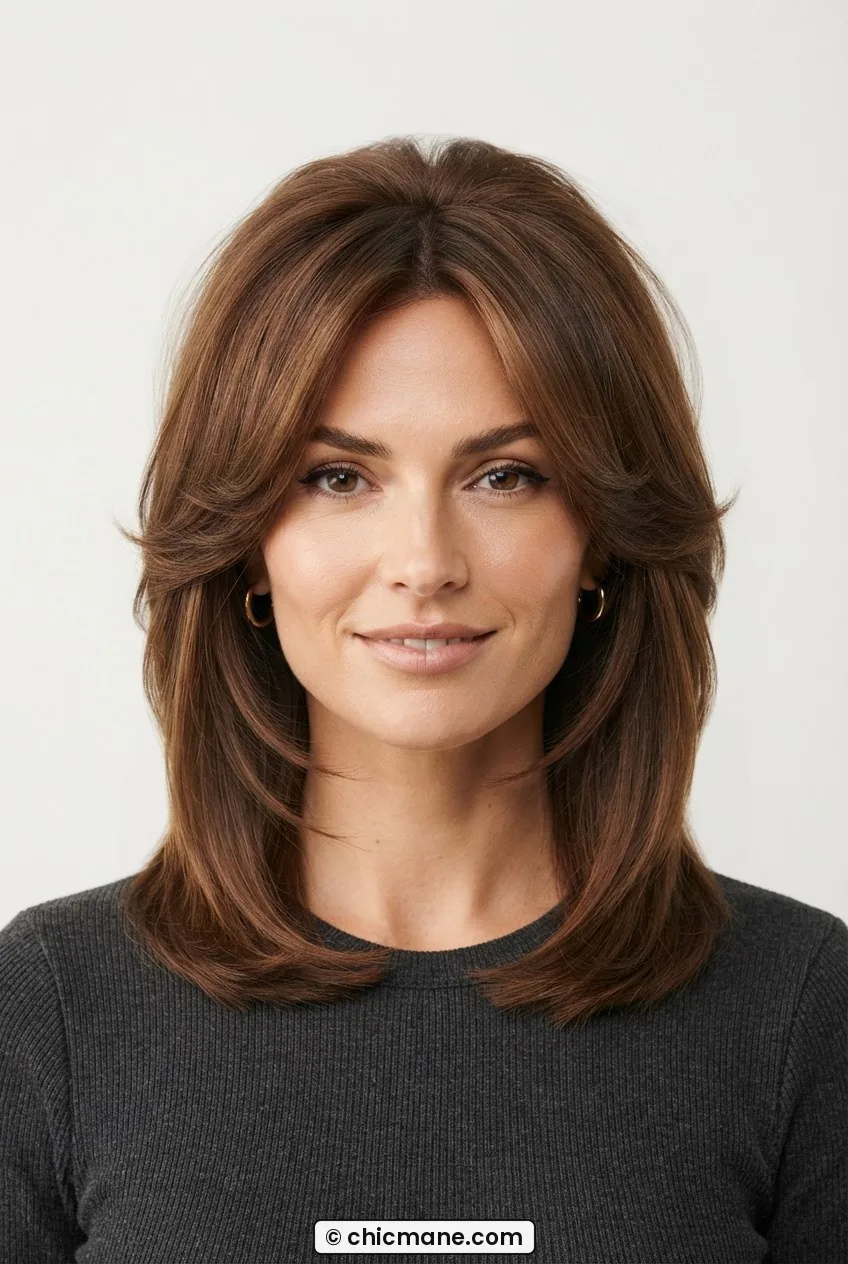
What to ask for: “I want a butterfly cut — a shorter layer starting around my cheekbones that sits visibly on top of a longer length underneath. I want the two sections to be distinct, not blended, so the volume reads clearly.”
Questions I Get Asked Before Every Appointment
How do I know which cut will actually suit my face shape?
Honest answer: your stylist will tell you if you ask — but you need to ask directly. Pull up two or three cuts from this list and say “which of these works for my face shape?” Most stylists love that question. You can also do a quick self-assessment by understanding how to identify your face shape — it takes about two minutes and genuinely helps you narrow your options before you sit down.
Should I bring a photo to the salon?
Always bring a photo AND the verbal ask. Photos help with shape, but stylists still need to understand the specific details — length, texture goal, fringe or no fringe. A photo alone leaves too much room for interpretation. The combination of visual and verbal is the sweet spot. Save a few images from this post and bring them with the exact ask written down on your phone.
How often do I need to get these cuts trimmed?
Blunt cuts (like the one-length and the micro fringe) need trims every four to six weeks to stay sharp — the line is the whole point, and it gets fuzzy fast. Textured cuts like the shag and the bixie can go eight to ten weeks and sometimes look even better with a little growth. Layered cuts sit somewhere in the middle: six to eight weeks. Understanding how to properly section and care for your specific cut is covered really well in the hair tutorial sectioning map, which I think every woman should read once.
What if my hair is naturally coarse or thick — do any of these cuts work?
Most of them, yes — with adjustments. Thick and coarse hair often does best with the soft blunt collarbone cut, the invisible layer long cut, or the butterfly cut. These three use weight strategically rather than fighting it. Tell your stylist your texture upfront and ask them to adjust accordingly — specifically, ask them not to over-thin the interior, which can create frizz and unpredictability in coarse hair.
Okay, that’s the full cheat sheet. Twelve cuts, all named, all with something you can actually say when you sit down. If I’ve done my job right, you’re already texting your stylist to book. Go get the cut. You’ve been thinking about it long enough.