










I did not plan this grow-out. I walked into a salon in January wanting a refresh and walked out with layers shorter than my chin, blinking at myself in the parking-lot rearview mirror like a woman who had just made a very expensive mistake. That was fourteen months ago. What followed was genuinely the most humbling hair experience of my adult life — and I want to write it down before I romanticize it, because right now it is still very much in progress.
Month Three
March. My layers were at approximately the worst possible length — long enough to look intentional but short enough to fall forward into my eyes every time I bent to load the dishwasher. I was pinning the front sections back with bobby pins every single day, which felt like defeat. My hair has always been thick, which means the layers my stylist had cut were actually holding a lot of volume in all the wrong places. The top layers were basically a little halo of frizz and the longer pieces underneath were doing something I can only describe as “shelf.”
I found myself obsessively reading about haircuts for medium hair at every length between where I was and where I wanted to be, trying to reverse-engineer a path. The reassuring thing about that research was seeing how many people had hair that looked intentional at every stage of the journey. The less reassuring thing was realizing that none of them seemed to have my particular combination of thick texture and impatience.
What actually carried me through month three was a single styling trick: diffusing upside-down and then not touching it. The layers sat better when I let them dry into each other instead of fighting them with a brush. It looked more deliberate. Less like a grow-out, more like a choice.
The Awkward Middle Nobody Warned Me About
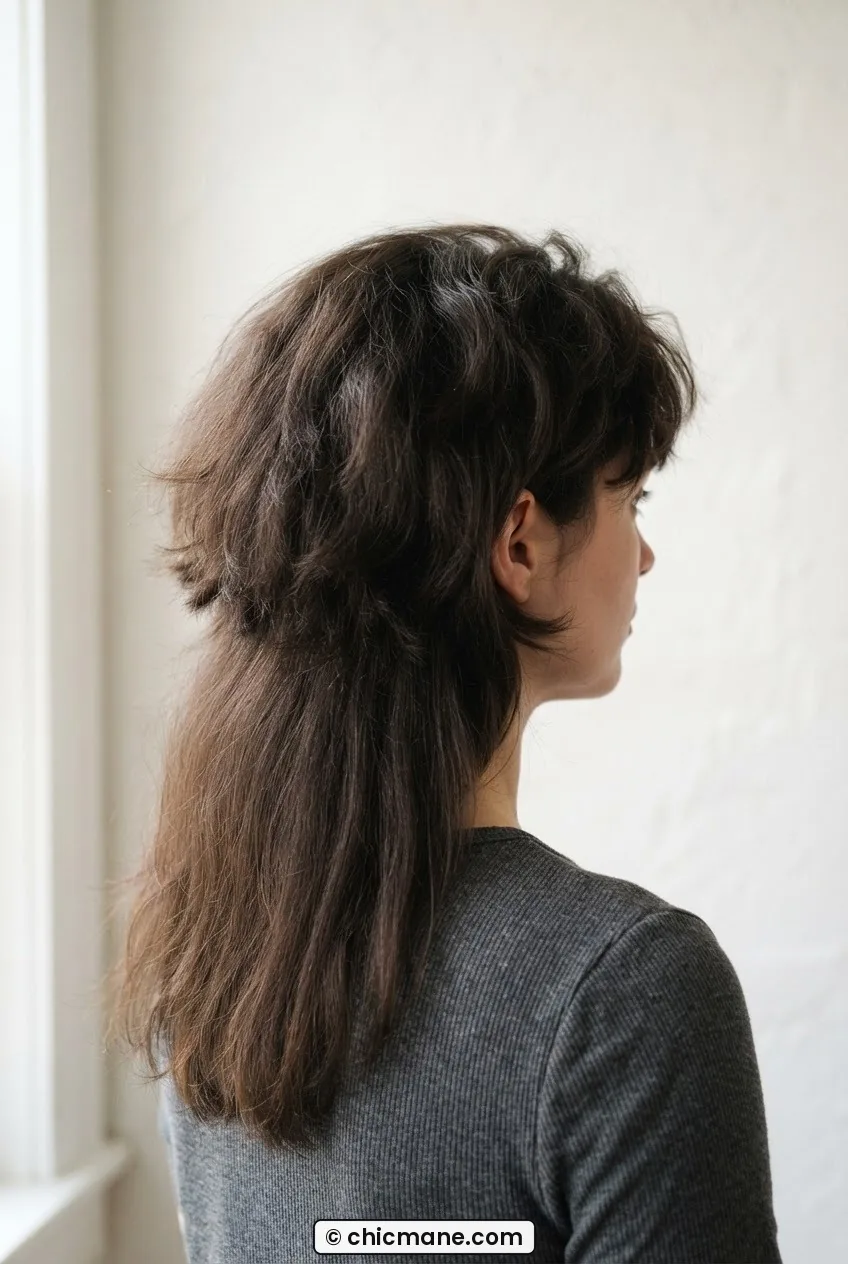
Months five through eight. I am going to be honest with you: this stretch nearly broke me more than the early stage did, and I think it is wildly underrepresented in every grow-out guide I have ever read. The shortest layers had grown just enough to lose all their original shape but not enough to blend with the longer sections. My hair looked — and I say this with love for myself — like a triangle. Wide at the shoulders, flat on top.
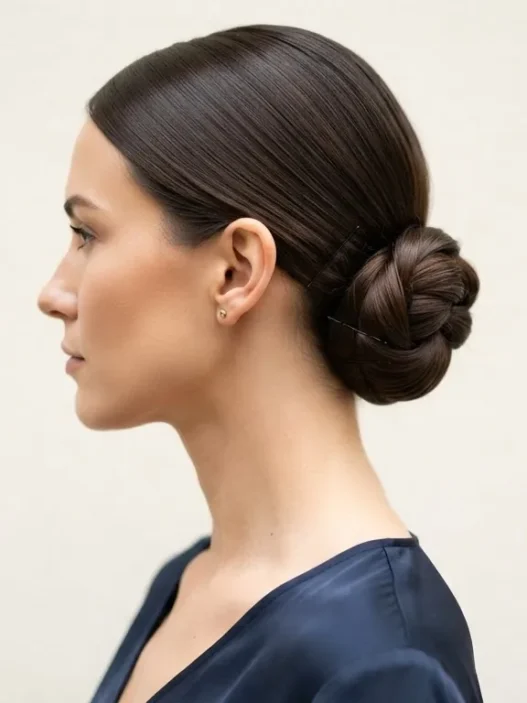
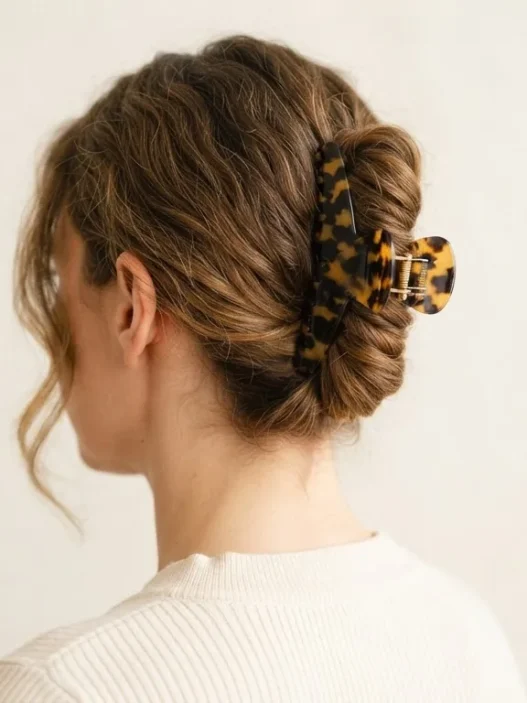
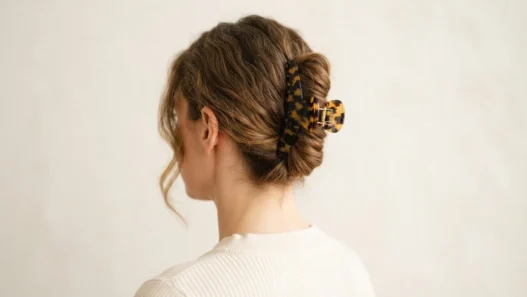
I started wearing my hair up almost every day. Half-buns, low clips, anything to hide the width. If you are in this phase right now, I deeply recommend spending some time with quick open hairstyles you can pull off in under five minutes — because styling energy is genuinely low in the awkward middle, and having a handful of easy options saved my sanity. A claw clip becomes a personality. A low twist with two pieces out becomes a whole vibe. You just have to let go of the idea that your hair should look polished right now.

Month six was when I started doing weekly deep conditioning treatments. Not because anyone told me to, but because I needed something to feel like progress. My ends were not damaged — I had been careful with heat — but that ritual of doing something intentional for my hair every Sunday evening genuinely helped my mindset. Small acts of maintenance feel like agency when the growth itself is so slow you can barely measure it.
I also want to say something slightly controversial here, and I mean it sincerely: I think the standard advice to “just embrace your natural texture during the grow-out” is, for some hair types, genuinely unhelpful. My texture during this phase was not something I wanted to embrace. It was confused. Letting it air-dry into its confused state did not make me feel empowered — it made me feel like I had given up. There is nothing wrong with using a round brush and a blow-dryer to impose some order on your hair while it figures itself out. You are not betraying the grow-out by styling it.
The Stage I Nearly Gave Up
Month nine. I sat in the chair at my usual salon and seriously, sincerely considered asking for a chop. Not back to a bob, but something shorter than what I was doing — a collarbone cut, maybe, something with structure. My stylist talked me down, but only barely. What she said has stuck with me: “The layers you hate right now are going to be the layers that give you movement in three more months. They are not your enemy — they are just not finished yet.”

I did not cut. But I understood in that moment why so many people do. The grow-out is an act of sustained faith in something you cannot see yet. And there is a specific kind of emotional drain that comes from looking in the mirror every morning at a hairstyle you did not choose and would not choose, knowing it is going to look the same tomorrow. The best resource I found at this stage was looking at hairstyle inspiration across the full length spectrum from crop to waist — not to pick something to cut into, but just to remember that every length has possibilities. There was something genuinely calming about seeing it as a spectrum rather than a stuck point.
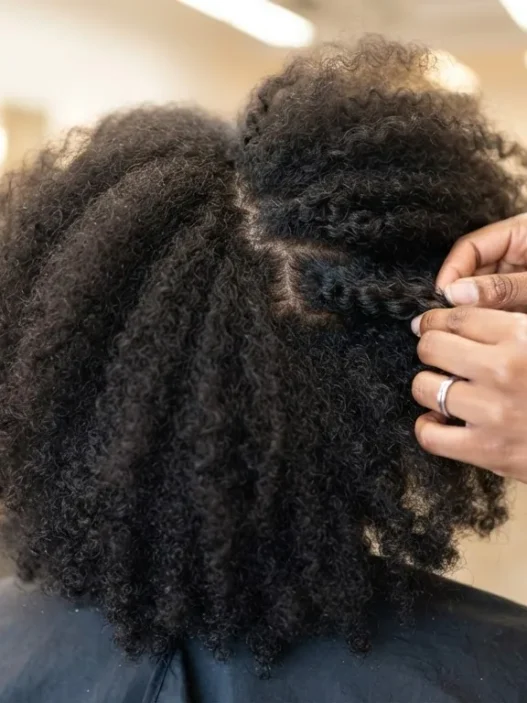
Month nine was also when I started paying attention to thick hair grow-out tips in a more structured way — oiling my scalp twice a week, switching to a wide-tooth comb on wet hair, and genuinely being more careful about how I slept on it. Silk pillowcase, loose braid, no tight elastics. Whether or not any of it measurably accelerated growth I honestly cannot tell you. But it kept my ends healthier, and healthy ends are the only thing standing between you and a forced haircut.
A Video That Actually Talked Me Down
The Trim That Set Me Back
Month eleven. I need to tell you about this one because I think it is a cautionary tale I wish someone had shared with me.
I went in for what I thought was a simple dusting — half an inch off the ends to clean things up. I had communicated this clearly. What I got was closer to two inches off, plus some “reshaping” of the layers that my stylist felt were getting “too heavy at the bottom.” She was not wrong that they were heavy. She was also not wrong that it looked better immediately after the cut. The problem was that she trimmed the longer under-layers in a way that reset my longest point by about six weeks of growth. I did not fully realize this until I got home and compared photos.

I was not devastated. But I was frustrated in a specific, quiet way that I think anyone who has grown out a layered cut will recognize. You do the math. Six weeks. That is a month and a half. And it happened in twenty minutes because I did not ask enough questions in the chair.
What I do now: I bring a photo of exactly the length I want to maintain, I use specific measurements when I can (“please take off no more than one centimeter”), and I ask my stylist to show me on a comb before she cuts. Understanding how your hair sections work before a trim appointment genuinely changes the conversation you can have with your stylist. You stop being a passenger.
A side note: if you are considering any kind of at-home dusting during a grow-out, the technique matters enormously. Reading through a proper hair tutorial sectioning guide before you pick up scissors at home is not optional — it is the difference between a clean result and an accidental layer that you will be growing out for another six months.
Month Fourteen
This is where I am right now. And I want to resist the urge to wrap this up in a bow, because the honest truth is that I am not done.
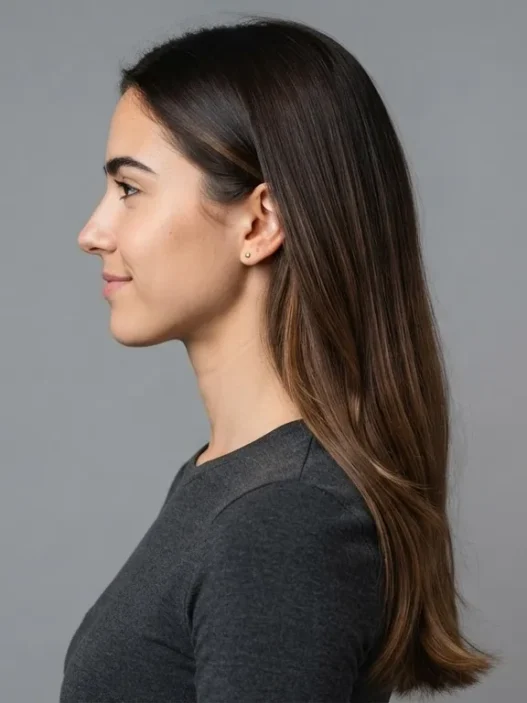
My layered hair is sitting at about bra-strap length now on the longest sections. The original short layers have grown to somewhere around collarbone, which means I finally — finally — have some cohesion between the different lengths. The triangle phase is genuinely behind me. When I look at photos of women in the early stages of growing their layers out, like the image shown here where you can see the weight of the longer sections starting to pull everything into a more unified shape, I can actually recognize what my hair was trying to become all along.
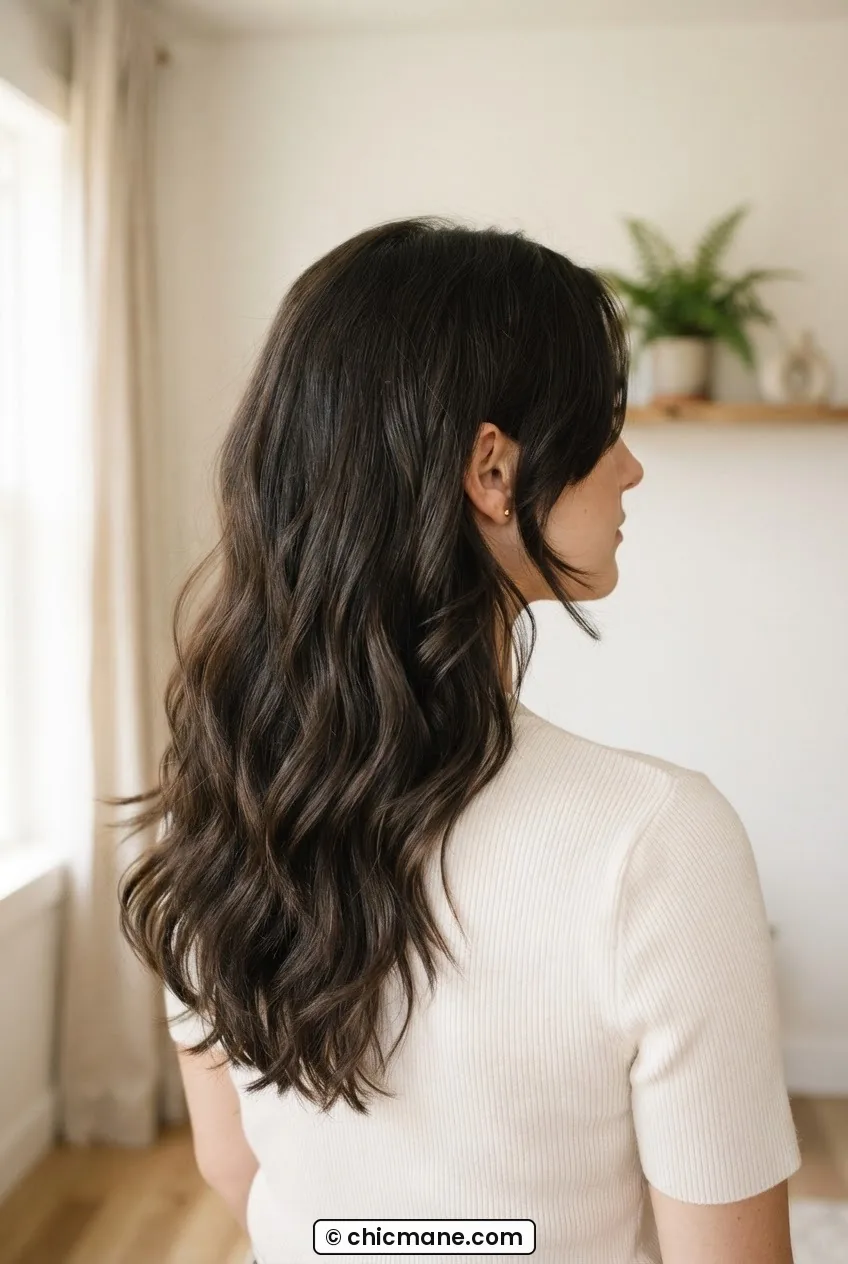
But there is still a gap between where I am and where I want to be. My goal was always past the shoulder, closer to mid-back — something with enough length that the layers read as movement rather than just different lengths that happen to coexist. I am not there. I am maybe four or five months away, if I am conservative with trims and lucky with growth rate.
What has surprised me most is how different the grow-out experience is depending on where you started. If you are starting from a short layered cut, you might want to look through options for navigating a short bob phase as one of your transitional stages — because that bob moment is coming whether you plan for it or not, and having a sense of how to work with it makes the whole journey less reactive. Planning for the stages you have not hit yet is genuinely useful.
My hair is not the hair I wanted fourteen months ago. But it is also no longer the hair that made me blink at myself in parking lots. It is somewhere in between, doing its slow thing, and I have made a kind of peace with that.
Questions I Get About This
How often should I trim while growing out layered hair?
Every twelve to sixteen weeks, not every six to eight like you might have been told. The traditional eight-week trim schedule exists to maintain a shape — not to grow length. When you are growing out, you want to hold on to every centimeter you can. Just make sure whoever is trimming understands the difference between dusting the ends and reshaping the layers.
Is there a “worst” length in the grow-out process?
For thick hair, yes — and it is usually around months five through eight when the layers are long enough to add width but not long enough to have any unified weight. This is the triangle phase I described above. Knowing it is coming does not make it painless, but it does make it survivable because you can plan your styling strategies in advance rather than being blindsided.
Does cutting layers slow down the grow-out?
Technically no — cutting hair does not affect the rate at which it grows from the scalp. But getting too-aggressive trims on the longest sections absolutely does delay when you reach your length goal. Those are different things. Hair grows at roughly the same rate regardless of what you do at the ends; it is your trimming habits that determine how much of that growth you actually keep.
Can I add more layers while growing out to make the shape look better?
You can, and sometimes it genuinely helps the silhouette during the awkward middle phases. But I would be very specific with your stylist about what you mean — “face-framing layers” and “internal layers for texture” are very different requests with very different grow-out implications. Ask to see where exactly they are planning to cut before they do it, and reference your longer-term goal so they can work backwards from it rather than just fixing what is in front of them right now.
Still in it. Still growing. See you in a few months.