








I saved a photo once — soft, effortless waves, that lived-in kind of girl hair that looks like the person wearing it has never tried too hard in her life. I showed it to my stylist. She nodded. I walked out with something that looked, objectively, like a different species of hairstyle. It wasn’t her fault, and it wasn’t mine. But I spent about three weeks confused and mildly betrayed by a stranger on Pinterest.
Since then I’ve become a little obsessed with the gap between the photo and the result. Not the stylist-skill gap — that’s a different conversation — but the structural gap. The stuff that a photo genuinely cannot tell you about your own head.
The Photo That Started It All
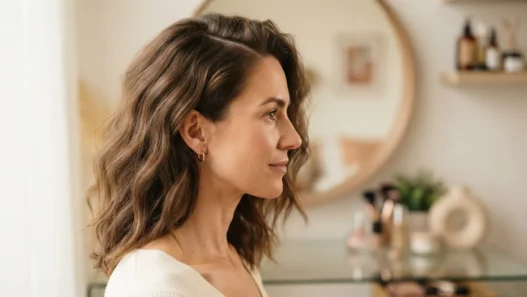
The photo was probably shot at golden hour, or in a studio with diffused light that flattered every strand. The model’s hair moved like water. It looked easy. And that ease is exactly what sold me on it — I wanted easy. What I forgot, and what I think most of us forget when we’re scrolling at midnight, is that ease in a photo is a collaboration between the hair, the light, the photographer, and quite possibly a product budget I don’t have.
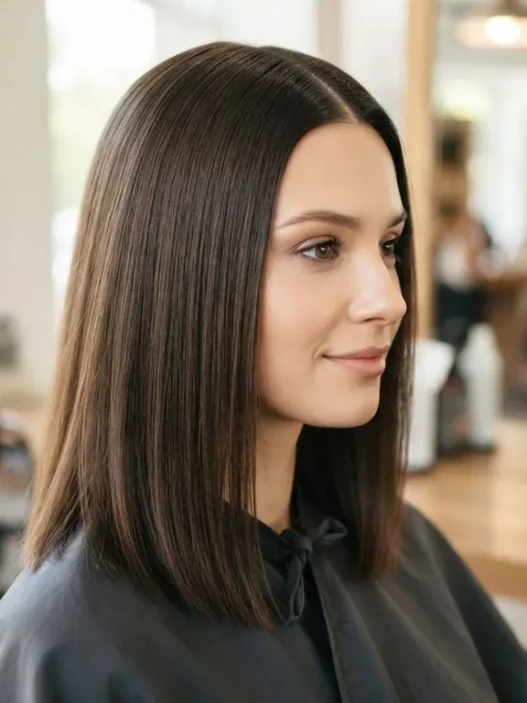
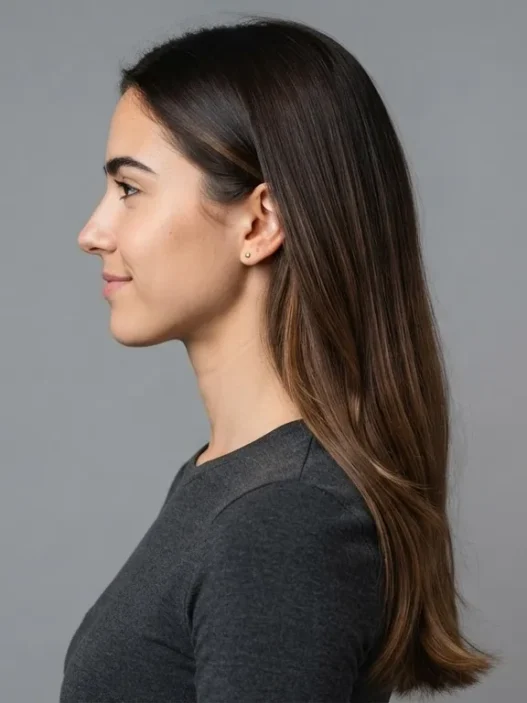
Look at her in this first image — notice how the light is hitting her mid-lengths just so, making the waves look almost weightless. That’s real hair, real shine, but also really specific light. In a bathroom mirror at 7am, those same waves might read completely differently.
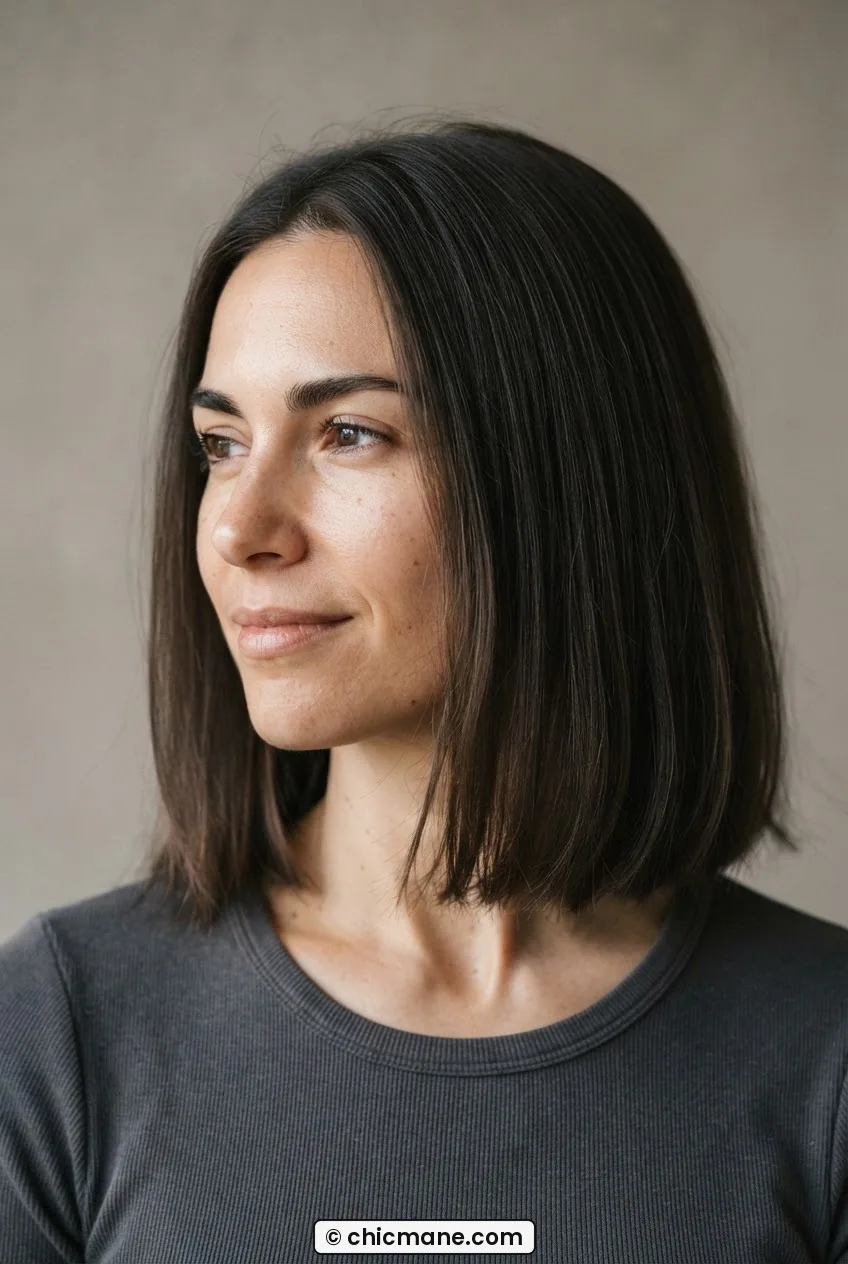
I’m not saying don’t use reference photos. I use them constantly, and I think they’re genuinely useful tools. What I’m saying is that the photo is the beginning of a conversation, not the answer. And if you go in treating it as a blueprint rather than a direction, you’re setting yourself up for that same three-week quiet disappointment I lived through.
The variables the photo hides are the ones that matter most. Let’s get into them properly.
Density Changes Everything
This is the one I wish someone had explained to me much earlier. Density — the actual number of individual strands on your scalp — shapes how every cut falls, how much volume naturally appears, and how long a style holds without product. It’s not about how thick each strand is (that’s a different thing entirely). It’s about how many of them there are.
Fine-haired women often have very high density. Thick-stranded women can have surprisingly low density. The photo you fell in love with might belong to someone whose density is the mirror opposite of yours, and that means the same cut will behave in a completely opposite way on your head.
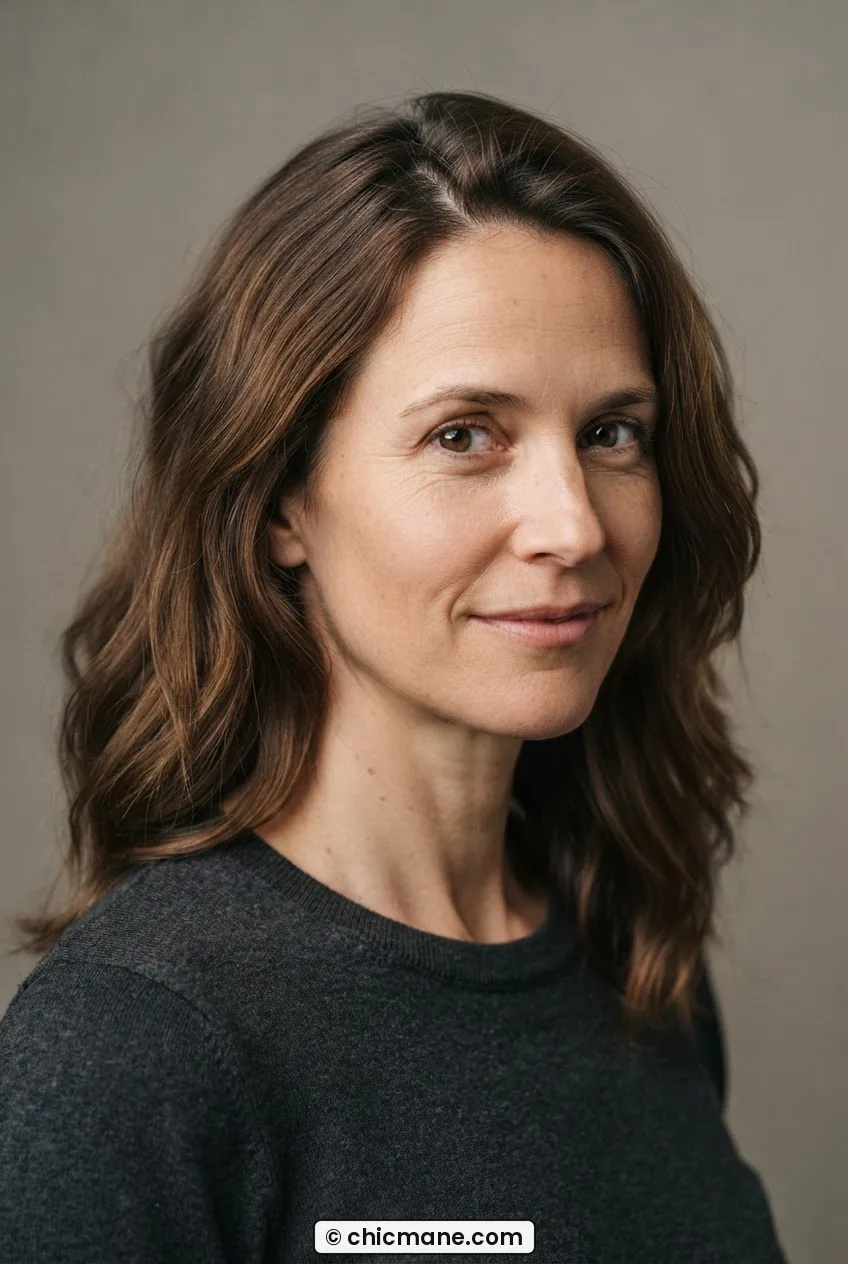
Here’s the thing I find most underrated: women with high density and fine strands often get the best results with styles that look deceptively simple in photos — loose braids, soft half-ups, things that need volume to not go flat. If that sounds like you, browsing through some open hairstyle options for when you have five minutes is actually more useful than hunting for a complex cut that your hair will fight against all day.
On the other side: if your density is genuinely low — fewer strands overall — a style that looks full and lush on your reference photo might just look thin on you, not because the cut is wrong, but because there’s less raw material. Layers can help. So can learning volumizing techniques that work specifically for your strand count.
The blunt honest truth? Most of us have no idea what our actual density is. We’ve just accepted that our hair “doesn’t do that thing.” Sometimes the reason it doesn’t is density, and knowing that is genuinely freeing — because it means you can stop trying to fix something that isn’t broken and start finding styles that work with what you have.
A Stylist Breaks Down Density Live
Your Growth Pattern Is the Hidden Variable
Growth pattern is where it gets sneaky. It’s the direction your hair grows out of your scalp, and it creates all those cowlicks, whorls, and hairline quirks that no photo of someone else will ever prepare you for. Your growth pattern is essentially your hair’s personality before it’s even been cut.
I have a small but persistent cowlick at the back crown. It means any style that requires the hair to lay flat from root to tip at the crown is fighting a losing battle against my actual biology. Pixie cuts? Gorgeous on other people. On me, the crown section needed about four times as much product as the model in the photo was using, and it still had opinions of its own by lunchtime.
A few things worth knowing about growth pattern and style choice:
- A strong widow’s peak changes how fringes and curtain bangs sit — they often need to be cut slightly longer and swept to account for the growth direction at the center hairline.
- A double crown makes any style that requires the crown to be the highest, fullest point genuinely difficult to maintain without product.
- Growth that sweeps hard to one side can actually be an asset — you’ve got a natural part, and fighting it costs you real effort every single day.
- Nape swirls affect how short cuts close up at the back. A style that ends at the nape on your reference photo might bubble out or kick up differently depending on your growth.
None of this means you can’t have the style you want. It means you need a stylist who looks at your actual scalp — the real map of your head — before making decisions. Understanding proper sectioning for haircuts is honestly more relevant to your result than any photo you walk in with.
What the Photo Actually Hid
Here is my slightly controversial opinion, and I’m standing by it: the biggest thing a reference photo hides is the maintenance. Not effort in general — actual, specific, daily maintenance. The wash days. The products. The time. The photos that go viral for that effortlessly sassy, styled-but-not-styled look? Those often require the most backstage work.
I think the hair industry — and I say this as someone who genuinely loves hair — has a complicated relationship with showing maintenance honestly. The “no-effort” aesthetic is a whole brand that takes significant effort to produce. And when you replicate the cut without replicating the routine, you get a version that doesn’t quite match.
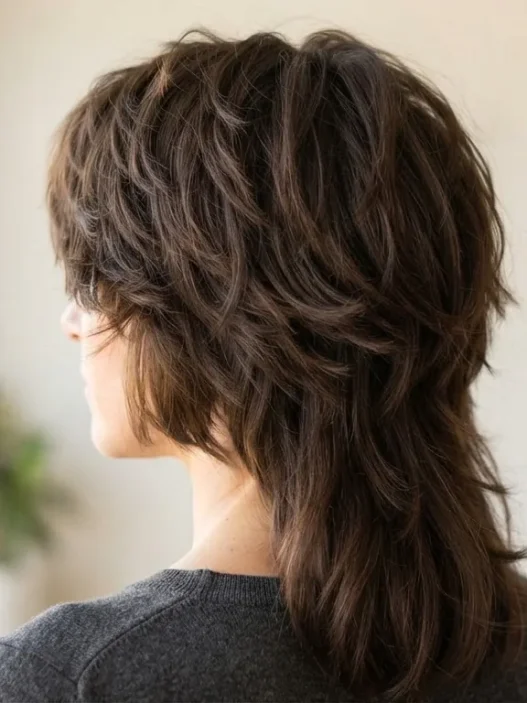
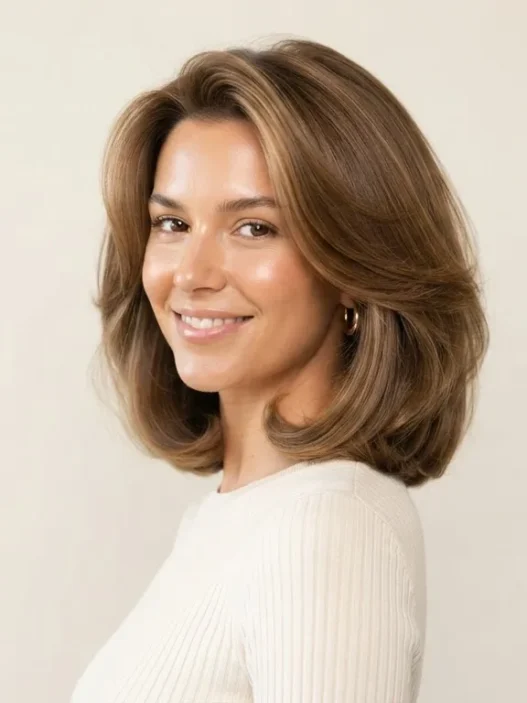
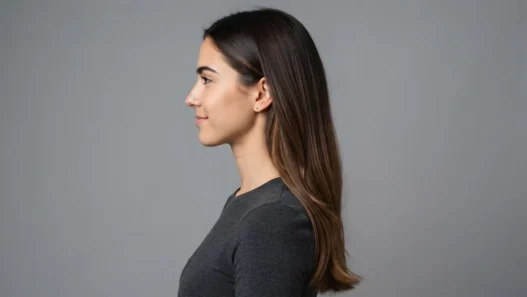
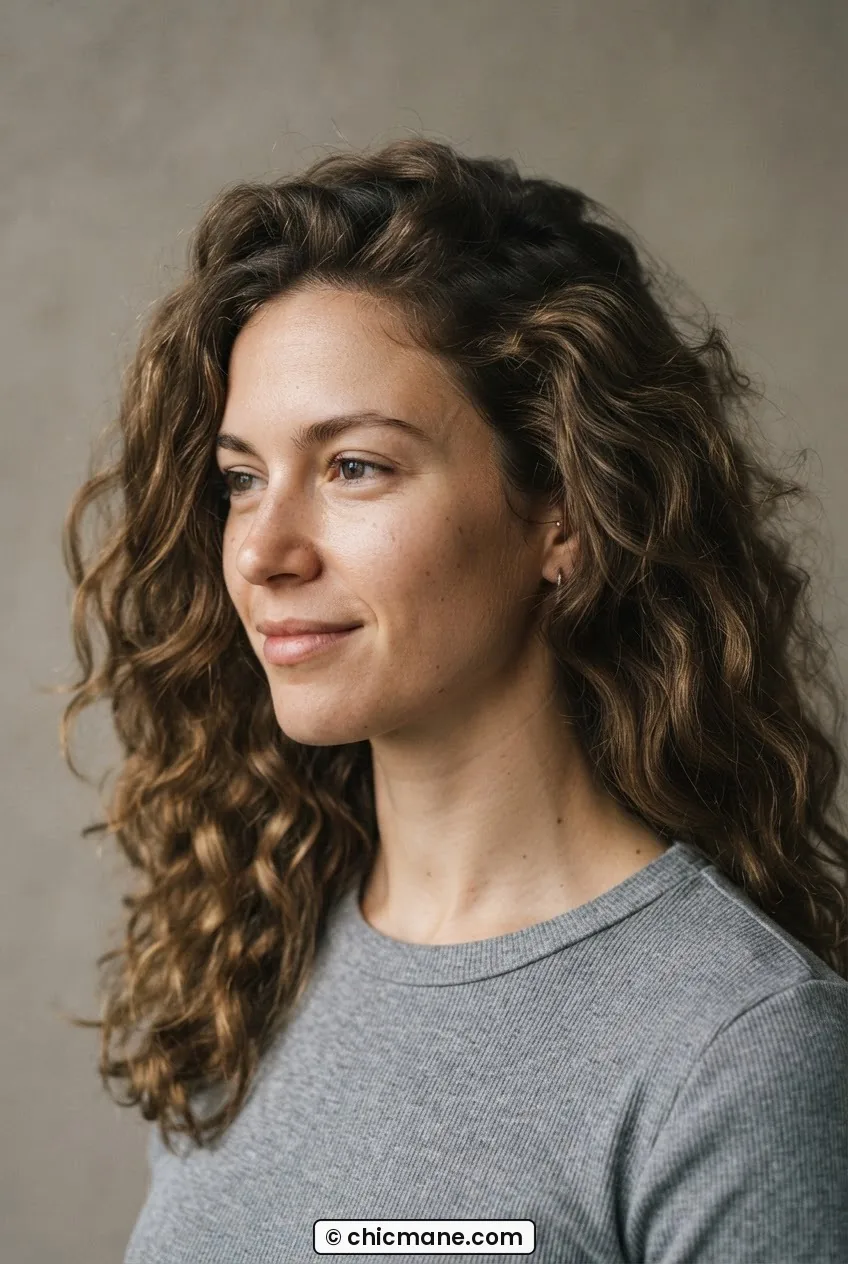
Look at her in this image — the texture here is gorgeous, really. But what you’re seeing is the result of a diffuser, a styling cream, probably a second-day refresh routine, and hair that knows exactly how it wants to sit. You’re not seeing the Wednesday morning when it didn’t cooperate. None of us are posting that.

There’s also the matter of color. So many styles read beautifully because of how light catches dimension — highlights, balayage, even subtle toning. A blunt cut that looks rich and interesting on someone with a lived-in color might look flatter on hair that’s one solid shade, not because the cut is bad, but because the color is doing half the heavy lifting in the photo. If you’re looking for styles that genuinely work across a range of lengths and color situations, a browse through hairstyle ideas from crop to waist gives you a sense of how structure and length interact before color enters the picture.
And then there’s face shape — which I’m not going to reduce to a geometry lesson, because I find the traditional “oval is best” framing exhausting. But the relationship between where a cut ends and how it frames your jaw, cheeks, and forehead is real and individual. A chin-length style that creates a beautiful oval framing effect on your reference photo might hit you at a point that emphasizes something you’d rather not emphasize. That’s not a character flaw. It’s just structure.
How to Bring a Reference That Survives Reality
This is the part I actually love talking about, because it’s practical and it works. The goal isn’t to abandon reference photos — it’s to use them better. Here’s what changed the game for me.
Bring multiple photos. Three is better than one. If you can find the same style on at least two different face shapes, hair types, or lengths — one that’s slightly off from your dream — you’re giving your stylist real information about what you actually want from the style, not just what you want from that specific person’s features.
Bring a photo of what you don’t want too. This sounds odd, but it’s maybe the most useful thing I’ve ever done at a salon. Showing a stylist “this is beautiful but I don’t want this” tells them exactly where your boundaries are, which is information a single inspiration photo can’t give them.

Tell them your actual morning routine. How many minutes, what tools, what your hair feels like unwashed on day two. If your reference is a style that requires a round brush blowout every single time and you’re a wash-and-go person, your stylist needs to know that to give you a version you’ll actually be able to live with.
Ask specifically what would need to change to make it work for you. A good stylist will tell you honestly. They might say the length needs to adjust, or that your density means the layers need to be placed differently, or that there’s a face-framing piece that will do the same job more effectively for your structure. That conversation is the whole point. For braided and textured girls especially, the conversation often goes deeper — thinking through things like how braided styles work structurally can help you understand why a style needs adapting rather than copying.
And if you’re ever between appointments and experimenting on your own, take a look at how sectioning actually works — the sectioning map that most tutorials skip explaining is one of those things that makes every styling attempt make more sense, including why your reference photo’s result might need a completely different starting point than your usual routine.
The reference photo is a direction, not a destination. The destination is a style that looks good on your actual head, in your actual light, on a Tuesday when you didn’t try that hard.
There’s also something worth saying about the current moment in girl hair trends — the styles circulating in 2026 lean heavily into texture, movement, and what I’d describe as “honest volume.” If you’re noticing a lot of softly tousled, lived-in looks right now, that’s partly because the aesthetic genuinely suits a wider range of textures than the sleek, controlled styles that dominated a few years ago. Even something athletic and functional like the resurgent styles in how softball hairstyles came back into fashion shows how movement-first styling has crossed into everyday wear. It’s a good moment to find a style that actually works with your hair rather than against it.
Questions I Get About This
Is it ever the stylist’s fault when a reference photo doesn’t translate?
Sometimes, yes — but less often than we assume. More often it’s a communication gap: the client knows what they love about the photo, but the stylist doesn’t know which part of it matters most to them. Being specific (“I love how it hits the collarbone, but I really need more volume at the crown”) is more useful than handing over the image and hoping.
How do I know if a style will actually work for my face shape before committing?
Ask your stylist to talk through where the weight and length will land relative to your specific jawline and cheekbones — not in general, but on you, in the chair. Some stylists will even do a rough dry trim first so you can see the silhouette before anything is finalized. And understanding hair length and face shape is useful prep before you even walk in the door.
What if my hair just genuinely won’t do a style I love?
Then it’s worth having an honest conversation about what’s close enough to give you the feeling of that style, even if not the exact execution. A lot of the time what we love about a look is something abstract — the lightness, the edge, the softness — and a good stylist can often get you to the feeling even when the specific cut won’t translate. That reframe genuinely helps.
Does hair texture matter more than cut when it comes to matching a reference?
In my experience, yes — texture is often the bigger variable. A cut designed to show off natural wave on a 2B curl pattern will look flat and shapeless on straight fine hair unless the stylist accounts for it. Always try to find reference photos taken on hair with a similar natural texture to yours, not just the same length or shape.
If you’ve made it this far — thank you, genuinely. I wrote this because I’ve had that quiet deflation in front of a mirror, and I think it happens to a lot more people than talk about it. Your hair is not the problem. The photo just couldn’t show you everything. Go find something built for what you actually have.