










Month four of a grow-out is the real villain. Not month one, not month two when you still feel brave about it — month four, when the shape is gone and the length is not quite anything yet. I’ve been there more times than I want to admit, and the thing that saved me every single time was picking a cut that works with the awkward inch rather than fighting it. Chocolate brown hair actually makes this easier than you’d think — the depth of the colour disguises a multitude of mid-grow-out sins, and the right cut channels that richness into something intentional. Here are eleven cuts I’d genuinely recommend to anyone riding out the in-between.
Your Grow-Out Survival Guide
- 1. The Long Layered Shag
- 2. The Soft Curtain Fringe
- 3. The Rounded Bob
- 4. The Butterfly Cut
- 5. The Face-Framing Lob
- 6. The Textured Wolf Cut
- 7. The Blunt Midi
- 8. The Wispy Pixie Grow-Out
- 9. The Feathered Layer Cut
- 10. The Collarbone-Length Bixie
- 11. The One-Length Curtain Bob
- Questions I Get About This
1. The Long Layered Shag
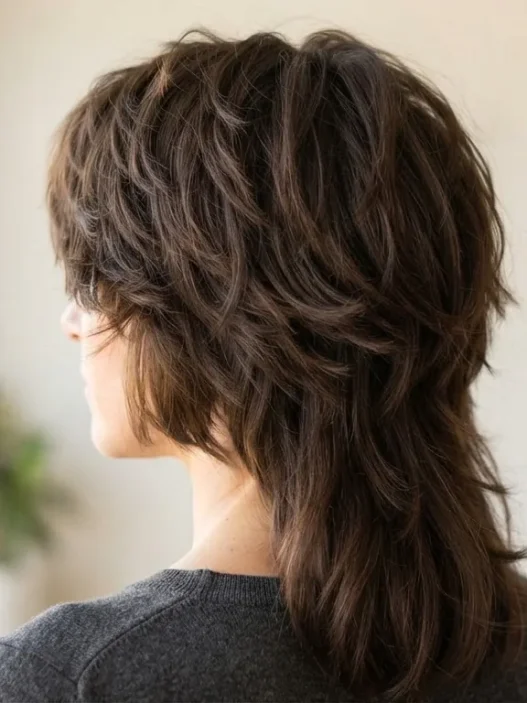
The long layered shag is, in my opinion, the single most forgiving cut you can get when you’re growing something out. The layers are already meant to be uneven. They’re designed to look like they’re at different lengths — which means three months of growth just makes the whole thing feel more intentional rather than neglected.
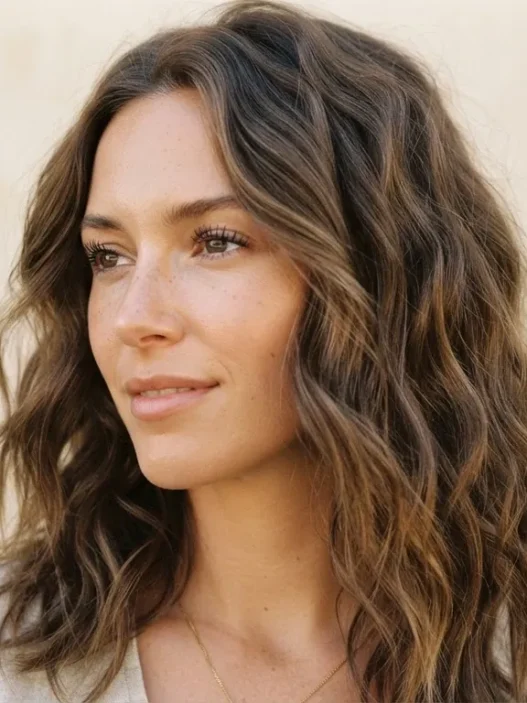
On chocolate brown hair specifically, the layering creates movement that catches the light differently at each level. You get this beautiful dimensional shift from root to tip that reads like balayage even if you haven’t touched a brush to your hair in months. She’s wearing hers parted just off-centre in the photo below, and look how the layers cascade — each piece a different value of warm brown. That’s the depth of the colour doing the heavy lifting, not hours of styling.
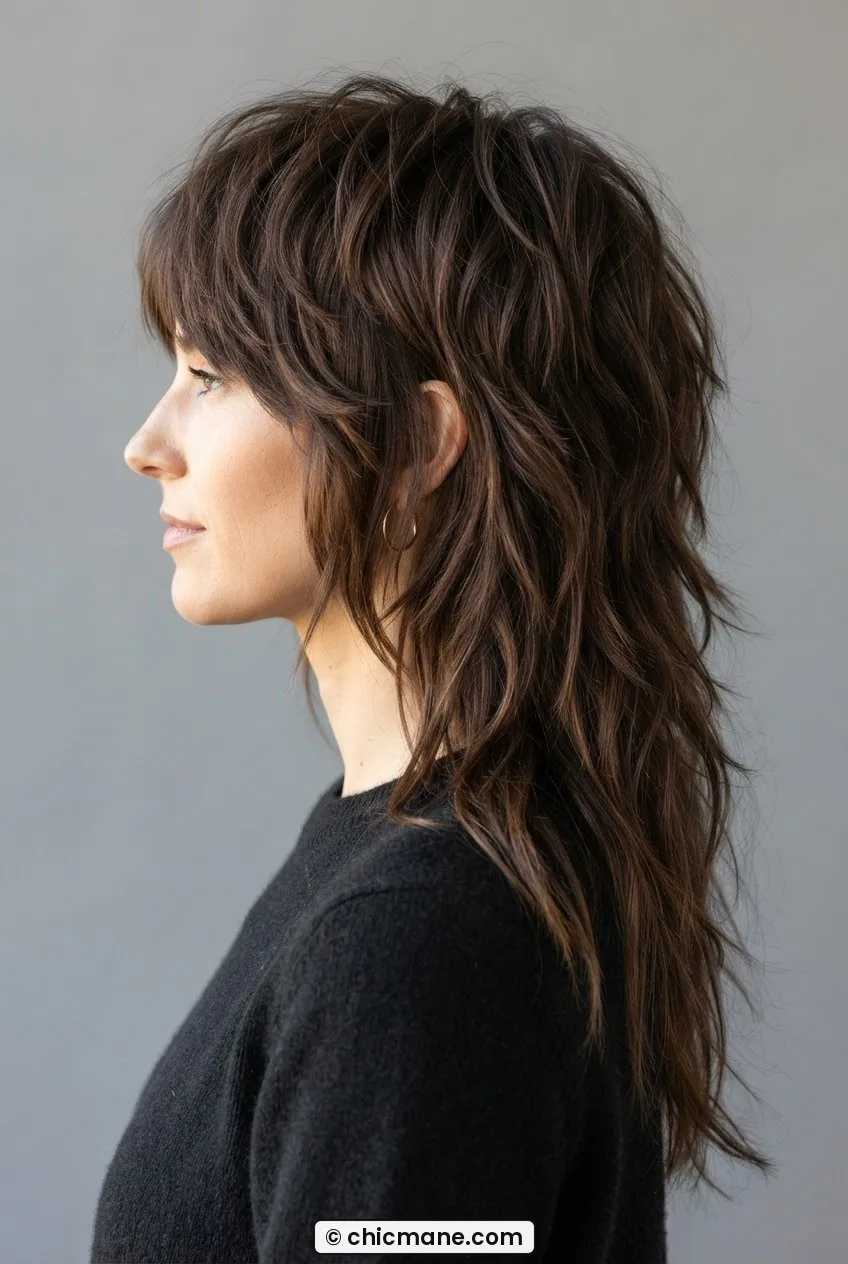
Trim interval: every 12–14 weeks, trimming only the very ends to keep split ends from travelling up. The shape genuinely gets better as it grows, which almost never happens with other cuts.
2. The Soft Curtain Fringe
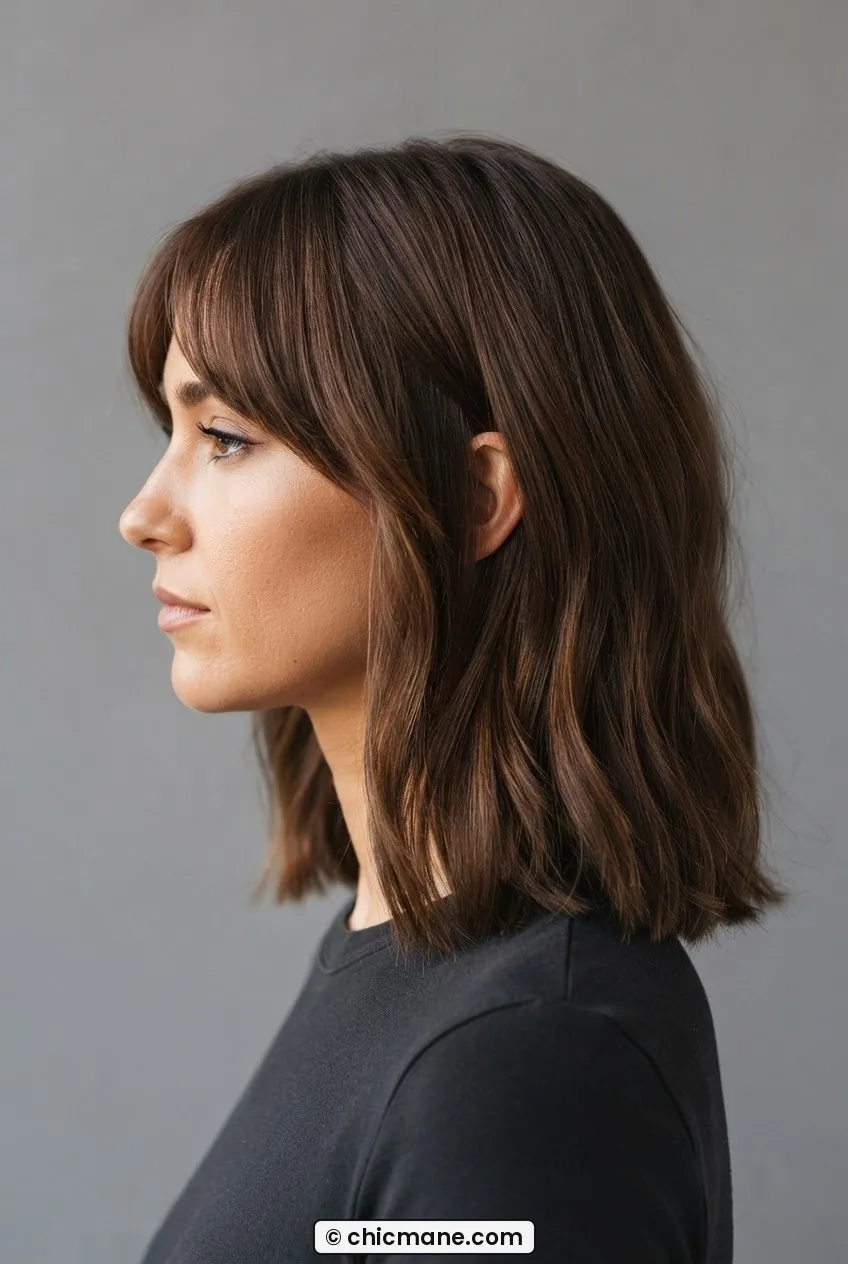
Technically this is an addition rather than a full cut, but hear me out — if your length is at that irritating between-chin-and-shoulder zone, a soft curtain fringe redirects all the attention to your face. Nobody is looking at the scraggly ends when there’s a perfectly parted fringe framing your cheekbones.
Curtain bangs on chocolate brown hair have this gorgeous effect where the face-framing pieces look almost highlighted, because the hair naturally lightens very slightly around the hairline. It fakes dimension. And as they grow, curtain bangs just become longer curtain bangs — which is still a look. They need a light trim every six to eight weeks just to keep them from covering the eyes, but the rest of your length can keep growing unbothered. I love this option for anyone who’s growing out a short style and not quite ready to commit to a full cut yet.
3. The Rounded Bob
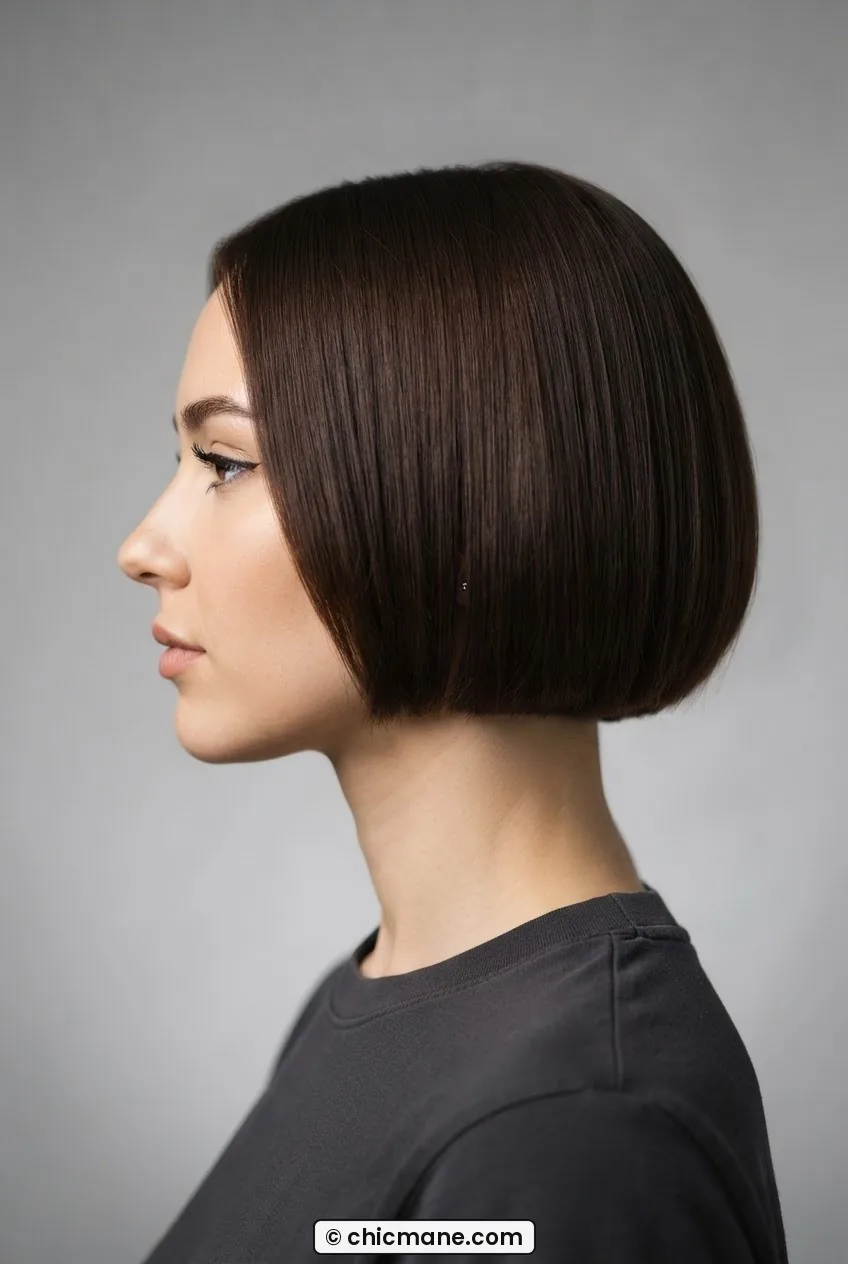
The rounded bob is the one I’d pick if someone put a gun to my head and made me choose a single grow-out cut. It’s chin-length or just below, cut with a slight curve so the back is marginally shorter than the front. As it grows, the curve softens into a C-shape, then into a very wearable lob. You’re essentially buying yourself four to five months before it looks like anything other than “intentional.”
Dark brown hair really suits this shape because the bluntness of the line emphasises the colour’s depth. There’s nothing quite like a rich cocoa brown bob swinging at the jaw — it looks expensive in a way that lighter shades just don’t replicate. Trim every ten to twelve weeks, just taking off a centimetre to maintain the roundness at the back.
Worth reading through the hair styles for medium hair length guide if you’re debating whether the bob or the lob is the right call for your face shape — it covers the in-between territory really clearly.
4. The Butterfly Cut
The butterfly cut is having a major moment in 2026, and I think it’s specifically flattering for grow-outs because of how it’s structured. The crown layers are cut short and voluminous — almost like a ’70s blowout — while the underneath hair keeps its length. It creates this incredible winged silhouette when you blow it out.
Here’s why it works for growing out: the top layers are supposed to be at a different length than the bottom. Growth just adds to the drama rather than ruining the shape. And on rich brown hair, that crown volume reads so beautifully — the lighter, warmer tones sit at the top where light hits, and the deeper chocolate sits underneath creating shadow. She’s got hers blown back in the photo, and that wingedness? That’s exactly what I mean. You can see how the top section almost floats above the rest.
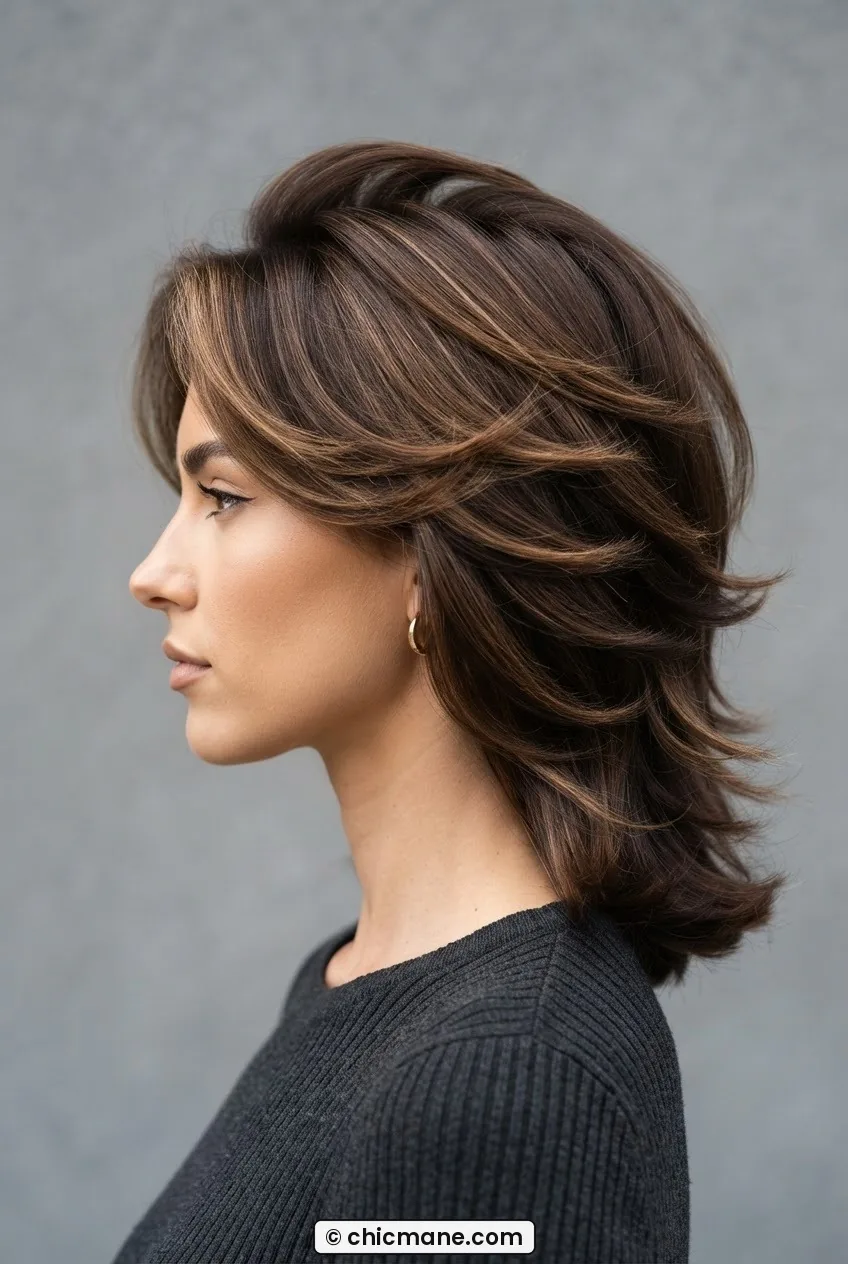
Trim every twelve weeks at the crown layers only. The length underneath can go much longer between visits.
5. The Face-Framing Lob
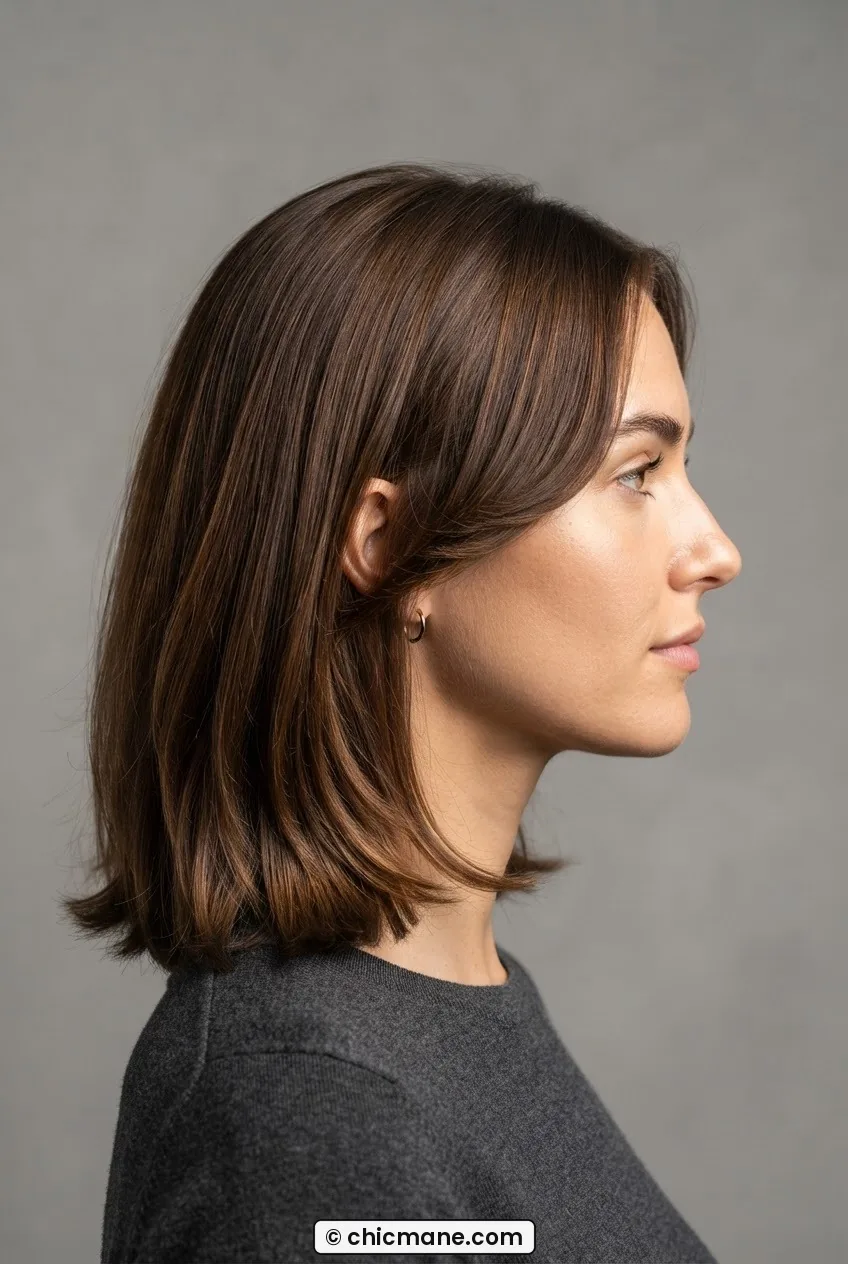
The lob — collarbone length, with a few face-framing pieces cut slightly shorter around the front — is one of those cuts that genuinely flatters almost everyone. I’ve recommended it to so many friends who were growing out bobs or pixies, and every single one of them went back to their hairdresser saying “why didn’t you tell me about this sooner.”
The face-framing variation adds two or three shorter pieces at the front that graduate longer toward the back. As the whole thing grows, the front pieces become part of a natural layer rather than a defined face frame. It’s one of the most graceful transitions in any grow-out I’ve seen. Trim the front pieces every eight weeks if you want to keep the frame sharp; leave them if you’re going for longer and want everything to blend into a longer style.
If you’re at the longer end of a lob and wondering which direction to take your length next, the round-up of hairstyles ideas from crop to waist has some genuinely helpful visual reference for planning your next chapter.
My personal pick for the most versatile grow-out cut is the face-framing lob. It looks polished at the salon, requires minimal maintenance, and reaches shoulder length so gracefully you barely notice the transition. The chocolate brown colour adds so much warmth at collarbone length that it almost never looks tired — even when you haven’t styled it properly all week.
6. The Textured Wolf Cut
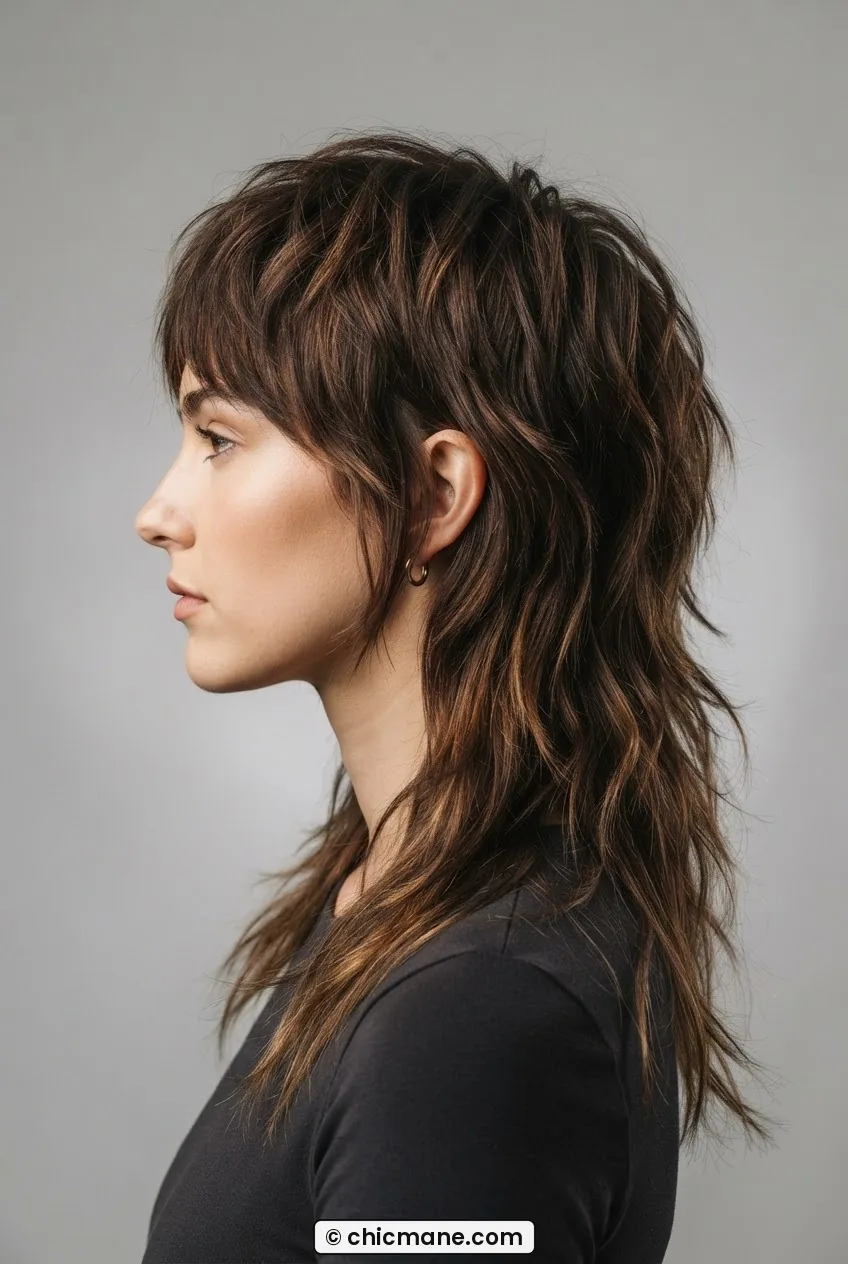
The wolf cut gets a lot of attention for short-to-medium hair, but honestly? It’s even better as a grow-out solution for medium-to-long lengths. The heavy texture and disconnected layers mean the cut has no single “line” to grow out of. There is no blunt edge to get scraggly. Every inch of growth just becomes another layer.
On chocolate brown hair, the texture creates incredible visual interest — each razored piece catches the light slightly differently, so you get this almost holographic depth. The wolf cut suits wavy and slightly coarse textures particularly well, which tends to go hand-in-hand with natural brown hair. Trim every fourteen weeks, focusing on the crown and the very shortest pieces. The rest? Let it run wild.
7. The Blunt Midi
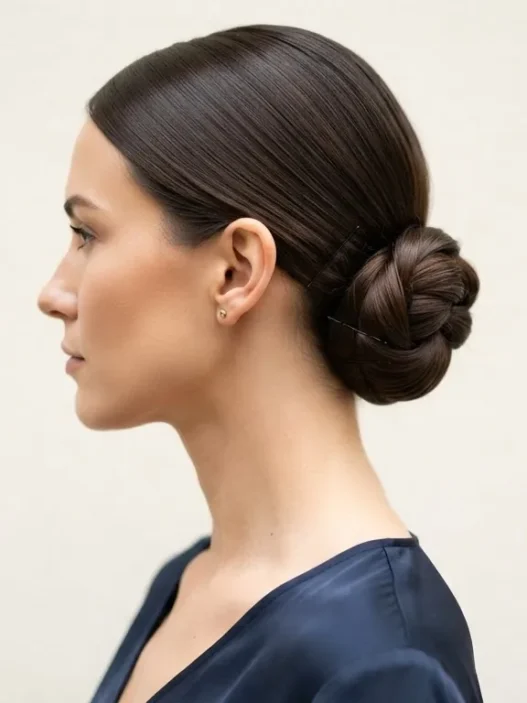
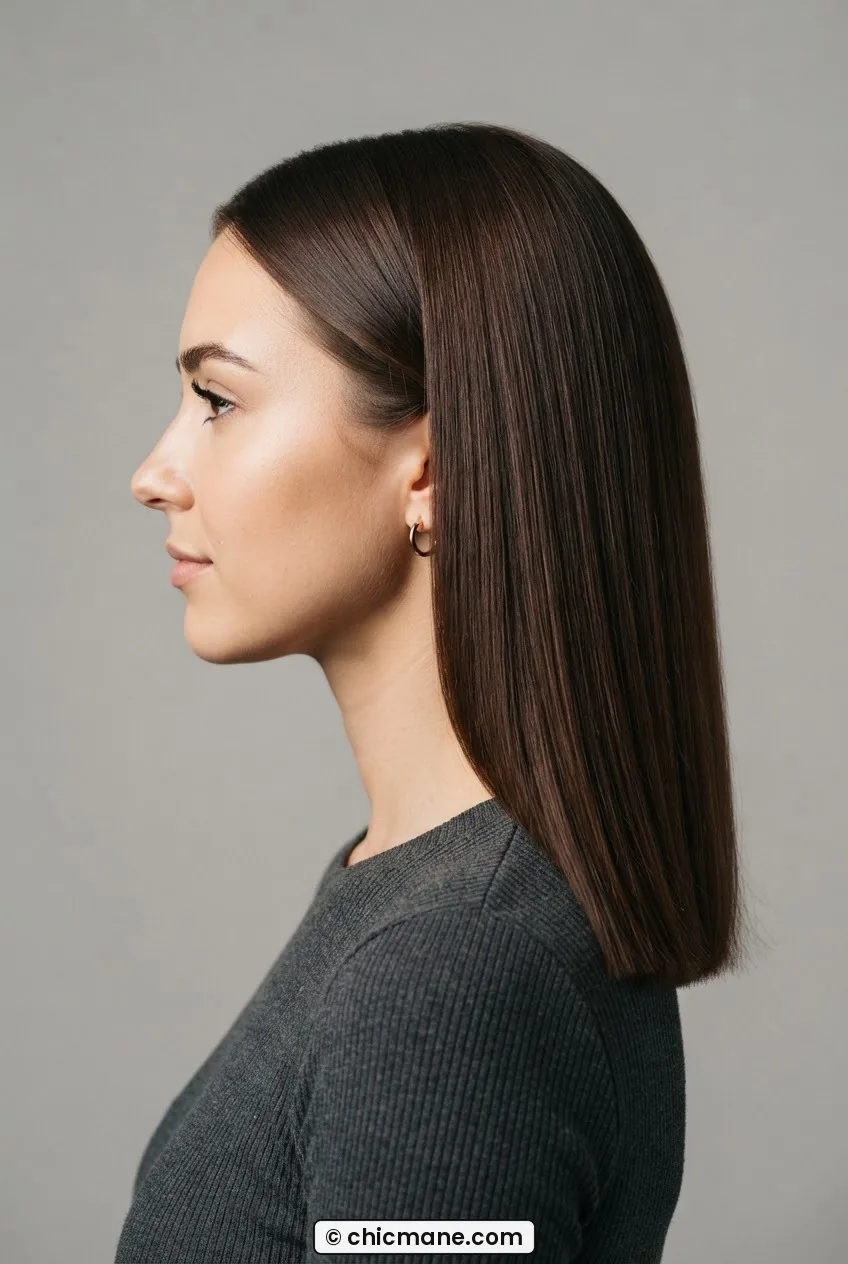
The blunt midi sits at bra-strap length, cut straight across with no layers and no fringe. It sounds counterintuitive for a grow-out — surely you want layers to hide the lack of shape? — but the blunt line actually photographs beautifully and hides a huge amount of irregular growth underneath the surface because the eye goes straight to the strong perimeter.
This one needs a trim every ten weeks to maintain the integrity of the blunt line. Let it go longer than that and the ends start to look thin. But the actual cut itself is so simple that even a budget trim can do it justice. And dark chocolate brown at bra-strap length has a genuinely enviable weight to it — like a curtain. Look at the way her hair falls in one solid sweep in the photo. That’s the whole point of this cut.
8. The Wispy Pixie Grow-Out
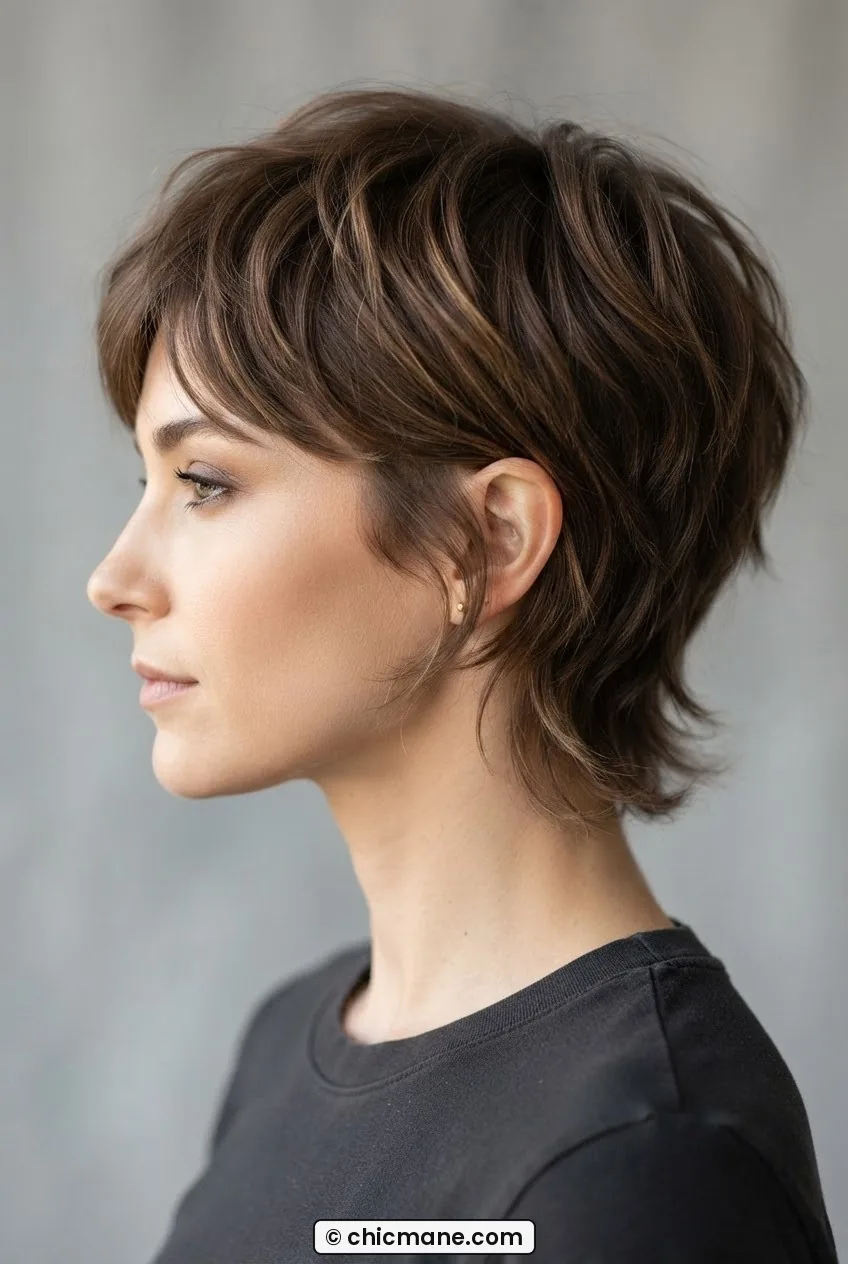
This one is specifically for anyone growing out a pixie — which is arguably the hardest grow-out of all. The wispy pixie grow-out embraces where you are rather than pretending you’re somewhere else. Instead of trying to force a tidy shape onto hair that isn’t ready, you work with the texture by point-cutting the ends so they stay soft and effortless rather than stiff and shapeless.
Chocolate brown colouring helps enormously here because the depth of the tone makes thin, wispy ends look intentional rather than sparse. The colour has enough presence to carry the style even when the style itself is essentially controlled chaos. Ask your stylist to check your grow-out technique and point-cut rather than scissor-over-comb — the difference is significant. Trim every eight weeks, focusing purely on the neckline and around the ears.
9. The Feathered Layer Cut
I have a genuine soft spot for the feathered layer cut. It’s nostalgic but in a cool, intentional way — think early 2000s but elevated. The layers are long and graduated, feathering out from the face with a lightweight finish. As the cut grows, the feathers just get longer, which is actually a gorgeous silhouette in its own right.
The key is keeping those leading pieces around the face maintained. The back can grow freely — twelve to sixteen weeks between trims for the length — but the face-framing feathers need a check every eight to ten weeks or they start looking overgrown rather than intentional. Rich brown tones make feathering especially dramatic because you can see each individual piece move independently. It’s almost like watching leaves shift in a breeze.
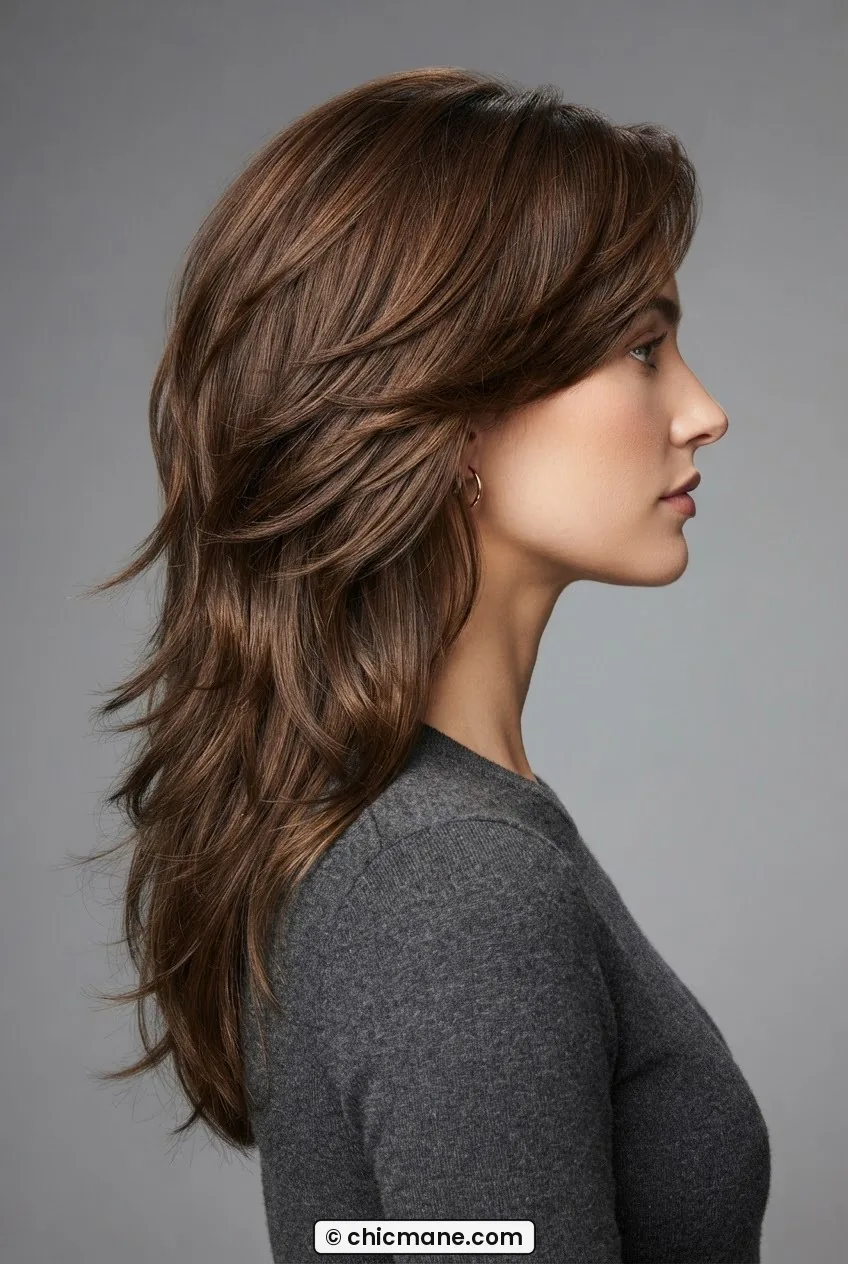
If you’re planning to style this one yourself at home, start with your sections before anything else — a proper hair tutorial sectioning map makes a massive difference when you’re trying to replicate layered looks solo.
10. The Collarbone-Length Bixie
The bixie — halfway between a bob and a pixie — sits at its best at collarbone length when you’re mid grow-out. It’s already past the truly awkward phase of a pixie but not yet at lob territory, and this cut meets you exactly there. Short layers through the crown, slightly longer through the sides, and a clean-ish line at the collarbone.
What I love about a chocolate brown bixie is the contrast between the shorter top layers and the longer collarbone pieces. The colour reads differently at each length because the shorter pieces have more volume and catch more light. It’s a lot of visual interest for a relatively simple cut. Trim every ten weeks — this one doesn’t have as much forgiveness as the shag or the wolf cut, so keeping up with it matters.
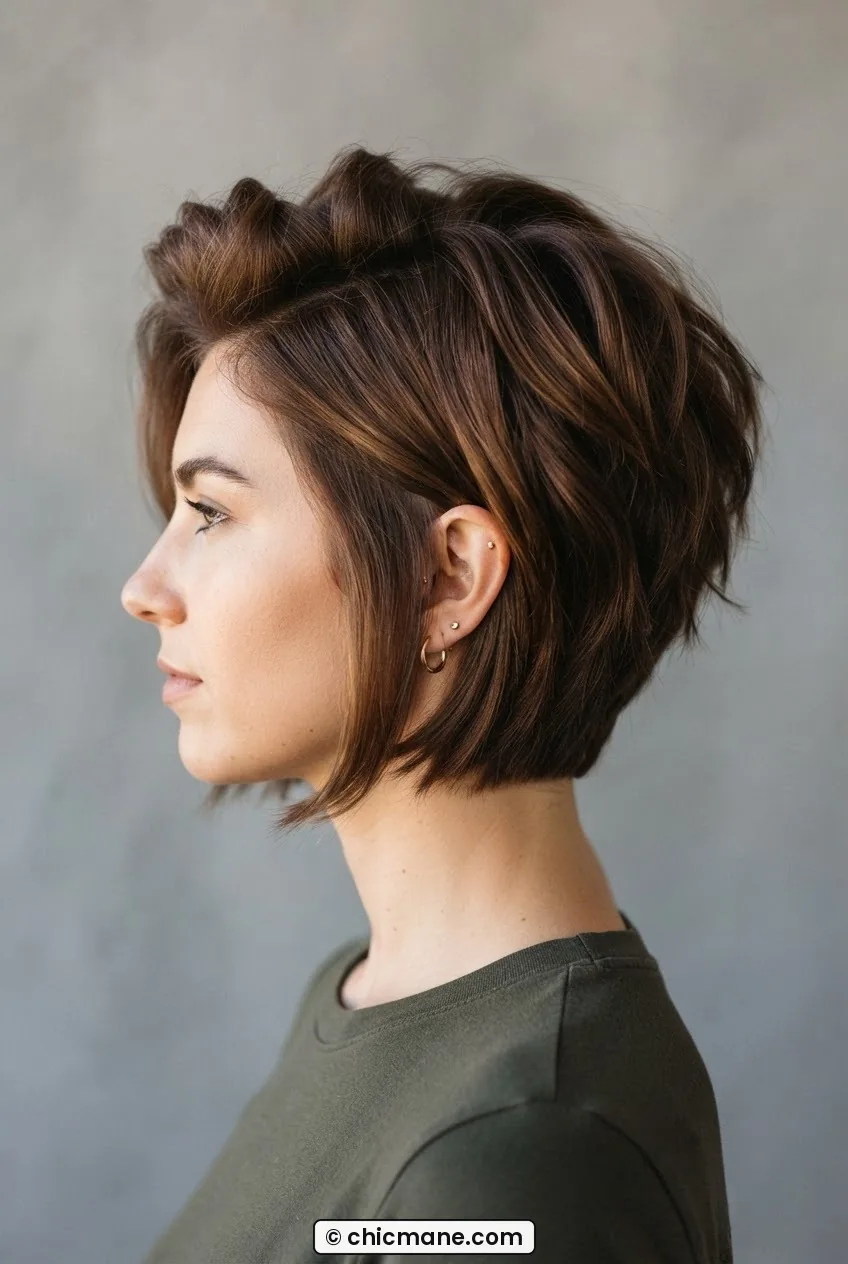
On the days the bixie isn’t cooperating, a quick half-up style buys you five minutes and saves the whole look — there are some genuinely fast ideas in these five-minute open hairstyle options that work brilliantly at this length.
11. The One-Length Curtain Bob
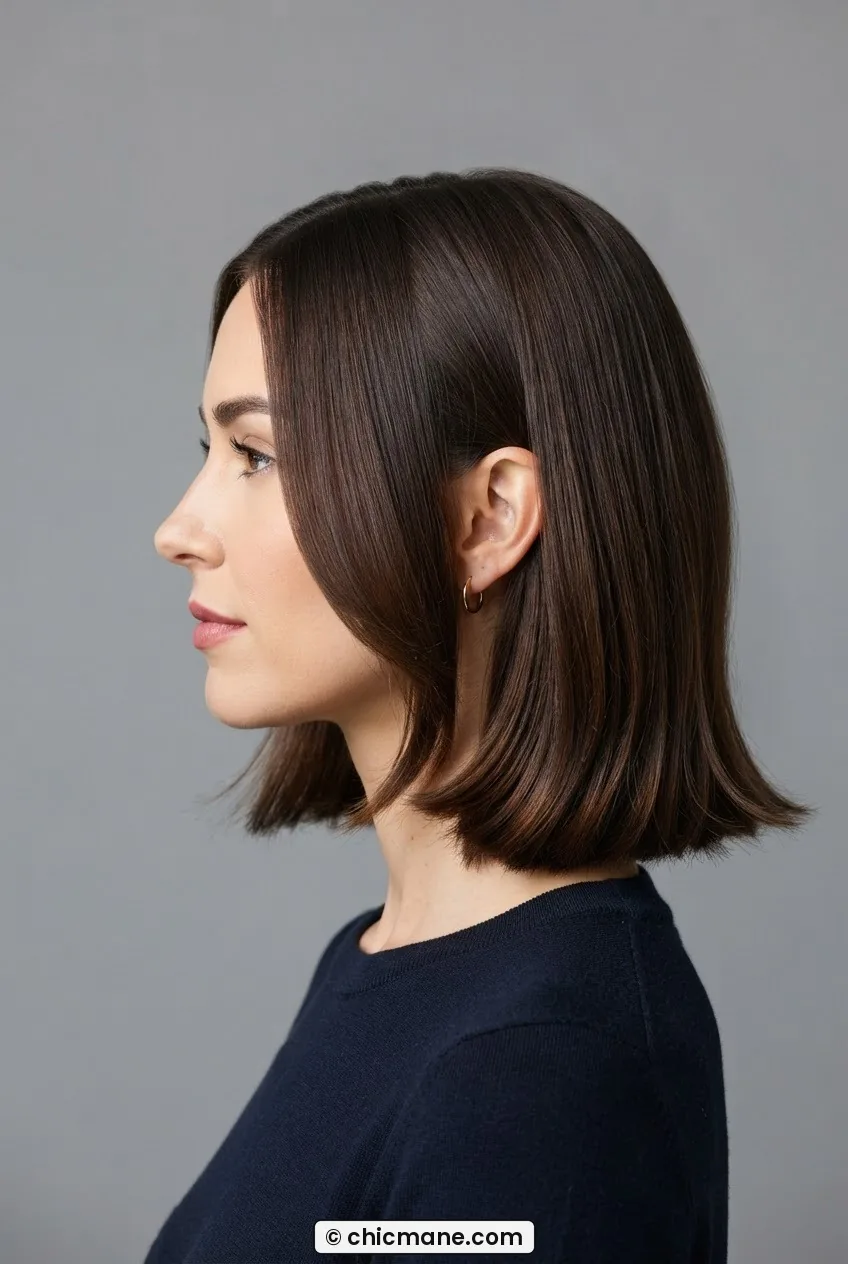
Last but genuinely not least. The one-length curtain bob is cut blunt at chin or just-below-chin length, with a centre part and very minimal layering — just enough to let the ends flick out slightly rather than curling under. It’s one of those cuts that photographs spectacularly and takes about twenty minutes to blow out at home.
The reason it works for grow-outs is that the one-length cut stays wearable for a long time. There’s no complex layering to grow out of. It just gets longer, which eventually transitions into a lob, which transitions into a mid-length. You can ride the curtain bob for four to five months before it starts begging for attention. Trim every twelve weeks maximum.
On chocolate brown hair, the curtain part is everything. The way the two panels frame the face creates an almost romantic quality — you can see in the photo how the colour sits deeper at the root and warms up slightly toward the ends, and that parted curtain shape amplifies that gradient beautifully. If I were starting a grow-out tomorrow, this might be the cut I’d pick.
The One Cut to Avoid While You’re Growing
A quick note before the FAQ, because I’d feel bad leaving this out: if you’re mid grow-out, avoid the blunt one-length bob at jaw level. Not the curtain bob I just praised — specifically the shorter, jaw-grazing version with no texture and no fringe. It looks incredible at the salon and then grows into the most shapeless, ear-covering middle length about eight weeks later. I made this mistake in 2023 and spent six months trying to claw my way back. The jaw-length blunt bob has a very narrow window of looking right, and a grow-out is not that window. Come back to it when you’ve reached your goal length and you’re starting fresh.
Questions I Get About This
Will chocolate brown colour look uneven as my roots come in during a grow-out?
This depends on how close your natural colour is to your dyed shade. If you have naturally dark hair, chocolate brown grows out incredibly gracefully — the root line is barely visible. If you’re naturally lighter, a root melt at the start of your grow-out will blur the line significantly and buy you months before you need to touch it. It’s one of the smartest moves I’ve seen for low-maintenance grows.
How do I keep my ends looking healthy during a long grow-out?
Trim every eight to twelve weeks — I know it feels counterproductive but removing split ends actually speeds up progress because damage travels up the shaft. Deep condition weekly if your hair is colour-treated. A good bond-building treatment used monthly makes a visible difference in how your ends handle the longer growth phases.
Can I style these grow-out cuts in braids or updos to hide the awkward stage?
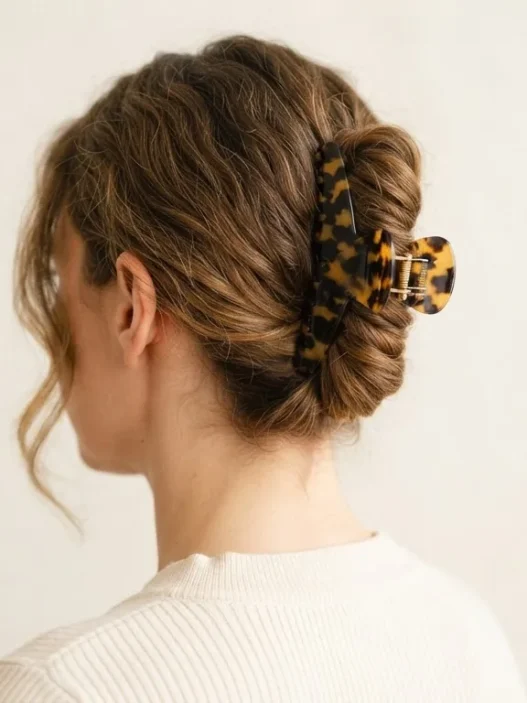
Absolutely — braided styles are a grow-out’s best friend, especially once you hit the collarbone-length territory where there’s enough to work with. If you need inspiration for what’s possible at each length, the guide on hairstyles from crop to waist covers a brilliant range of options. And yes, even shorter bixie-length hair can do a half-up braid — it just requires a few more pins than usual.
Does the grow-out look different with chocolate brown versus lighter brunette shades?
Yes, and honestly in the best way. Deeper shades of brown give you so much more coverage over the natural texture irregularities that come with grow-outs. Lighter brunettes show more of the unevenness in how hair grows at different rates across the head. If you’re struggling with your grow-out looking patchy, going a shade or two darker is a surprisingly effective trick that most people don’t think to try.
Honestly, the grow-out is not as grim as it feels from the inside. Month four is peak misery but once you’ve got a cut that’s actually designed to handle the journey, the whole thing becomes much less dramatic. Pick one of these eleven, give your stylist a clear brief, and then — this is the hard part — just let it go. Check back in twelve weeks and you’ll be genuinely surprised how far you’ve come. Chocolate brown hair has a way of making every length look like it was entirely on purpose.